

































- May 26, 2026
Share this post on:
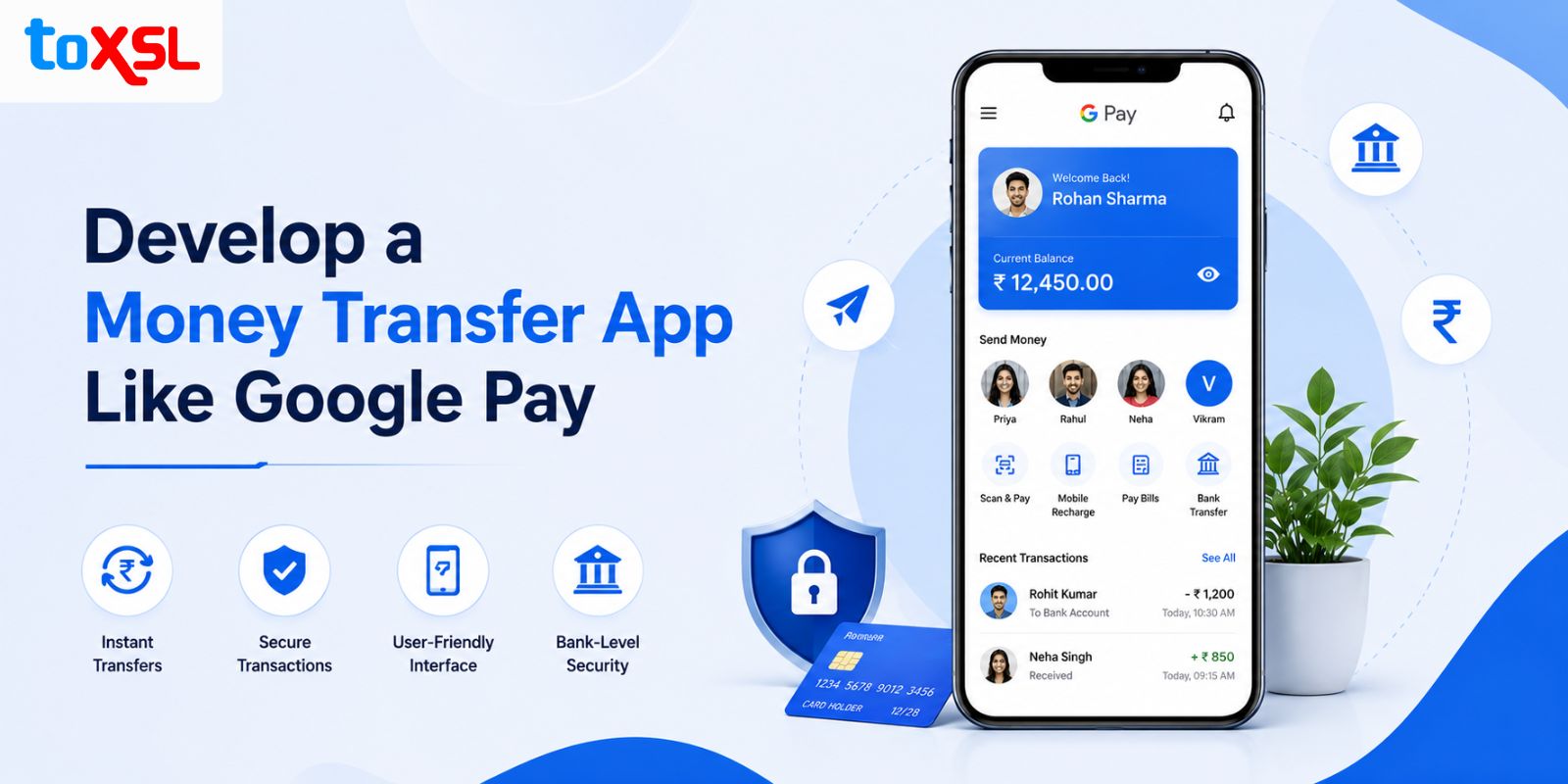
The rapid digitization of financial services has significantly changed how individuals and businesses manage money. Money transfer apps have become a cornerstone of this transformation, enabling users to send and receive funds instantly, securely, and conveniently. Whether it’s paying bills, transferring money to family, or conducting cross-border transactions, these apps are now an essential part of everyday financial activities.
The global market reflects this massive growth potential. The global money transfer app market is estimated to be valued at US$ 28.35 billion in 2026 and is expected to reach US$ 94.11 billion by 2033, exhibiting a compound annual growth rate (CAGR) of 18.7% from 2026 to 2033. This remarkable growth highlights the increasing demand for digital payment solutions and presents a lucrative opportunity for businesses looking to enter the fintech space.
However, building a successful money transfer app requires more than just a good idea. It involves careful planning, robust technology, strong security measures, compliance with financial regulations, and a clear understanding of user needs. This blog provides a complete roadmap to help you develop a money transfer app, covering its types, features, sourcing models, and cost considerations.
Key Takeaways
- The global money transfer market is growing rapidly, offering strong business opportunities
- Selecting the right app type is crucial based on your target audience and geography
- Security, compliance, and user experience are the pillars of a successful fintech app
- Choosing the right sourcing model impacts cost, quality, and scalability
- Development costs vary depending on features, complexity, and integrations
- Continuous updates and innovation are essential to stay competitive
The Rise of Money Transfer Apps
Money transfer apps have quickly transformed how people handle payments. Instead of relying on traditional banking methods, users can now send and receive money instantly using their smartphones. This shift has been driven by increased internet access, mobile usage, and the demand for faster, more convenient financial solutions.
In countries like India, digital payment adoption has grown rapidly, supported by systems like Unified Payments Interface (UPI). Popular apps such as Google Pay and PhonePe allow users to transfer money, pay bills, and shop online with ease. Security improvements like encryption and biometric authentication have also built user trust. As a result, money transfer apps like google pay are now an essential part of everyday financial transactions and continue to grow in popularity.
Step-by-Step Guide to Developing a Money Transfer App Like Google Pay
1. Start with Market Research
Before development begins, it’s essential to understand the market landscape. Analyze your target audience, identify competitors, and study existing apps to find gaps and opportunities. This step helps define your app’s unique value proposition and ensures your product aligns with real user needs.
- Identify your target audience and their financial needs
- Analyze competitors and their strengths/weaknesses
- Define your unique value proposition (USP)
- Decide the app type (P2P, remittance, wallet, etc.)
2. Define Features and Monetization Model
Clearly outlining features and revenue strategies helps streamline development and avoid unnecessary changes later. It ensures your app delivers value while remaining profitable and scalable.
- List essential features like KYC, transfers, and notifications
- Decide revenue streams (transaction fees, subscriptions)
- Prioritize features for MVP (Minimum Viable Product)
- Plan for future feature upgrades and scalability
3. Ensure Legal Compliance
Compliance is critical in fintech apps to avoid legal issues and build user trust. Following regulations ensures safe and lawful operations.
- Implement KYC (Know Your Customer) verification
- Follow AML (Anti-Money Laundering) guidelines
- Obtain necessary financial licenses
- Ensure compliance with data protection laws
4. The Right Technology Stack
The right technology ensures performance, scalability, and security. Your tech stack should support real-time transactions and handle large user volumes.
- Select frontend frameworks (Flutter, React Native)
- Choose backend technologies (Node.js, Python)
- Use secure and scalable databases
- Opt for cloud services like jiWebHosting, AWS, or Google Cloud
5. Design a User-Centric UI/UX Interface
A well-designed interface improves user engagement and simplifies complex financial tasks. Focus on clarity, speed, and ease of use.
- Create simple and intuitive navigation
- Design seamless onboarding and transaction flow
- Ensure responsive design for all devices
- Focus on accessibility and user convenience
6. Develop the App
This stage involves building the core functionality and integrating essential services required for transactions and communication.
- Develop frontend and backend architecture
- Integrate payment gateways and banking APIs
- Add notification and messaging services
- Ensure smooth data flow between components
7. Advanced Security Measures
Security is essential to protect sensitive financial data and maintain user trust. Strong security measures prevent fraud and unauthorized access.
- Use end-to-end encryption for data protection
- Implement two-factor authentication (2FA)
- Apply biometric login features
- Integrate fraud detection systems
8. Conduct Testing and Quality Assurance
Testing ensures your app functions smoothly and securely before launch. It helps identify bugs and performance issues early.
- Perform functional and usability testing
- Conduct security and penetration testing
- Test app performance under heavy load
- Fix bugs and optimize app performance
9. Launch the App on the App Store and Play Store
A successful launch ensures visibility and user acquisition. Proper preparation helps avoid rejections and improves downloads.
- Prepare app store listings and descriptions
- Ensure compliance with app store and play store guidelines
- Monitor initial user feedback post-launch
10. Monitor Performance
Post-launch maintenance is crucial to keep the app running smoothly and relevant in the market.
- Track user behavior and app performance
- Fix bugs and release regular updates
- Provide customer support and issue resolution
- Optimize features based on user feedback
Types of Money Transfer Apps
Here are the various types of money transfer apps:
Peer-to-Peer (P2P) Payment Apps
Peer-to-peer money transfer apps are designed for individuals to send and receive money directly from one account to another. These apps are widely used for daily transactions like splitting bills, paying rent, or sending money to friends and family. Their simplicity, speed, and minimal transaction fees make them highly popular among users across all age groups and regions.
Cross-Border Remittance Apps
Cross-border money transfer apps facilitate sending funds across countries with support for multiple currencies and real-time exchange rates. These apps are ideal for expatriates, freelancers, and global businesses. They require compliance with international financial regulations and often include features like currency conversion, transaction tracking, and low-cost remittance options for global users.
Bank-Integrated Apps
Bank-integrated money transfer apps are directly connected to banking systems, ensuring high levels of security and trust. These apps allow users to transfer money within the same bank or across different banks seamlessly. They often include additional banking services such as account management, bill payments, and financial insights, making them a comprehensive financial solution.
Cryptocurrency Transfer Apps
Cryptocurrency-based transfer apps enable users to send and receive digital currencies like Bitcoin or Ethereum. These apps leverage blockchain technology to provide transparency, decentralization, and faster transactions. However, they require advanced security measures and must navigate regulatory challenges, making them suitable for businesses looking to innovate in the fintech space.
Mobile Wallet Apps
Mobile wallet apps allow users to store funds digitally and perform multiple financial activities such as payments, recharges, shopping, and transfers. These apps offer a seamless user experience by integrating various services into one platform. Their versatility and convenience make them highly popular in regions with high smartphone and internet penetration.
Key Features of Money Transfer Application
Here are the key features of money transfer application:
Onboarding with Secure KYC Verification
A smooth onboarding process is essential to attract and retain users. Integrating KYC (Know Your Customer) verification ensures compliance with financial regulations while building trust. This feature typically involves identity verification through documents or biometric authentication, making the registration process both secure and user-friendly.
Advanced Authentication
Security is critical in financial applications. Implementing features like two-factor authentication (2FA), biometric login, and OTP verification ensures that user accounts are protected from unauthorized access. These multi-layered security measures help prevent fraud and enhance user confidence in the application.
Real-Time Money Transfer Capabilities
Users expect instant or near-instant fund transfers. Real-time transaction processing ensures quick and seamless transfers, improving user satisfaction. This feature is especially important for apps handling urgent payments or cross-border transactions where speed is a key differentiator.
Multi-Currency and Localization Support
For apps targeting global users, multi-currency support is essential. It allows users to send and receive money in different currencies while viewing real-time exchange rates. Localization features such as language support further enhance accessibility and user experience across diverse regions.
Payment Gateway Integration
Integrating secure and reliable payment gateways enables users to fund their accounts and make transactions using various payment methods like debit cards, credit cards, UPI, and digital wallets. This flexibility improves user convenience and increases transaction success rates.
Comprehensive Transaction History
Providing users with detailed transaction history helps them track their financial activities effectively. Advanced analytics can offer insights into spending patterns, enabling users to make informed financial decisions and improving overall user engagement.
Push Notifications and Real-Time Alerts
Push notifications keep users informed about transaction updates, security alerts, and promotional offers. Real-time alerts enhance transparency and ensure users are always aware of their financial activities, which builds trust and improves app engagement.
AI-Based Fraud Detection
Artificial intelligence can be used to detect suspicious activities and prevent fraudulent transactions. This feature analyzes user behavior and transaction patterns to identify anomalies, ensuring a high level of security and compliance with financial regulations.
Admin Dashboard for Business
An admin panel allows businesses to manage users, monitor transactions, ensure compliance, and generate reports. This feature is essential for maintaining operational efficiency and making data-driven decisions.
Various Approaches for Money Transfer App Development
Following are the approached for money transfer app development:
In-House Development for Complete Control
In-house development involves building a dedicated team within your organization to design and develop the app. This model provides complete control over the development process, ensuring better communication and alignment with business goals. However, it requires significant investment in hiring, training, infrastructure, and ongoing maintenance, making it suitable for large enterprises.
Outsourcing to Development Companies
Outsourcing your project to a professional development company provides access to experienced developers, structured workflows, and faster delivery timelines. This model balances cost and quality, ensuring reliable results. It also reduces the burden of managing the development team, allowing businesses to focus on core operations.
Dedicated Development Teams
A dedicated development team works exclusively on your project, offering the benefits of both in-house and outsourcing models. This approach ensures scalability, flexibility, and long-term support. It is ideal for businesses planning to expand their app or add advanced features over time.
Cost of Money Transfer App Development
Developing a money transfer app involves multiple cost factors, including design, development, testing, security implementation, and maintenance. The overall cost depends on the app’s complexity, features, platform, and development team location. A basic app with limited features is relatively affordable, while a feature-rich and scalable solution requires a higher investment. Additionally, compliance with financial regulations and integration of advanced security features can significantly impact the overall budget.
App Type | Features Included | Estimated Cost |
|---|---|---|
Basic App | Basic transfers, login, transaction history | $15,000 – $30,000 |
Mid-Level App | Multi-currency, payment gateway, enhanced security | $30,000 – $70,000 |
Advanced App | AI fraud detection, analytics, global integrations | $70,000 – $150,000+ |
Key Factors That Influence the Development Cost of a Money Transfer App
Developing a money transfer app involves multiple cost-driving elements that directly impact your overall budget. Understanding these factors helps businesses plan effectively and avoid unexpected expenses. Below are the most important factors that determine the cost of building a money transfer application.
1. App Complexity and Feature Set
The more complex your app, the higher the development cost. A basic app with limited features like simple transfers and login functionality will cost significantly less than an advanced app with AI-based fraud detection, real-time analytics, and multi-currency support. Adding premium features increases both development time and technical effort.
2. Platform Choice (iOS, Android, or Cross-Platform)
The platform you choose plays a crucial role in determining cost. Developing separate native apps for iOS and Android is more expensive compared to building a cross-platform app using frameworks like Flutter or React Native. However, native apps may offer better performance and user experience.
3. UI/UX Design Complexity
A well-designed user interface enhances user experience but also adds to development cost. Custom designs, animations, and interactive elements require additional design and development effort. Simpler designs are more cost-effective but may not offer the same level of engagement.
4. Security and Compliance Requirements
Security is one of the most critical aspects of a money transfer app. Implementing features like encryption, multi-factor authentication, and fraud detection systems increases development cost. Additionally, complying with financial regulations such as KYC and AML requires extra resources and legal expertise.
5. Third-Party Integrations
Money transfer apps rely heavily on third-party services such as payment gateways, banking APIs, and notification systems. Each integration adds to the development cost, especially if APIs require licensing fees or custom configurations.
Conclusion
Building a money transfer app like Google Pay is a complex yet rewarding endeavor that requires the right combination of technology, strategy, and expertise. From selecting the right type of app to implementing essential features and choosing an appropriate sourcing model, every decision plays a critical role in the success of your application. At ToXSL Technologies, we specialize in delivering secure, scalable, and feature-rich fintech solutions tailored to your business needs. Our experienced team ensures compliance with global standards while creating seamless user experiences. Whether you’re launching a new app or upgrading an existing one, we help you turn your vision into a powerful and future-ready money transfer platform.
Frequently Asked Questions
1. How long does it take to develop a money transfer app?
The time to develop a money transfer app depends on several factors, including the complexity of features, level of security, integrations with banking systems, and compliance requirements. A basic app with core functionalities like user registration and simple transfers can be built relatively quickly. However, if your app includes advanced features such as multi-currency support, AI-based fraud detection, real-time processing, and cross-border capabilities, the development time increases significantly.
- Basic app development: 3–4 months
- Medium complexity app: 4–8 months
- Advanced fintech app: 6–12+ months
- Time required for testing and QA: 3–6 weeks
- Compliance and security approvals may extend timelines
2. What security features are essential in a money transfer app?
Security is one of the most critical aspects of a money transfer app, as it directly deals with sensitive financial data and transactions. A robust security framework ensures user trust and prevents fraud or data breaches. Developers must implement multiple layers of security, including encryption, authentication, and real-time monitoring systems.
- End-to-end encryption to protect transaction data
- Two-factor authentication (2FA) for secure login
- Biometric authentication like fingerprint or facial recognition
- AI-powered fraud detection and risk analysis
- Secure APIs and tokenization methods
- Regular security audits and vulnerability testing
3. What technologies are used to build a money transfer app?
Developing a money transfer app requires a robust and scalable technology stack that ensures performance, security, and seamless user experience. The choice of technologies depends on the app’s requirements, target audience, and scalability needs. Modern fintech apps typically use cross-platform frameworks for faster development and cloud-based solutions for scalability. Backend technologies must support real-time processing and secure data handling.
- Frontend technologies: React Native, Flutter, Swift, Kotlin
- Backend technologies: Node.js, Python, Java, PHP
- Database systems: MongoDB, PostgreSQL
- Cloud platforms: jiWebHosting, AWS, Google Cloud, Microsoft Azure
4. How do money transfer apps make money?
Money transfer apps generate revenue through multiple monetization strategies depending on their business model and target audience. While some apps focus on high transaction volumes with minimal fees, others offer premium services for additional revenue. A well-planned monetization strategy ensures sustainability and profitability in the competitive fintech market.
- Transaction fees charged per transfer
- Currency exchange margin in international transactions
- Merchant or partner commissions
5. What factors affect the cost of developing a money transfer app?
The cost of developing a money transfer app varies widely depending on several factors. These include the app’s complexity, number of features, level of security, third-party integrations, and the location of the development team. Additionally, compliance with financial regulations and ongoing maintenance costs also contribute to the overall budget.
- Feature complexity and customization level
- Platform choice (iOS, Android, or both)
- Security and compliance requirements
- Integration with payment gateways and APIs