




























According to Gartner, the global AI spending will soar to an incredible $2.5 trillion in 2026, highlighting just how deeply artificial intelligence is becoming embedded in the global tech ecosystem. Yet, the most powerful AI innovations are not always the ones we see. They are often the invisible systems quietly transforming how businesses operate, decisions are made, and digital experiences are delivered.
Artificial Intelligence is often imagined as something visible, interactive, and futuristic chatbots answering questions, robots assisting in warehouses, or voice assistants responding from smart speakers. But the most powerful wave of AI innovation today is not always loud, obvious, or even noticeable. In fact, some of the most transformative AI systems are the ones users never directly see.
Welcome to the era of Invisible AI - the silent force operating behind the scenes, optimizing processes, predicting needs, automating decisions, and enhancing digital experiences without demanding attention.
Key Takeaways
- Invisible AI works behind the scenes to improve digital experiences without being directly noticed by users.
- It is transforming industries like healthcare, retail, finance, manufacturing, and smart homes through automation and intelligent decision-making.
- Technologies such as machine learning, IoT, NLP, and edge computing power the growth of Invisible AI.
- Invisible AI enhances efficiency and productivity by reducing manual tasks and optimizing operations.
- Businesses use Invisible AI to deliver personalized experiences through recommendations, predictive analytics, and smart automation.
- Challenges such as data privacy, transparency, and ethical concerns must be addressed for responsible AI adoption.
The Rise of Invisible AI
Invisible AI refers to artificial intelligence systems that function in the background without requiring direct human interaction. These systems are embedded into digital ecosystems, software platforms, connected devices, and enterprise operations to automate tasks, improve decision-making, and enhance user experiences in subtle yet powerful ways.
The rise of Invisible AI is closely tied to the evolution of modern technology. As software development companies generate more data than ever before, the need to analyze, interpret, and act on that data in real time has become critical. Traditional manual processes can no longer keep pace with the scale and speed of today’s digital world. This is where Invisible AI steps in.
How Invisible AI is Transforming Industries
Invisible AI is not limited to one sector. It is transforming industries across the board by quietly improving operations, reducing costs, and unlocking new levels of intelligence.
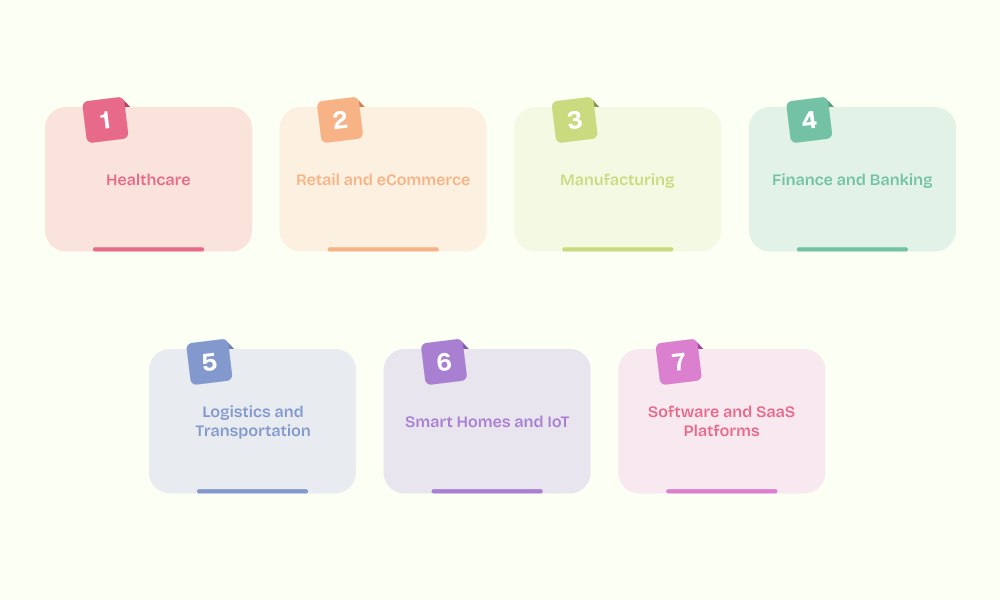
1. Healthcare
In healthcare, Invisible AI is helping providers make faster and more accurate decisions without disrupting clinical workflows. It can analyze patient data, flag anomalies, predict health risks, optimize hospital resource allocation, and assist in medical imaging analysis. For patients, this means improved outcomes and quicker diagnosis. For healthcare providers, it means smarter systems that reduce administrative burdens and improve care delivery.
2. Retail and eCommerce
Retail businesses use Invisible AI to personalize shopping experiences, optimize pricing, manage inventory, and forecast demand. Customers may not realize AI is working behind the scenes, but they experience it through tailored recommendations, faster search results, automated support, and efficient delivery. AI also helps retailers identify buying patterns, reduce cart abandonment, and improve customer retention through predictive insights.
3. Manufacturing
In manufacturing, Invisible AI powers predictive maintenance, quality control, supply chain optimization, and production planning. Smart sensors and AI algorithms monitor machinery in real time, detecting early signs of wear or malfunction before breakdowns occur. This reduces downtime, improves safety, and significantly lowers maintenance costs.
4. Finance and Banking
Banks and fintech companies rely heavily on Invisible AI for fraud detection, risk analysis, automated underwriting, credit scoring, and personalized financial services. These AI systems evaluate thousands of variables in seconds to detect suspicious behavior or recommend smarter financial actions. Customers benefit from safer transactions and more relevant services, while institutions reduce risk and increase operational efficiency.
5. Logistics and Transportation
Invisible AI helps logistics companies optimize routes, predict delays, improve warehouse operations, and automate fleet management. It uses real-time data such as weather, traffic, and delivery performance to make dynamic decisions. This results in faster deliveries, lower fuel costs, and more efficient resource utilization.
6. Smart Homes and IoT
In smart homes, Invisible AI learns user habits and adjusts lighting, temperature, security systems, and appliance behavior accordingly. It creates comfort and efficiency without requiring constant manual control. Similarly, in industrial IoT environments, AI monitors devices, predicts failures, and enables autonomous decision-making.
7. Software and SaaS Platforms
Many modern software products now use Invisible AI to automate repetitive workflows, prioritize tasks, detect anomalies, and provide intelligent insights. Whether it is CRM software suggesting next actions or HR platforms screening resumes, AI is becoming a hidden layer of intelligence inside everyday tools. Across industries, Invisible AI is not just enhancing technology, it is redefining how app development companies operate at scale.
Real-World Examples of Invisible AI
The best way to understand Invisible Artificial Intelligence is to look at how it already exists in the tools and systems people use every day.
1. Recommendation Engines
Platforms like streaming services, shopping apps, and content platforms use AI to recommend products, movies, music, or articles based on user behavior. Users see personalized suggestions, but the complex AI models behind those suggestions remain invisible.
2. Email Spam Filters
One of the most familiar examples of Invisible AI is spam filtering. AI models continuously analyze patterns in email content, sender behavior, and user engagement to identify unwanted or harmful messages, without users needing to manage the process manually.
3. Fraud Detection in Banking
Financial institutions use AI to detect unusual transaction patterns in real time. If a transaction seems suspicious based on location, timing, spending behavior, or device usage, the system can flag or block it instantly.
4. Predictive Text and Smart Autocorrect
Typing assistants in smartphones, email tools, and messaging platforms use Invisible AI to predict what users want to say, correct errors, and speed up communication. The experience feels natural, but the intelligence behind it is highly sophisticated.
5. Predictive Maintenance in Factories
Manufacturers use AI-powered systems connected to machine sensors to detect issues before equipment fails. Instead of waiting for breakdowns, maintenance teams receive proactive alerts.
6. Navigation and Route Optimization
Ride-sharing apps, delivery services, and navigation systems rely on Invisible AI to calculate the best routes based on live traffic, road conditions, and travel patterns. Users simply see faster and smarter directions.
Technologies Behind Invisible AI
Invisible AI is powered by a combination of advanced technologies that enable systems to learn, adapt, and act without constant human intervention.
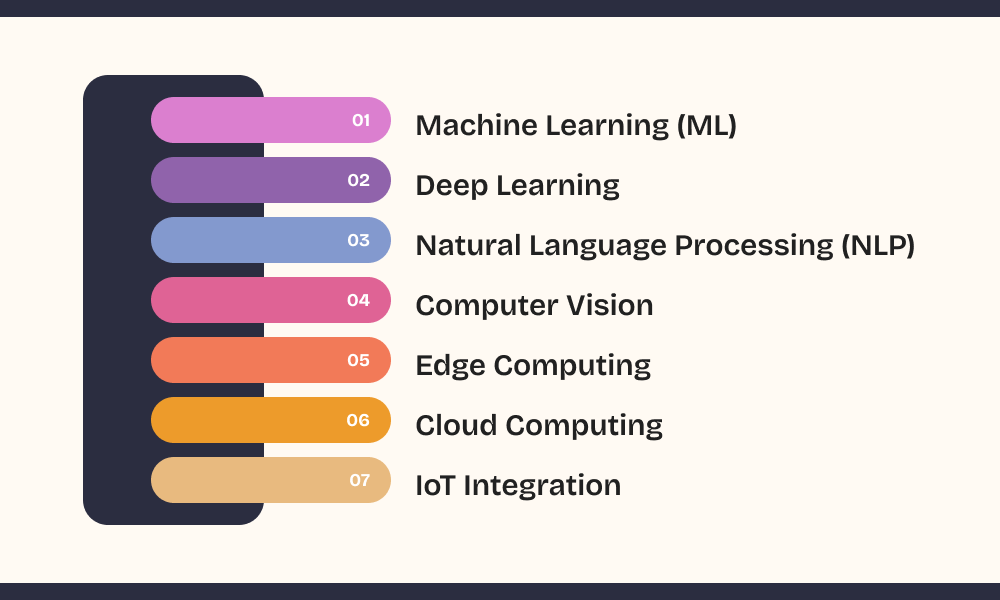
1. Machine Learning (ML)
Machine learning is the foundation of Invisible AI. It allows systems to analyze data, identify patterns, and improve performance over time without being explicitly programmed for every scenario.
2. Deep Learning
Deep learning uses neural networks to process large and complex datasets, especially for tasks like image recognition, speech processing, natural language understanding, and anomaly detection.
3. Natural Language Processing (NLP)
Natural Language Processing enables systems to understand and process human language. It powers smart search, sentiment analysis, email classification, text prediction, and voice-based systems that often operate behind the scenes.
4. Computer Vision
Computer vision allows machines to interpret visual information from images and videos. It is widely used in manufacturing inspection, security monitoring, autonomous systems, and healthcare diagnostics.
5. Edge Computing
Edge computing processes data closer to the source - such as sensors, cameras, or IoT devices - rather than sending everything to the cloud. This is crucial for Invisible AI applications that require real-time responses with minimal latency.
6. Cloud Computing
Cloud platforms provide the scalability, storage, and processing power needed to train and deploy AI models across large systems. They make Invisible AI accessible to businesses of all sizes.
7. IoT Integration
The Internet of Things provides the connected devices and sensors that feed real-time data into AI systems. Without IoT, many Invisible AI use cases, especially in manufacturing, logistics, and smart environments, would not be possible.
Challenges of Invisible AI Integration
While Invisible AI offers major advantages, it also comes with important challenges that businesses must address carefully.
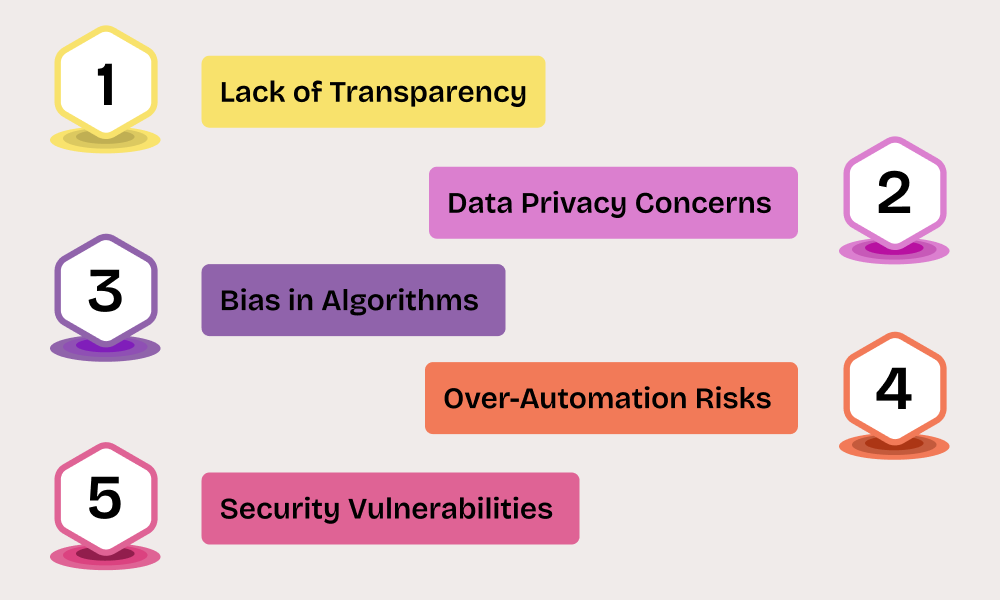
1. Lack of Transparency
Because Invisible AI operates in the background, users may not always know when or how decisions are being made. This can create trust issues, especially in areas like finance, hiring, healthcare, or security.
2. Data Privacy Concerns
Invisible AI often depends on large volumes of user and operational data. If data collection or usage is not handled responsibly, it can raise serious privacy concerns and regulatory risks.
3. Bias in Algorithms
AI systems can unintentionally reflect biases present in training data. When Invisible AI makes hidden decisions, biased outcomes can go unnoticed for long periods unless businesses actively monitor fairness.
4. Over-Automation Risks
Not every process should be fully automated. Over-reliance on Invisible AI can reduce human oversight, which may be risky in high-stakes environments where judgment, ethics, or context matter.
5. Security Vulnerabilities
As AI becomes embedded into critical infrastructure and connected systems, it can become a target for cyberattacks. Poorly secured AI pipelines can expose businesses to manipulation, data breaches, or system failures.
The Future of Invisible AI
The future of Invisible AI is not about making AI more visible. It is about making it more seamless, more intelligent, and more deeply integrated into the systems people already use every day. From AI-powered automation and predictive analytics to smart enterprise software, IoT integration, and AI-driven personalization, Invisible AI will continue to transform the tech industry quietly but profoundly.
As businesses move toward smarter operations and customer-centric innovation, the real winners will be those who can harness Invisible AI technology in ways that feel effortless to users while delivering measurable value behind the scenes. The revolution may be silent, but its impact on the future of business and technology will be impossible to ignore.
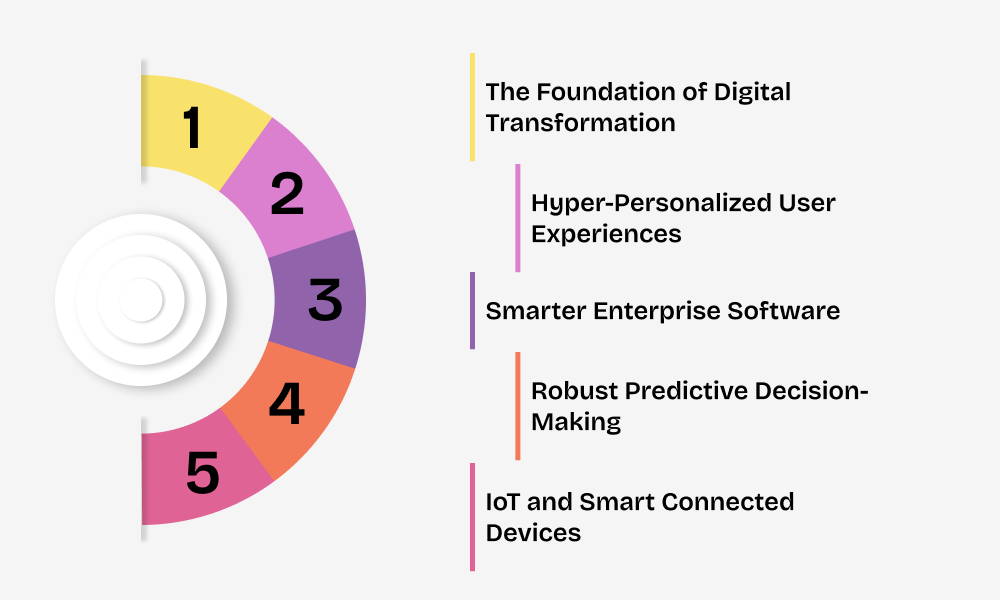
1. The Foundation of Digital Transformation
As organizations modernize their infrastructure, Invisible AI in digital transformation will become a core enabler of speed, efficiency, and adaptability. Businesses will increasingly build AI into the foundation of their systems rather than adding it later as an extra feature.
- Smarter business operations: AI will automate repetitive tasks, reduce manual errors, and improve operational efficiency.
- Faster decision-making: Real-time insights from machine learning and predictive analytics will help leaders make data-driven decisions faster.
- Seamless customer experiences: AI will quietly improve websites, mobile apps, and digital platforms without interrupting the user journey.
- Stronger scalability: Businesses will be able to handle more customers, data, and workflows without proportionally increasing costs.
2. Hyper-Personalized User Experiences
The future of Invisible AI technology will be closely tied to AI-driven personalization. Customers today expect experiences that feel tailored, relevant, and intuitive. Invisible AI will help businesses deliver exactly that without requiring customers to manually set preferences or repeatedly explain their needs.
- Personalized product recommendations: eCommerce platforms will predict what users want before they even search.
- Smarter content delivery: Streaming apps, media platforms, and learning apps will show the most relevant content automatically.
- Context-aware support: AI systems will understand user behavior, history, and intent to provide faster assistance.
- Reduced friction: Apps and websites will become easier to navigate because AI will anticipate the next best action.
3. Smarter Enterprise Software
The future of Invisible AI in enterprise software is one of the biggest shifts in the business world. Software platforms such as CRM, ERP, HRM, project management tools, and customer support systems will increasingly rely on background AI to improve performance and automate workflows.
- CRM platforms: AI will prioritize leads, suggest follow-ups, and predict customer behavior.
- ERP systems: AI will optimize inventory, resource planning, procurement, and operational forecasting.
- HR software: AI will assist with candidate screening, employee engagement insights, and workforce planning.
- Project management tools: AI will identify delays, recommend task priorities, and improve team productivity.
- Customer support platforms: AI will route tickets, detect urgency, and provide intelligent resolutions behind the scenes.
4. Robust Predictive Decision-Making
One of the most valuable benefits of the future of Invisible AI is its predictive capability. Instead of simply reacting to current data, AI systems will increasingly forecast future outcomes and recommend actions in advance.
- Demand forecasting: Retailers can predict customer demand and stock the right products at the right time.
- Predictive maintenance: Manufacturers can detect machine issues before breakdowns occur.
- Fraud prevention: Financial platforms can identify suspicious transactions in real time.
- Customer churn prediction: SaaS and service businesses can identify at-risk users and improve retention.
- Risk analysis: Businesses can assess operational and financial risks before they escalate.
5. IoT and Smart Connected Devices
The combination of IoT and AI integration will dramatically accelerate the growth of Invisible AI. As more devices become connected, AI will gain access to richer real-time data, allowing it to act faster and more intelligently.
- Smart homes: AI will manage lighting, climate, appliances, and security based on user habits.
- Wearable devices: Health trackers will detect patterns, monitor wellness, and offer proactive insights.
- Industrial IoT: AI will monitor machinery, performance metrics, and system health continuously.
- Smart buildings: Offices and commercial spaces will optimize energy usage, occupancy, and safety automatically.
- Smart cities: AI will improve traffic flow, public transport efficiency, waste management, and infrastructure planning.
Conclusion
At ToXSL Technologies, we understand that the true power of AI lies not just in what users can see, but in the intelligence working seamlessly behind the scenes. As a trusted AI development company, ToXSL Technologies helps businesses build future-ready digital solutions powered by innovation, automation, and scalable AI integration. Whether you are looking to modernize your operations, enhance customer engagement, or develop intelligent software solutions, ToXSL Technologies is here to help you unlock the full potential of Invisible AI and stay ahead in the evolving tech landscape. Contact us to learn more.
Frequently Asked Questions
1. What is Invisible AI?
Invisible AI refers to artificial intelligence systems that operate in the background without requiring direct user interaction. Unlike visible AI tools such as chatbots or voice assistants, Invisible AI quietly improves business processes, digital experiences, and operational efficiency.
- Works silently behind the scenes
- Does not require active user interaction
- Powers AI-driven automation and smarter workflows
- Enhances digital platforms without being obvious to users
- Supports personalization, recommendations, and predictive decision-making
2. Why is Invisible AI important in the tech industry?
Invisible AI is important because it enables businesses to become more efficient, scalable, and customer-focused. In the modern tech industry, it helps organizations automate repetitive tasks, improve decision-making, and deliver seamless user experiences.
- Improves operational efficiency
- Reduces manual workload and human error
- Supports faster, data-driven decision-making
- Enhances customer experience through smart automation
- Plays a major role in digital transformation strategies
3. How is Invisible AI different from traditional AI?
Traditional AI is often visible and interactive, such as virtual assistants, chatbots, or AI-powered support tools. Invisible AI, however, works in the background and is embedded into systems, apps, and business software.
- Traditional AI is user-facing and interactive
- Invisible AI is background-based and embedded
- Traditional AI often requires direct user input
- Invisible AI improves processes automatically
4. What technologies power Invisible AI?
Invisible AI is powered by a combination of advanced technologies that allow systems to learn, analyze, predict, and automate in real time. These technologies form the foundation of intelligent digital ecosystems.
- Machine Learning (ML) for pattern recognition and continuous improvement
- Deep Learning for complex data processing
- Natural Language Processing (NLP) for language understanding and smart text analysis
- Computer Vision for image and video-based intelligence
- Predictive Analytics for forecasting trends and outcomes
- Cloud Computing for scalability and AI model deployment
- Edge Computing for real-time decision-making
- IoT integration for connected devices and live data processing
5. What are the main challenges of implementing Invisible AI?
While Invisible AI offers significant benefits, businesses must overcome technical, operational, and ethical challenges to implement it successfully. A well-planned strategy is essential for long-term success.
- Data privacy concerns when handling sensitive customer or business data
- Lack of transparency in how AI-driven decisions are made
- Bias in algorithms due to poor-quality or unbalanced training data
- Integration challenges with legacy systems and outdated infrastructure
- Security risks if AI systems are not properly protected
6. How can businesses get started with Invisible AI?
Businesses can begin by identifying areas where AI can improve efficiency, automate repetitive tasks, or enhance customer experiences. Starting with high-impact, low-complexity use cases can make adoption smoother and more effective.
- Identify repetitive or data-heavy business processes
- Look for opportunities in workflow automation and predictive analytics
- Start with use cases like recommendation engines, fraud detection, or process optimization
- Ensure access to clean, structured, and reliable data
- Choose scalable infrastructure for AI integration