






































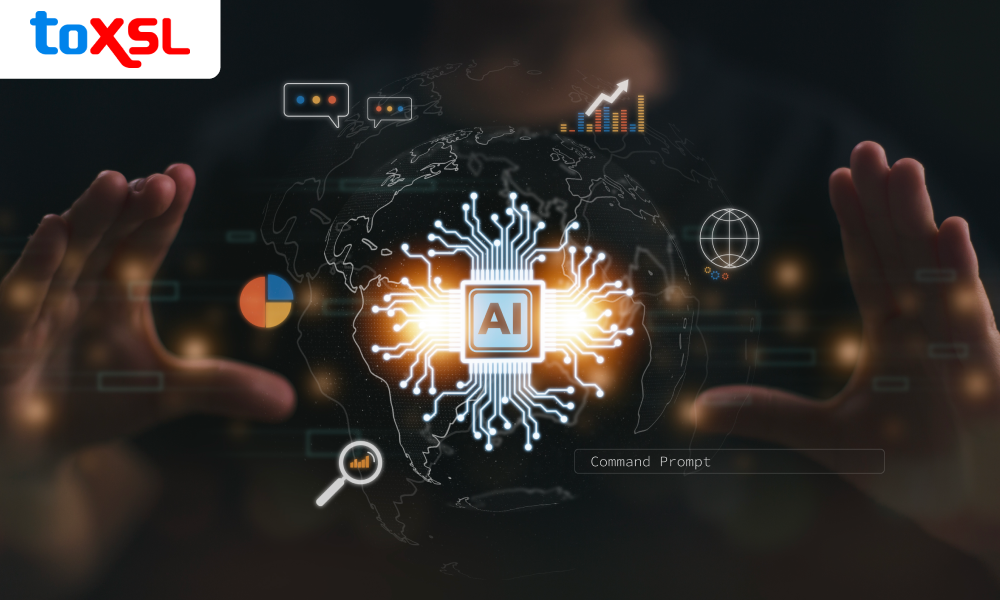
In product research and design alone, McKinsey estimates that generative AI could unlock up to $60 billion in productivity, highlighting the immense potential of this technology in reshaping digital innovation. As businesses strive to build smarter, faster, and more user-centric products, generative AI is emerging as a powerful catalyst across the entire product development lifecycle.
Generative AI goes beyond traditional automation by creating new content, such as code, user interfaces, product concepts, and documentation, based on patterns learned from vast datasets. This capability enables teams to accelerate ideation, streamline design processes, and enhance development efficiency while maintaining high levels of creativity and precision.
Key Highlights
- Generative AI transforms every stage of product development, from ideation to post-launch optimization.
- It significantly accelerates development timelines, enabling faster product releases and iteration cycles.
- Businesses benefit from reduced operational costs through automation and resource optimization.
- AI enhances creativity by generating innovative ideas, designs, and solutions at scale.
- Data-driven insights improve decision-making and reduce risks in product development.
- AI-powered testing and monitoring ensure higher product quality and reliability.
- Organizations adopting generative AI gain a strong competitive edge in digital markets.
How Does Generative AI Work in Digital Product Development?
Generative AI is transforming digital product development by automating workflows, improving efficiency, and helping businesses create smarter and more personalized solutions. It uses advanced algorithms, machine learning models, and large datasets to generate content, analyze user behavior, assist developers, and optimize product performance. From idea generation to testing and deployment, Generative AI supports every stage of the development lifecycle, enabling companies to innovate faster, reduce manual efforts, and deliver high-quality digital experiences tailored to modern user expectations.
- Automates product ideation and market research using data-driven insights
- Generates UI/UX design suggestions to improve user experience and design efficiency
- Creates content, product descriptions, and chatbot responses automatically
- Assists developers with code generation and repetitive programming tasks
- Enhances personalization through intelligent user behavior analysis
- Supports automated testing, bug detection, and performance monitoring
- Provides real-time insights for faster and smarter business decisions
- Continuously improves product functionality based on user interactions and feedback
Generative AI in Digital Product Development: Use Cases
Generative AI in digital product development is not confined to a single stage of product development - it spans the entire lifecycle, acting as a co-creator, assistant, and optimizer. From conceptualizing product ideas to refining user experiences after launch, generative AI enables teams to work smarter, faster, and with greater precision. Its ability to analyze massive datasets and generate actionable outputs allows businesses to innovate continuously while minimizing risks and inefficiencies.
1. AI-Powered Product Ideation
Generative AI leverages large datasets, market trends, and user behavior analytics to generate innovative product ideas. It helps teams identify gaps in the market, propose feature enhancements, and validate concepts early. This reduces uncertainty, accelerates brainstorming sessions, and ensures that ideas are aligned with real user needs and business objectives.
2. Automated UI/UX Design
AI-driven design tools can create wireframes, mockups, and fully interactive prototypes within minutes. By analyzing user preferences and behavior patterns, these tools generate designs that are both visually appealing and highly functional. Designers can iterate rapidly, test multiple variations, and deliver optimized user experiences with minimal manual effort.
3. Code Development
Generative AI assists developers by generating boilerplate code, suggesting logic structures, and even debugging errors in real time. It accelerates the development process while maintaining code quality and consistency. This allows developers to focus on complex problem-solving and innovation rather than repetitive coding tasks.
4. Intelligent Testing and QA
AI-powered testing tools simulate real-world user scenarios, identify bugs, and recommend fixes automatically. They can run thousands of test cases in a fraction of the time required by manual testing. This improves software reliability, reduces time-to-market, and ensures that products meet high-quality standards before deployment.
5. Personalized User Experiences
Generative AI enables dynamic personalization by analyzing user interactions and preferences. It generates customized interfaces, content, and recommendations for individual users. This leads to higher engagement, improved customer satisfaction, and stronger user retention, making products more relevant and impactful.
6. Content Generation
AI tools can generate product documentation, onboarding guides, FAQs, and marketing content automatically. This ensures consistency, reduces manual effort, and accelerates product launches. Teams can maintain up-to-date documentation without dedicating significant time and resources to writing and editing.
Benefits of Generative AI in Digital Product Development
The integration of generative AI into product development workflows offers transformative benefits that go beyond simple efficiency gains. It enhances innovation, improves collaboration, and enables businesses to deliver superior digital experiences. By reducing manual workloads and leveraging intelligent insights, organizations can achieve sustainable growth and competitive differentiation.
1. Faster Time-to-Market
Generative AI accelerates development by automating repetitive tasks such as coding, testing, and design generation. Teams can quickly move from concept to deployment, reducing delays and gaining a first-mover advantage. Faster releases also enable continuous iteration based on user feedback.
2. Cost Reduction
By minimizing reliance on large teams for repetitive tasks, generative AI significantly reduces operational costs. It optimizes resource allocation, eliminates inefficiencies, and ensures that development budgets are used effectively, making it an ideal solution for both startups and enterprises.
3. Enhanced Product Quality
AI-driven testing, monitoring, and analytics improve product quality by identifying issues early and enabling continuous optimization. This results in more stable, reliable, and high-performing digital products that meet user expectations and reduce post-launch maintenance efforts.
4. Improved Decision-Making
Generative AI processes large volumes of data to provide actionable insights and predictive analytics. Product teams can make informed decisions about features, design, and market strategies, reducing risks and increasing the likelihood of success.
5. Increased Productivity
Automation of routine tasks allows teams to focus on strategic and creative aspects of product development. This boosts productivity, enhances collaboration, and enables faster execution across departments, leading to more efficient workflows.
6. Scalability and Innovation
Generative AI enables businesses to scale operations without a proportional increase in resources. It supports rapid experimentation, idea generation, and iterative improvements, fostering a culture of innovation and continuous development.
Generative AI in Digital Product Development: Cost Analysis
Implementing AI in digital product development involves a mix of initial investments and ongoing operational costs. While the upfront investment may seem significant, the long-term benefits - such as reduced development time, improved efficiency, and enhanced product quality - often outweigh the costs.
The overall cost depends on several factors, including the complexity of the product, the level of AI integration, the type of tools used, and the scale of deployment. Businesses can choose between off-the-shelf AI solutions or custom-built models, each with its own cost implications.
Cost Component | Description | Estimated Cost Range (USD) |
|---|---|---|
Data Preparation | Collecting, cleaning, and structuring datasets for training AI models | $5,000 – $8,000 |
Model Development / Training | Building or fine-tuning AI models using large datasets and compute resources | $7,000 – $10,000 |
Infrastructure & Cloud | GPU servers, cloud hosting, storage, and compute resources | $8,000 – $15,000 |
Integration & Development | Connecting AI with apps, APIs, and existing systems | $20,000 – $50,000 |
UI/UX & Frontend | Designing interfaces, dashboards, and user interactions | $9,000 – $10,000 |
Testing & QA | Model validation, performance testing, and bug fixing | $5,000 – $10,000 |
Deployment | Launching the AI system in production environments | $10,000 – $20,000 |
Maintenance & Monitoring (Annual) | Model updates, retraining, performance tracking | $12,000 – $50,000/year |
Features of AI-powered Digital Product Development
AI-powered digital product development introduces advanced capabilities that fundamentally enhance how products are built and managed. These features enable smarter workflows, real-time adaptability, and continuous innovation, making development processes more efficient and results-driven.
1. Intelligent Automation
Generative AI automates repetitive tasks such as code generation, testing, and documentation. This reduces manual effort, improves efficiency, and allows teams to focus on high-value activities like strategy and innovation, ultimately accelerating the entire development lifecycle.
2. Real-Time Data Insights
AI systems continuously analyze user behavior, product performance, and market trends in real time. These insights help teams make informed decisions, optimize features, and improve user experiences, ensuring that products remain relevant and competitive.
3. Predictive Analytics
Generative AI uses historical data and machine learning models to predict user needs, market demands, and product performance. This enables proactive decision-making, reduces risks, and helps businesses anticipate changes before they occur.
4. Adaptive Learning Systems
AI-powered systems learn and evolve based on new data and user interactions. This allows digital products to improve over time without manual intervention, enhancing personalization, functionality, and overall performance.
5. Seamless Integration
AI tools can integrate with existing development environments, design platforms, and business systems. This ensures smooth adoption, minimizes disruption, and enables organizations to leverage AI capabilities without overhauling their current workflows.
6. Enhanced Collaboration
Generative AI facilitates collaboration by providing shared insights, automated documentation, and intelligent recommendations. Teams can work more effectively across departments, ensuring alignment and faster execution throughout the product lifecycle.
How to Integrate AI in an Existing Product
Integrating AI into an existing product helps businesses improve automation, enhance user experiences, and make smarter data-driven decisions. A successful AI integration strategy requires proper planning, the right technology, and a clear understanding of business goals and user needs.
1. Identify Business Goals and AI Use Cases
Start by analyzing your product’s current challenges and identifying where AI can add value. Focus on areas like automation, personalization, customer support, predictive analytics, or workflow optimization to ensure meaningful and goal-oriented AI implementation.
2. Collect and Organize Quality Data
AI systems rely heavily on accurate and structured data. Gather relevant user, operational, and business data from your existing product and organize it properly to train AI models effectively and improve decision-making accuracy.
3. Choose the Right AI Technologies and Tools
Select AI technologies based on your product requirements, scalability needs, and budget. Businesses can use machine learning models, natural language processing, computer vision, or AI APIs depending on the desired functionality and user experience goals.
4. Integrate AI Features into Existing Workflows
AI should enhance the existing product experience without disrupting usability. Carefully integrate AI-driven features such as chatbots, recommendation systems, automation tools, or analytics dashboards into current workflows for smooth adoption and performance.
5. Test, Monitor, and Continuously Improve
After integration, regularly test AI performance, monitor user interactions, and gather feedback. Continuous optimization helps improve accuracy, security, and efficiency while ensuring the AI features align with changing business and customer expectations.
The Future of Generative AI in Digital Product Development
The future of generative AI in product development is both expansive and transformative. As AI technologies continue to evolve, we can expect even deeper integration across development ecosystems, enabling smarter, faster, and more autonomous workflows.
One of the most exciting developments is the emergence of autonomous development systems—AI platforms capable of independently designing, building, testing, and optimizing digital products. While human oversight will remain essential, these systems will significantly reduce the need for manual intervention.
Another key trend is hyper-personalization. Future digital products will adapt in real time to individual user preferences, behaviors, and contexts. Generative AI will enable highly customized experiences that evolve continuously, creating stronger user engagement and loyalty.
Conclusion
Being a leading AI development company, ToXSL Technologies recognize that generative AI is reshaping the future of digital product development. It is not just a tool but a strategic asset that empowers businesses to innovate faster, operate more efficiently, and deliver superior user experiences. By integrating generative AI into development workflows, organizations can unlock new opportunities for growth, reduce costs, and stay ahead in an increasingly competitive digital landscape.
Our team specializes in building AI-driven solutions tailored to unique business needs, ensuring that our clients achieve maximum value from their technology investments. As the digital world continues to evolve, embracing generative AI will be essential for businesses aiming to lead, innovate, and succeed. Contact us.
Frequently Asked Questions
1. What is Generative AI in Digital Product Development?
Generative AI in digital product development refers to the use of artificial intelligence technologies to automate content generation, improve workflows, enhance user experiences, and accelerate software development processes. It helps businesses build smarter, faster, and more personalized digital products.
- Uses AI models to generate content, designs, and code
- Automates repetitive development and operational tasks
- Enhances personalization and customer engagement
- Supports faster innovation and product optimization
2. How long does it take to implement Generative AI in a digital product?
The implementation timeline for Generative AI depends on the product complexity, AI features, data availability, and integration requirements. Simple AI integrations can be completed quickly, while advanced custom solutions require more development and testing time.
- Basic AI features may take a few weeks to integrate
- Custom AI solutions require detailed planning and development
- Testing and optimization impact the overall timeline
- Ongoing improvements continue after deployment
3. Which industries benefit the most from Generative AI solutions?
Generative AI is transforming multiple industries by automating processes and improving customer experiences. Its flexibility makes it valuable across both technical and non-technical sectors.
- Healthcare uses AI for diagnostics and patient engagement
- eCommerce platforms use AI for recommendations and support
- FinTech companies leverage AI for automation and analytics
- Education platforms use AI for personalized learning experiences
4. What technologies are commonly used in Generative AI development?
Generative AI development uses advanced machine learning frameworks, natural language processing, and cloud-based infrastructure to build intelligent digital products and automation systems.
- Large Language Models (LLMs) for content generation
- Machine learning frameworks like TensorFlow and PyTorch
- NLP technologies for chatbots and virtual assistants
- Cloud platforms for AI deployment and scalability
5. How does Generative AI improve customer experience in digital products?
Generative AI enhances customer experiences by delivering personalized interactions, faster support, and intelligent recommendations tailored to user behavior and preferences.
- Provides personalized content and product suggestions
- Enables real-time AI chatbot support and engagement
- Improves response accuracy and customer satisfaction
- Creates seamless and interactive user experiences
6. What challenges should businesses consider before implementing Generative AI?
While Generative AI offers significant advantages, businesses must address technical, ethical, and operational challenges to ensure successful implementation and long-term reliability.
- Data privacy and security concerns must be managed
- AI models require quality data for accurate performance
- Integration complexity may impact existing workflows
- Ongoing monitoring and optimization are essential
7. How can businesses choose the right Generative AI development partner?
Choosing the right Generative AI development partner is essential for building scalable, secure, and high-performing digital products. Businesses should evaluate technical expertise, industry experience, and long-term support capabilities before making a decision.
- Look for experience in AI and digital product development
- Evaluate technical skills, tools, and AI technologies used
- Check portfolio, case studies, and client feedback
- Ensure the company offers support, scalability, and maintenance