



























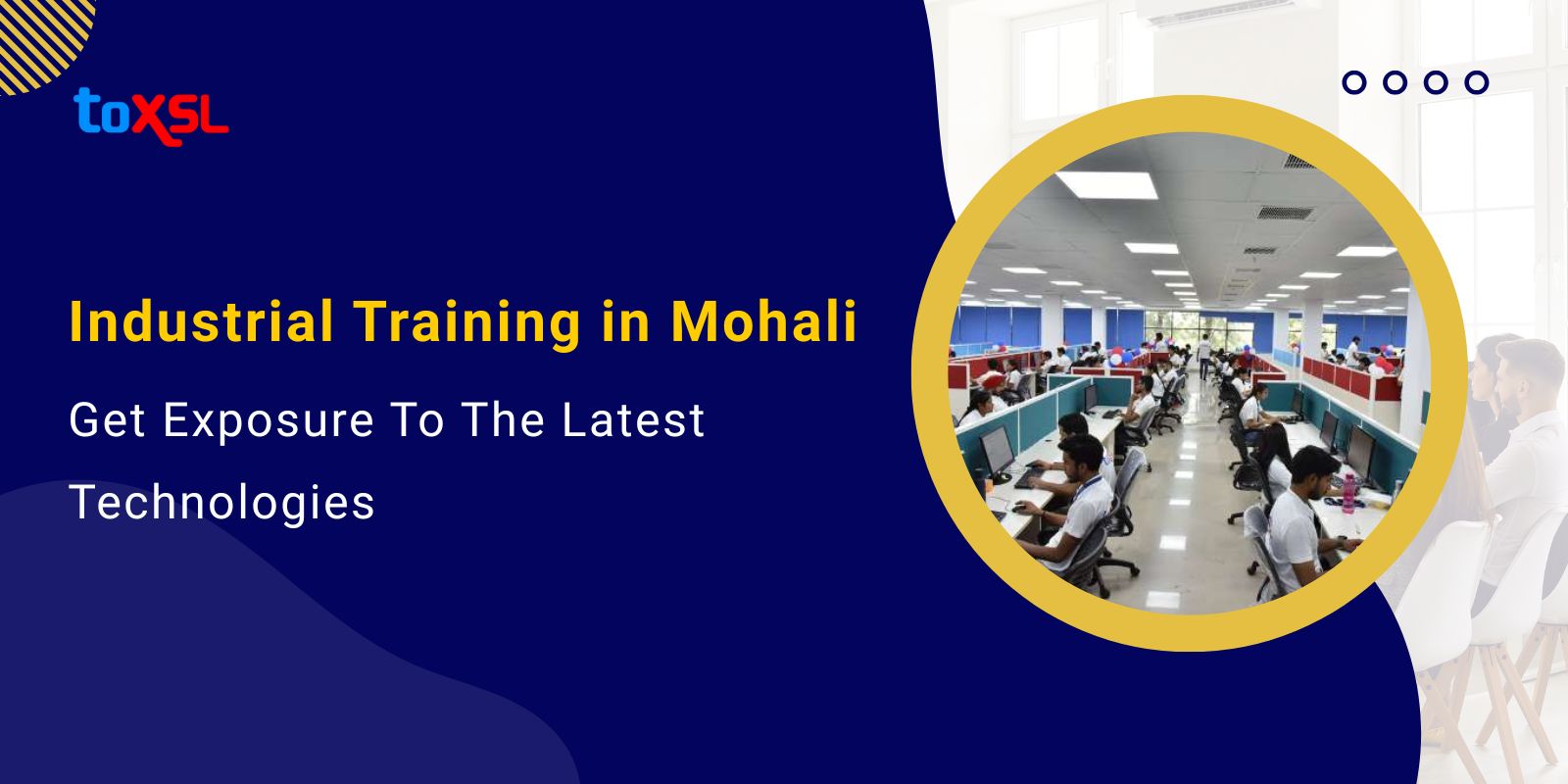
Pursuing engineering as a career and getting your dream job is what every fresher wish. Getting a job in this highly competitive world is not an easy task. If you are just a college pass out and looking for a job, then Industrial training and programs from a reputed organization can help.
The Industrial Training in Mohali is one of the most critical aspects that help in the growth of engineering students. It boosts up their industrial experience and exposes them to the corporate environment. The college passes out students have more theoretical knowledge to polish their skills and prepare them for the future challenges training plays a crucial role.
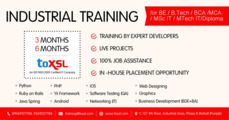
ToXSL is one of the leading organizations that deals with the latest technologies, have a global presence, and offers 3months/6 months of industrial training for different and latest technologies.
Key Takeaways
- Industrial training bridges the gap between academic knowledge and real-world skills.
- ToXSL Technologies offers 3/6-month training programs in latest technologies with placement support.
- Hands-on experience, exposure to corporate culture, and practical learning boost employability.
- Courses include Python, Digital Marketing, Flutter, Testing, and more, guided by industry experts.
What are the benefits of Industrial Training?
The 3/6 months period plays a crucial role in the life of students as they pass out from college. It helps in their skill enhancement and gains the practical knowledge to perform tasks while working for an organization. Here are some of the most important benefits that our Industrial training offers:
1. Hands-On Experience: One of the most significant advantages of industrial training is the opportunity to work in a real-world environment. While academic learning provides important theoretical knowledge, industrial exposure allows you to work on actual projects, use industry-standard tools, and understand how different processes work in practice. This hands-on experience helps you grasp concepts better and gives you a deeper understanding of your field.
2. Boosts Employability: Employers today are not only looking for academic excellence but also for candidates with practical experience. Industrial training provides you with the chance to demonstrate your skills and knowledge in a professional setting. Having this kind of experience on your resume makes you more attractive to potential employers, giving you a distinct advantage over candidates who have only theoretical knowledge.
3. Improves Soft Skills: In addition to technical expertise, industrial training also helps you develop essential soft skills like teamwork, communication, time management, and problem-solving. You’ll learn how to interact with colleagues, present your ideas, and collaborate effectively within a team. These interpersonal skills are often just as important as technical skills in securing a job and succeeding in your career.
4. Networking Opportunities: Industrial training offers a unique chance to build a network of professional contacts. You'll interact with experts, supervisors, and colleagues who can provide career guidance, mentorship, and potentially even job opportunities in the future. These connections can be invaluable when you start looking for jobs, as many positions are often filled through referrals and networking.
5. Better Understanding of Industry Standards: Every industry has specific standards and practices that need to be followed. During your training, you’ll get firsthand experience with these standards—whether it’s safety protocols, quality control measures, or regulatory compliance. Understanding these industry norms ensures that you’re well-prepared to enter the workforce and align with professional expectations from day one.
6. Increases Confidence: As you gain real-world experience and successfully complete tasks, your confidence in your abilities will grow. You'll feel more comfortable navigating challenges, making decisions, and contributing to projects. This newfound confidence can help you perform better in job interviews and make the transition from academic life to professional work much smoother.
7. Exposure to Latest Technologies: Industries are constantly evolving, with new tools, software, and technologies being introduced regularly. By participating in industrial training, you get to work with the latest equipment and systems used in your field. This exposure keeps you updated on the current trends and developments, ensuring that you remain relevant and adaptable to the changing demands of the job market.
8. Develops Problem-Solving Skills: In an industrial setting, you often have to face real problems that require creative and quick solutions. Unlike academic projects, where conditions are controlled, challenges in the workplace are unpredictable. This dynamic environment sharpens your problem-solving skills and helps you think critically, making you more effective at tackling issues in your future career.
9. Prepares You for Job Expectations: The transition from student life to full-time employment can be challenging. Industrial training helps ease this transition by exposing you to the work culture and expectations you’ll face in a real job. From understanding deadlines to dealing with workplace dynamics, the experience prepares you to handle the pressures and responsibilities that come with any profession.
10. Clarifies Career Goals: Industrial training also provides valuable insights into the day-to-day realities of working in your chosen field. You’ll get a clearer picture of the roles, responsibilities, and opportunities within the industry. This experience helps you decide whether this path is right for you or if you want to explore other career options. It can also inspire you to specialize in certain areas or develop new interests based on your exposure during the training.
Why is Industrial Training the need for an hour?
The competition for the job market is higher and, to give your theoretical knowledge a practical edge, the training has become the need of the hour. Organizations prefer candidates who are skilled not only with theoretical knowledge but also have strong hands-on practicals. It creates a perspective among the students and learners so that they can visualize what they have to perform and learn about state-of-the-art technology. Students get a broad scope for job opportunities when they are practically trained.
Training Courses Offered by ToXSL Technologies
ToXSL offers world-class best industrial training in chandigarh and Mohali in different industry domains. After the internship, there is placement assistance. We have been helping the aspirants to find the right place where they can work. After the session completion, we offer certificates to the students. Here are the areas we offer training for:
1. Internet of Things (IoT): This course focuses on the world of IoT, where everyday objects are interconnected via the internet. Students learn how to design and develop smart devices that communicate with each other, automate tasks, and improve efficiencies. Topics typically covered include sensors, actuators, cloud platforms, and communication protocols.
2. Artificial Intelligence (AI): The AI course introduces students to the concepts of machine learning, neural networks, natural language processing, and deep learning. The course covers key AI algorithms and applications such as voice assistants, image recognition, recommendation systems, and more. Students will learn how to build intelligent systems that can simulate human cognition and make decisions.
3. Full Stack Development: This course is ideal for those looking to become versatile developers. Full Stack Development involves both front-end (what users see) and back-end (server-side, databases) web development. Students learn technologies such as HTML, CSS, JavaScript, React, Node.js, and various backend technologies like PHP, Python, or Java. The course ensures students can build end-to-end web applications from scratch.
4. Business Development: Business development training focuses on strategies and techniques for driving business growth. Students learn market research, client relationship management, sales strategies, negotiation skills, and how to identify and develop new business opportunities. This course is ideal for aspiring entrepreneurs or professionals looking to build their career in business management.
5. Linux / Networking Administrator: In this course, students learn how to work with Linux operating systems and how to manage network systems. Topics include server setup and administration, network protocols, security management, and troubleshooting. This course is crucial for individuals pursuing a career in IT infrastructure, server management, or network administration.
6. Web & Graphics Designing: This course combines the art of designing beautiful websites with graphic design principles. Students learn tools like Adobe Photoshop, Illustrator, and web design software, focusing on user experience (UX) and user interface (UI) design. The course covers web layout, color theory, typography, and responsive design, enabling students to create visually appealing and functional web designs.
7. Node.js Development: The Node.js Development course teaches students how to develop high-performance, scalable web applications using JavaScript and the Node.js runtime. Students learn how to build server-side applications, handle databases, manage APIs, and work with various libraries and frameworks to optimize web development processes.
8. Software Testing: Software testing is a critical part of the software development life cycle. This course teaches students how to test software to ensure it’s functional, secure, and performs optimally. Topics include manual testing, automated testing, unit testing, integration testing, performance testing, and tools like Selenium and JUnit.
9. DevOps: DevOps is a set of practices that combines software development (Dev) and IT operations (Ops) to shorten the development lifecycle and provide continuous delivery. Students learn about automation, continuous integration and delivery (CI/CD), version control systems like Git, containerization (Docker), and cloud platforms like AWS and Azure, making them capable of streamlining software development and deployment processes.
10. React JS Development: This course focuses on developing modern, interactive, and dynamic web applications using React JS. Students learn about React components, hooks, state management, and how to build single-page applications (SPAs). The course covers concepts like JSX, props, component lifecycle, and React Router, enabling students to develop fast and efficient user interfaces.
11. React Native App Development: React Native allows developers to build mobile applications for both Android and iOS platforms using JavaScript. This course teaches students how to create cross-platform mobile apps with a single codebase. Students will learn to work with components, navigation, APIs, and native modules to create apps that feel native to each platform.
12. Python/Django Development: This course focuses on Python programming and the Django web framework. Students learn to write clean, efficient Python code and develop robust web applications using Django. Topics covered include model-view-controller (MVC) architecture, database management, REST APIs, and deploying Django applications on cloud platforms.
13. iOS Development: The iOS Development course covers everything you need to build apps for Apple's mobile devices, including iPhones and iPads. Students learn to work with Swift, Apple’s primary programming language, as well as the Xcode environment. The course covers iOS app design, UI elements, data storage, APIs, and publishing apps on the App Store.
14. Android Development: This course teaches students how to build mobile applications for Android devices using Java and Kotlin. Topics include Android Studio, user interface design, databases, APIs, and app performance optimization. Students will develop a range of apps and learn the best practices for developing Android mobile apps from start to finish.
15. Digital Marketing: Digital marketing is essential for businesses to reach their audience in today’s online world. In this course, students learn about various digital marketing strategies, including SEO (Search Engine Optimization), SEM (Search Engine Marketing), social media marketing, content marketing, email marketing, and analytics tools. This course is perfect for anyone looking to pursue a career in online marketing or e-commerce.
16. Flutter Mobile App Development: Flutter is an open-source UI toolkit for building natively compiled applications for mobile, web, and desktop from a single codebase. This course teaches students how to build cross-platform apps for both Android and iOS using Dart programming language and the Flutter framework. Topics include widget building, navigation, data management, and testing.
17. PHP/Yii/Laravel/WordPress Development: This course focuses on web development using PHP, one of the most popular server-side scripting languages. Students also learn frameworks like Yii and Laravel, which help streamline the development process. Additionally, students will learn how to build websites using WordPress, one of the most widely used content management systems (CMS). The course covers front-end and back-end integration, web security, and best practices in PHP development.
Winding-up!
Learning is a lifelong journey and, at ToXSL, we help students develop a bright future by offering IT Training in Mohali on different technologies and enhance their skills. We help them tackle the most complex situations and set them according to the business operations and work ethics.
Be a part of ToXSL and keep yourself updated in the technical field to overcome all the challenges you may face in the corporate world. Join our Industrial Training today!
FAQ's
1. What is Industrial Training and why is it important for engineering students?
Industrial training bridges the gap between academic knowledge and real-world industry practices. It equips students with practical experience, helping them understand how theoretical concepts are applied in real scenarios, making them job-ready.
2. What training programs does ToXSL offer as part of its Industrial Training?
ToXSL offers training in Automation Testing, Web & Graphic Designing, Flutter, React Native, Python Development, Business Development, and Digital Marketing. All trainings are designed with live projects and current industry practices.
3. What are the eligibility criteria for joining the training?
Students pursuing or having completed B.Tech, BCA, MCA, Diploma, or other IT-related courses are eligible to join. The training is open to freshers and graduates looking to enhance their technical skills and gain practical experience before entering the corporate world. Basic knowledge of computers and a willingness to learn are essential.
4. How does industrial training help in career growth?
Industrial training gives students real-world exposure, sharpens their technical skills, and improves their understanding of business environments. It boosts their confidence, enhances their resumes, and opens doors to more job opportunities. Many recruiters prefer candidates with practical knowledge, and industrial training ensures you are prepared to meet industry demands.
5. What makes ToXSL different from other training institutes in Mohali?
ToXSL stands out with its focus on 100% practical training, experienced mentors, live project exposure, and placement support. It provides training on the latest technologies in a corporate environment, helping students experience real industry work. Their structured modules and personalized guidance make learning more impactful and industry-aligned.