




























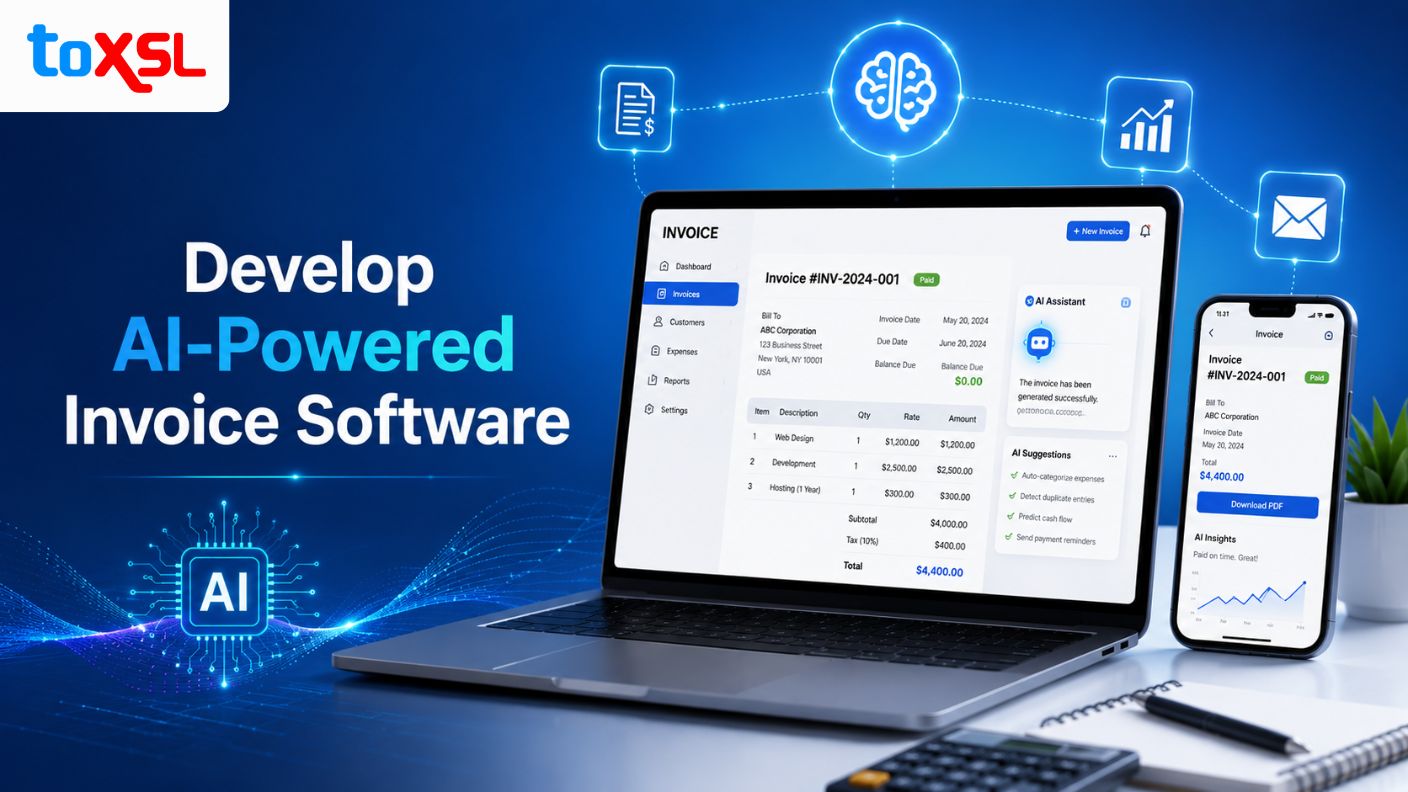
In today's fast-paced digital economy, businesses are continuously looking for ways to streamline operations, reduce administrative workloads, and improve financial accuracy. Traditional invoicing methods often involve repetitive manual tasks, data entry errors, delayed payments, and inefficient invoice tracking. As organizations scale, these challenges become even more significant, impacting cash flow and overall productivity.
This is where AI-powered invoice software is transforming the billing landscape. By leveraging artificial intelligence, machine learning, and automation technologies, modern invoicing systems can generate invoices, process payments, track expenses, detect anomalies, and provide intelligent financial insights with minimal human intervention.
Whether you are a startup, a growing enterprise, or a company searching for reliable invoicing software for small business, AI-driven solutions offer unprecedented efficiency and accuracy. From automating invoice creation to predicting payment delays, businesses can now manage their entire billing cycle more effectively.
Key Takeaways
- AI invoice software automates billing workflows, reducing manual effort and improving operational efficiency.
- Intelligent invoice processing minimizes errors, ensuring greater accuracy in financial transactions and records.
- Automated payment tracking and reminders help businesses accelerate collections and improve cash flow.
- Development costs vary based on AI capabilities, integrations, customization requirements, and security features.
- Advanced analytics and predictive insights enable smarter financial planning and better business decisions.
- Investing in AI invoice software provides scalability, security, and a competitive advantage for growing businesses.
How AI is Transforming Modern Billing and Invoicing Operations
Artificial intelligence is revolutionizing how businesses handle invoicing and billing by automating repetitive tasks, minimizing errors, and improving financial visibility. AI-powered solutions help organizations streamline workflows, accelerate payment cycles, and deliver a seamless billing experience.
1. Automated Invoice Generation
AI can automatically generate invoices by extracting data from contracts, purchase orders, and transaction records, reducing manual effort and ensuring consistency across billing operations.
Benefits include:
- Eliminates manual invoice creation
- Improves billing accuracy
- Reduces administrative workload
- Speeds up invoice processing
2. Intelligent Data Extraction
AI-powered invoice software uses Optical Character Recognition (OCR) and machine learning to capture and process invoice data from multiple formats without manual entry.
Benefits include:
- Faster document processing
- Accurate data extraction
- Reduced human errors
- Improved workflow efficiency
3. Automated Payment Tracking
AI continuously monitors invoice statuses and payment activities, helping businesses track overdue payments and maintain healthy cash flow.
Benefits include:
- Real-time payment monitoring
- Faster collections
- Reduced payment delays
- Better financial visibility
4. Smart Fraud Detection
AI algorithms identify unusual billing patterns, duplicate invoices, and suspicious transactions, helping organizations strengthen financial security.
Benefits include:
- Detects invoice fraud
- Prevents duplicate payments
- Improves compliance
- Enhances financial security
5. Predictive Cash Flow Management
AI analyzes historical payment data and customer behavior to forecast future cash flow trends and potential payment risks.
Benefits include:
- Better financial planning
- Improved budgeting
- Reduced cash flow uncertainty
- Enhanced decision-making
6. Automated Invoice Approval Workflows
AI-powered systems automatically route invoices to the appropriate stakeholders for review and approval based on predefined rules.
Benefits include:
- Faster approvals
- Reduced bottlenecks
- Improved accountability
- Streamlined workflows
7. Custom Customer Billing Experience
AI enables businesses to create customized billing schedules, payment reminders, and invoice formats based on customer preferences.
Benefits include:
- Improved customer satisfaction
- Better payment compliance
- Enhanced communication
- Stronger client relationships
AI-Powered Invoice Software Pricing and Cost Factors
The cost of implementing an AI invoice software solution depends on various factors, including features, integrations, customization requirements, deployment model, and business size.
Estimated Development Cost
Software Type | Estimated Cost |
Basic AI Invoice Software | $10,000 - $25,000 |
Small Business Invoice Software | $25,000 - $50,000 |
Mid-Level Billing Software | $50,000 - $100,000 |
Enterprise Invoice Management System | $100,000 - $250,000+ |
Advanced AI-Powered Invoice Platform | $250,000 - $500,000+ |
Factors Affecting AI Invoice Software Development Cost
The cost of developing AI-powered invoice software depends on several technical, functional, and business-related factors. Features, integrations, security requirements, and customization levels significantly influence the overall development budget. Understanding these cost drivers helps businesses plan investments effectively and choose the right solution for their operational needs.
1. Artificial Intelligence Complexity
The sophistication of AI capabilities plays a major role in determining development costs. Advanced features such as predictive analytics, intelligent invoice processing, fraud detection, and automated decision-making require extensive model training, testing, and optimization, which increases overall development effort and expenses.
2. Feature Set and Functional Requirements
The number and complexity of features directly affect development time and resource allocation. Basic invoicing functionality costs less, while advanced capabilities such as workflow automation, payment tracking, reporting dashboards, and multi-user management require additional development and testing efforts.
3. Third-Party Integrations
Integrating the invoice software with external systems such as ERP platforms, accounting software, CRM solutions, and payment gateways increases project complexity. The number of integrations and compatibility requirements can significantly impact both development timelines and implementation costs.
4. User Interface Design
A well-designed user interface improves usability and customer satisfaction but requires additional design and development resources. Custom dashboards, interactive reports, mobile responsiveness, and personalized user experiences contribute to higher software development costs.
5. Cloud Infrastructure
The choice of cloud infrastructure influences both development and long-term operational costs. Factors such as server capacity, data storage, scalability requirements, backup systems, and cloud security measures affect the overall investment needed for deployment.
6. Security and Compliance Standards
Financial software must comply with industry regulations and data protection standards. Implementing advanced security features such as encryption, access controls, audit trails, and compliance frameworks requires specialized expertise, increasing the development budget.
7. Business-Specific Features
Organizations often require custom workflows, industry-specific billing processes, and tailored reporting capabilities. The more customized the software becomes, the greater the development effort required, resulting in higher implementation and maintenance costs.
8. Mobile Application Development
If businesses require dedicated mobile applications for invoice management, development costs increase due to additional design, coding, testing, and platform-specific optimization for Android and iOS devices.
9. Development Team Location
The geographical location and experience level of the development team significantly influence project costs. Highly skilled AI engineers, software architects, and financial technology specialists typically command higher rates but deliver better-quality solutions.
10. Ongoing Software Updates
Post-launch maintenance is an important cost consideration. Regular updates, feature enhancements, bug fixes, security patches, and AI model improvements ensure the software remains efficient, secure, and aligned with evolving business requirements.
How AI-Powered Invoice Software Works
AI-powered invoice software automates the entire billing lifecycle by combining artificial intelligence, machine learning, and workflow automation. It captures invoice data, validates information, processes approvals, tracks payments, and generates valuable financial insights. This streamlined approach reduces manual effort, improves accuracy, and enhances overall financial management efficiency.
1. Data Collection and Invoice Capture
The process begins by collecting invoice-related information from multiple sources such as purchase orders, accounting systems, emails, contracts, and ERP platforms. AI automatically gathers and organizes this data, ensuring all billing information is centralized and ready for processing.
Key Functions:
- Captures data from multiple sources
- Imports invoices automatically
- Organizes billing information
- Reduces manual data collection
2. Intelligent Data Extraction
Using OCR (Optical Character Recognition) and machine learning algorithms, the software extracts important invoice details including vendor information, invoice numbers, tax amounts, due dates, and payment terms. This eliminates manual data entry and significantly improves processing speed.
Key Functions:
- Extracts invoice information automatically
- Reads multiple document formats
- Reduces data entry errors
- Improves invoice processing speed
3. Invoice Validation and Verification
AI verifies invoice details by comparing them against purchase orders, contracts, and payment records. The system identifies discrepancies, duplicate invoices, incorrect calculations, and missing information before invoices move to the next stage.
Key Functions:
- Detects duplicate invoices
- Validates billing information
- Verifies payment details
- Ensures compliance accuracy
4. Automated Approval Workflow
Once validated, invoices are routed automatically to the appropriate managers or departments based on predefined approval rules. This eliminates delays associated with manual approvals and improves accountability throughout the invoicing process.
Key Functions:
- Automates approval routing
- Reduces approval delays
- Improves workflow transparency
- Increases process efficiency
5. Payment Processing and Tracking
After approval, the software initiates payment workflows and continuously tracks payment statuses. AI-powered monitoring helps businesses identify overdue invoices, automate reminders, and ensure timely collections for improved cash flow management.
Key Functions:
- Tracks invoice payments
- Sends automated reminders
- Monitors payment status
- Improves collection efficiency
6. Real-Time Analytics and Reporting
AI-powered invoice software generates comprehensive reports and dashboards that provide valuable insights into billing performance, outstanding invoices, revenue trends, and customer payment behavior. These insights support informed financial planning and decision-making.
Key Functions:
- Generates financial reports
- Tracks revenue performance
- Monitors payment trends
- Supports business decisions
Top Reasons Businesses Should Invest in AI-Powered Invoice Software
As businesses continue to embrace digital transformation, AI-powered invoice software has become a valuable investment for improving financial operations. The ability to streamline invoice management while improving customer payment experiences makes AI-powered billing systems an essential tool for modern businesses.
1. Increased Operational Efficiency
AI-powered invoice software automates time-consuming invoicing processes, allowing finance teams to focus on strategic activities rather than manual data entry and invoice management. This significantly improves overall productivity and operational performance.
2. Enhanced Accuracy and Reduced Errors
Manual invoicing often leads to calculation mistakes, duplicate invoices, and incorrect billing information. AI eliminates these issues by validating data, ensuring consistency, and maintaining accurate financial records throughout the invoicing process.
3. Faster Payment Collection
Automated invoice generation, smart payment reminders, and real-time tracking help businesses reduce payment delays. Faster collections improve cash flow and ensure a more predictable revenue stream for business operations.
4. Better Cash Flow Visibility
A billing software provides detailed analytics and real-time reporting that enable businesses to monitor outstanding invoices, payment trends, and revenue performance. This visibility supports informed financial planning and decision-making.
5. Improved Customer Experience
Modern invoice software delivers personalized billing experiences through customized invoices, flexible payment options, and automated communication. This enhances customer satisfaction while strengthening long-term business relationships.
6. Cost and Resource Optimization
By reducing manual intervention and automating repetitive workflows, businesses can lower administrative costs, minimize operational inefficiencies, and allocate resources more effectively across departments.
7. Scalability for Growing Businesses
As invoice volumes increase, AI-powered systems can handle larger workloads without compromising performance. This allows businesses to expand operations while maintaining efficient and organized billing processes.
The Future of Billing and Invoicing
The future of AI powered invoice software development is becoming increasingly intelligent, automated, and data-driven. Emerging technologies such as artificial intelligence, machine learning, robotic process automation (RPA), blockchain, and predictive analytics are reshaping financial operations across industries. The future AI invoice software solutions will offer:
- Fully autonomous invoicing workflows
- Advanced fraud prevention systems
- Real-time payment intelligence
- Predictive financial planning
- Voice-enabled invoice management
- Blockchain-powered transaction verification
- Hyper-personalized billing experiences
As businesses continue embracing digital transformation, AI-driven invoicing solutions will become an essential component of modern financial management strategies. Organizations that invest early in intelligent billing technologies will benefit from greater efficiency, stronger cash flow management, improved customer satisfaction, and enhanced competitive positioning.
Conclusion
AI-powered invoice software is redefining how businesses manage billing, invoicing, and financial operations. By automating invoice generation, payment tracking, approval workflows, and financial reporting, AI significantly improves efficiency while reducing operational costs and human errors.
At ToXSL Technologies, we specialize in AI-powered software solutions tailored to meet diverse business requirements. As a trusted AI invoice software development company, we help organizations build secure, scalable, and intelligent invoicing solutions that streamline operations, enhance financial visibility, and support long-term business success.
Frequently Asked Questions
1. How can AI-powered invoice software improve business cash flow management?
AI-powered invoice software helps businesses streamline billing operations, automate payment follow-ups, and gain real-time visibility into outstanding invoices. This allows organizations to improve collections and maintain a healthier cash flow.
- Automates invoice generation and delivery
- Sends timely payment reminders
- Tracks outstanding invoices in real time
- Improves cash flow forecasting
2. What ROI can businesses expect from investing in AI invoice software?
Businesses can achieve substantial returns by reducing manual workloads, minimizing billing errors, and accelerating payment cycles. AI-driven automation increases operational efficiency while lowering administrative costs.
- Reduces operational expenses
- Minimizes invoicing errors
- Accelerates revenue collection
- Enhances overall profitability
3. How does AI-powered invoice software support business scalability?
As businesses grow, managing increasing invoice volumes becomes challenging. AI-powered solutions automate workflows and handle large transaction volumes efficiently without requiring additional administrative resources.
- Supports higher invoice volumes
- Automates repetitive billing tasks
- Enables seamless business expansion
- Improves operational flexibility
4. What factors should businesses consider when choosing an AI invoice software development company?
Selecting the right development partner is critical to ensuring long-term success. Businesses should assess technical expertise, customization capabilities, security standards, and ongoing support services.
- Experience in AI software development
- Industry-specific expertise
- Customization and scalability options
- Strong security and compliance practices
5. Can AI-powered invoice software integrate with existing ERP and accounting systems?
Modern AI invoice software is designed to integrate seamlessly with various business applications, creating a centralized and efficient financial management ecosystem.
- Connects with ERP platforms
- Integrates with accounting software
- Supports CRM system connectivity
- Enables payment gateway integration