




























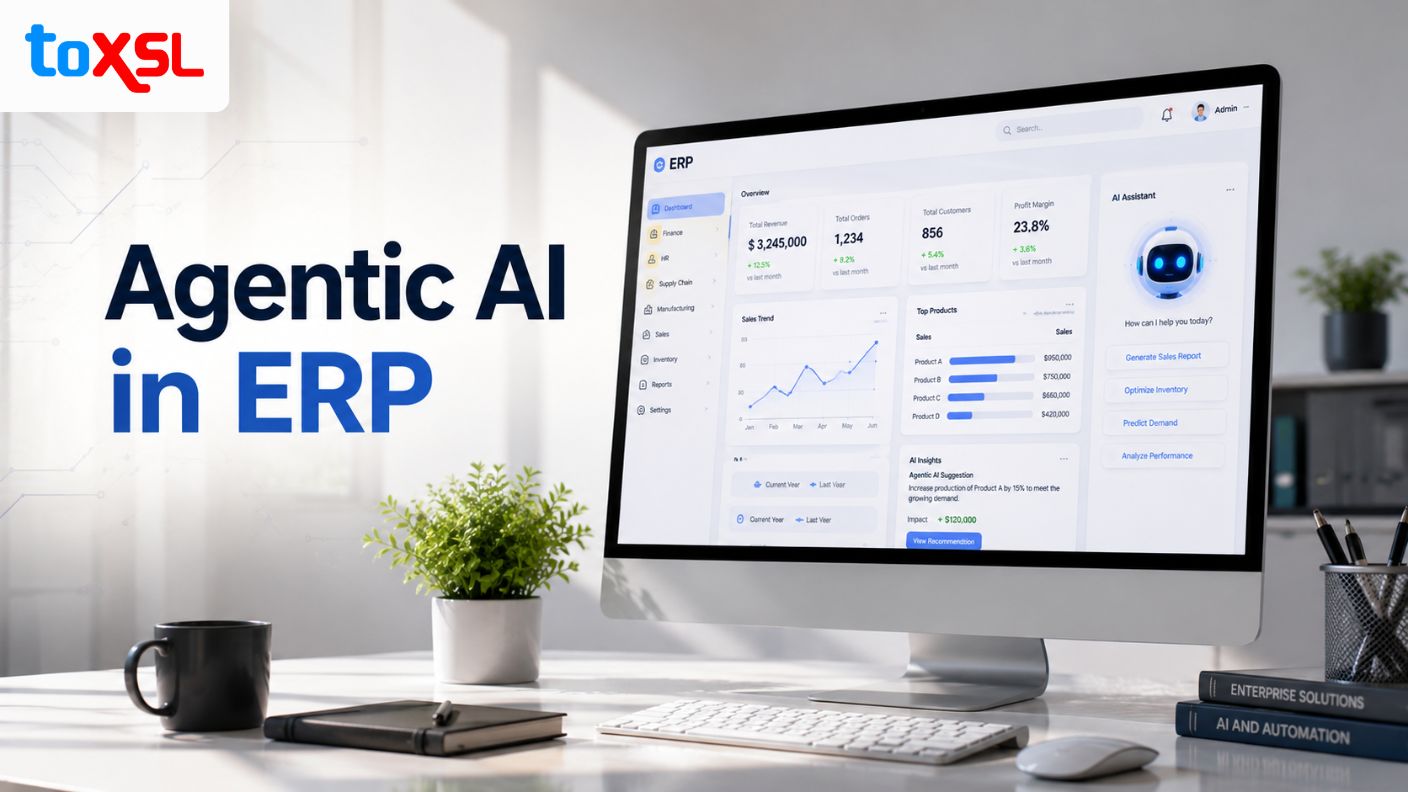
Enterprise Resource Planning (ERP) systems have long served as the operational backbone of modern businesses, helping organizations manage finance, procurement, supply chains, human resources, manufacturing, customer relationships, and more through a centralized platform. While traditional ERP solutions have evolved with cloud computing, automation, and predictive analytics, the growing complexity of business operations now demands systems that can think beyond predefined workflows.
This is where Agentic AI is transforming the ERP landscape. Unlike conventional AI models that simply analyze data or automate repetitive tasks, Agentic AI can understand goals, make informed decisions, plan multiple steps, execute actions, and continuously adapt based on changing business conditions. It functions as an intelligent digital teammate rather than just another automation tool.
From proactively resolving supply chain disruptions to optimizing inventory levels, accelerating financial close processes, and improving workforce planning, Agentic AI enables ERP systems to become more autonomous, responsive, and business-driven. It reduces manual intervention while helping enterprises respond faster to market changes with greater confidence.
In this guide, we will explore what Agentic AI is, how it works within ERP systems, its business benefits, real-world applications, implementation best practices, and why it represents the future of enterprise decision-making.
Key Takeaways
- Agentic AI goes beyond automation by making autonomous, goal-oriented decisions that reduce improve operational efficiency.
- Integrating Agentic AI with ERP systems enables real-time decision-making, smarter workflows, and faster responses to changing business conditions.
- Departments like finance, supply chain, HR, procurement, and customer service can benefit from AI agents that streamline processes and optimize performance.
- Businesses gain measurable advantages, including improved productivity, reduced operational costs, enhanced accuracy, and better resource utilization.
- Successful implementation requires high-quality data, strong governance, and seamless integration with existing ERP platforms to maximize AI performance.
- As ERP platforms continue to evolve, Agentic AI is set to become a strategic capability, helping enterprises become more agile and data-driven.
Beyond Automation: Understanding How Agentic AI Redefines Enterprise Intelligence
Traditional Artificial Intelligence focuses on executing predefined tasks, identifying patterns, and generating recommendations based on historical data. Agentic AI introduces a fundamentally different approach by enabling intelligent software agents that can reason, plan, make decisions, execute actions, monitor outcomes, and continuously improve without constant human intervention. Instead of waiting for commands, these AI agents work toward business objectives by evaluating multiple scenarios and adapting strategies in real time.
Within ERP environments, Agentic AI transforms business operations from reactive workflows into proactive decision-making systems capable of managing complex enterprise processes. This shift allows organizations to automate not only repetitive activities but also high-value operational decisions, enabling faster execution, improved accuracy, reduced operational costs, and greater business agility across departments.
How Intelligent AI Agents Power Next-Generation ERP Systems
Modern ERP platforms become significantly more powerful when autonomous AI agents are embedded across business processes. These agents continuously analyze enterprise data, collaborate across departments, execute workflows, and optimize decisions with minimal manual intervention, helping organizations improve operational efficiency while responding intelligently to changing business environments.
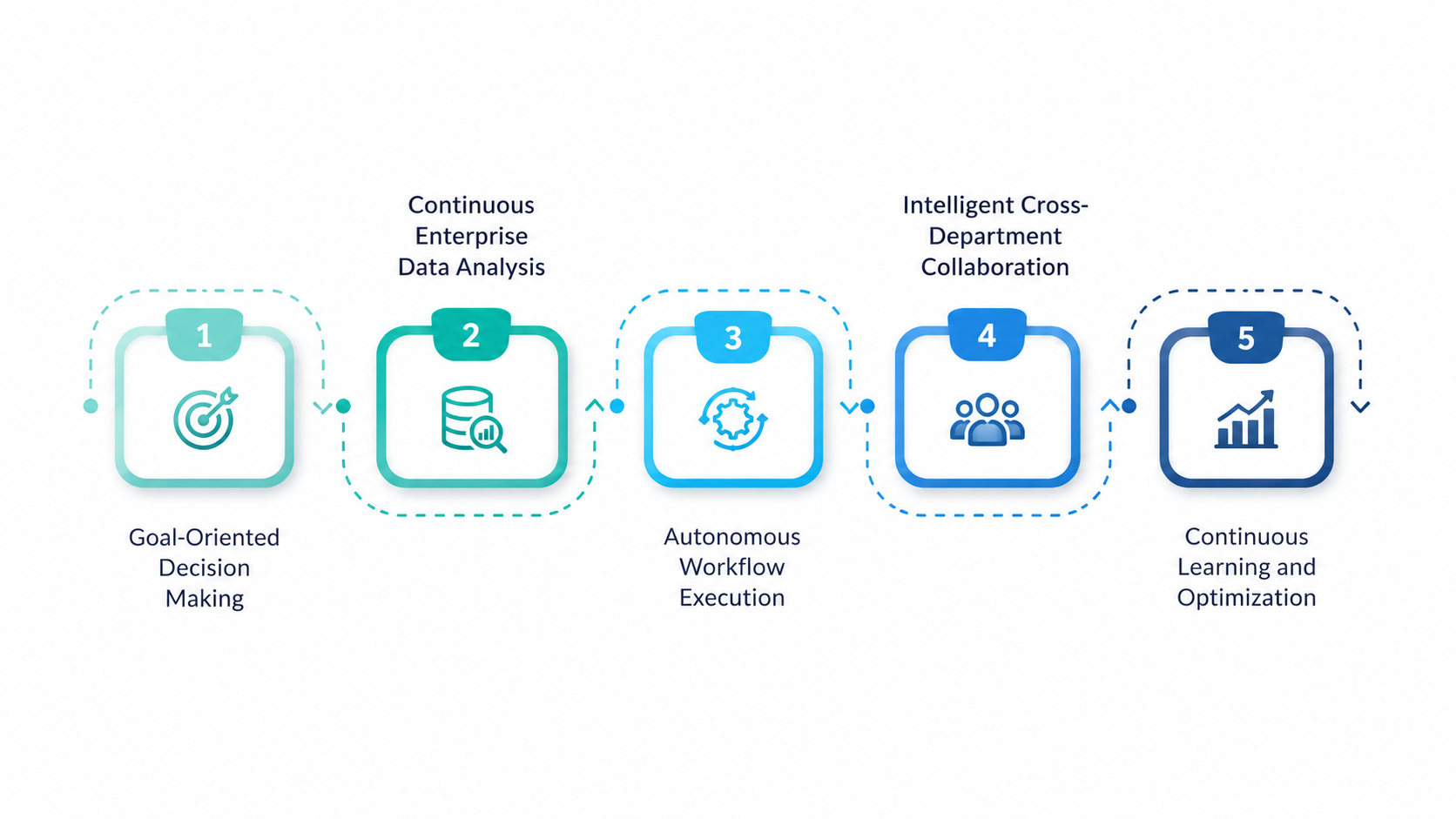
1. Goal-Oriented Decision Making
Unlike traditional automation that follows fixed rules, Agentic AI begins with a business objective and determines the most effective sequence of actions to achieve desired outcomes while adapting to changing conditions.
- Understands business goals instead of simple commands.
- Evaluates multiple execution strategies.
- Adjusts plans dynamically as conditions change.
- Minimizes manual decision-making.
- Continuously improves future recommendations.
2. Continuous Enterprise Data Analysis
AI agents constantly monitor structured and unstructured ERP data, identifying patterns, anomalies, opportunities, and risks that may otherwise go unnoticed through conventional reporting methods.
- Monitors operational data in real time.
- Detects unusual business patterns.
- Identifies potential operational risks.
- Generates proactive business insights.
- Supports faster executive decisions.
3. Autonomous Workflow Execution
After analyzing available information, Agentic AI automatically initiates, coordinates, and completes business workflows while ensuring compliance with organizational policies and approval structures.
- Executes multi-step workflows automatically.
- Reduces manual processing delays.
- Coordinates activities across departments.
- Maintains workflow consistency.
- Improves operational speed.
4. Intelligent Cross-Department Collaboration
Modern ERP systems connect with financial software, procurement, HR, manufacturing, sales, and logistics. Agentic AI enables these functions to collaborate intelligently by sharing context, predicting dependencies, and coordinating actions.
- Connects enterprise departments seamlessly.
- Shares relevant operational context.
- Predicts downstream business impacts.
- Eliminates information silos.
- Improves organizational coordination.
5. Continuous Learning and Optimization
Agentic AI evaluates previous outcomes, learns from business performance, and refines future decisions. This enables ERP systems to become increasingly intelligent over time without requiring extensive manual reconfiguration.
- Learns from operational outcomes.
- Refines future recommendations.
- Adapts to evolving business needs.
- Improves forecasting accuracy.
- Enhances long-term ERP performance.
How Agentic AI Works Within Modern ERP Systems
Agentic AI enhances modern ERP systems by enabling autonomous decision-making, real-time analysis, and intelligent workflow execution. Instead of simply automating repetitive tasks, AI agents understand business objectives, coordinate across departments, adapt to changing conditions, and continuously optimize enterprise operations with minimal human intervention.
1. Goal-Driven Decision Intelligence
Unlike traditional automation that follows predefined rules, Agentic AI starts with a business objective and determines the best course of action to achieve it. It evaluates multiple scenarios, prioritizes tasks, and dynamically adjusts decisions based on changing operational conditions, ensuring ERP processes remain efficient and aligned with organizational goals.
2. Continuous Data Analysis and Context Awareness
Agentic AI continuously analyzes structured and unstructured data across ERP modules, identifying trends, anomalies, and operational risks. By understanding business context rather than isolated datasets, it delivers accurate recommendations and proactive insights that support faster, data-driven enterprise decisions.
3. Autonomous Workflow Execution
After identifying the optimal course of action, Agentic AI independently executes business workflows while complying with organizational policies and approval processes. It coordinates multiple activities across departments, reducing manual intervention and improving operational efficiency without compromising governance.
4. Cross-Functional Collaboration Across ERP Modules
Modern enterprises rely on interconnected business functions. Agentic AI enables finance, procurement, HR, manufacturing, sales, and supply chain teams to collaborate intelligently by sharing operational insights, predicting dependencies, and synchronizing activities across the ERP ecosystem.
5. Continuous Learning and Process Optimization
Agentic AI continuously evaluates business outcomes, learns from historical performance, and refines future recommendations. As enterprise data grows, AI agents become increasingly accurate, enabling ERP systems to improve operational efficiency, forecasting accuracy, and strategic decision-making over time.
Top Business Benefits of Agentic AI in Enterprise ERP Systems
Agentic AI empowers ERP systems to move beyond automation by enabling intelligent decision-making, proactive problem-solving, and continuous optimization. By reducing manual effort and improving operational agility, it helps enterprises increase productivity, lower costs, enhance collaboration, and make faster, data-driven decisions across every business function.
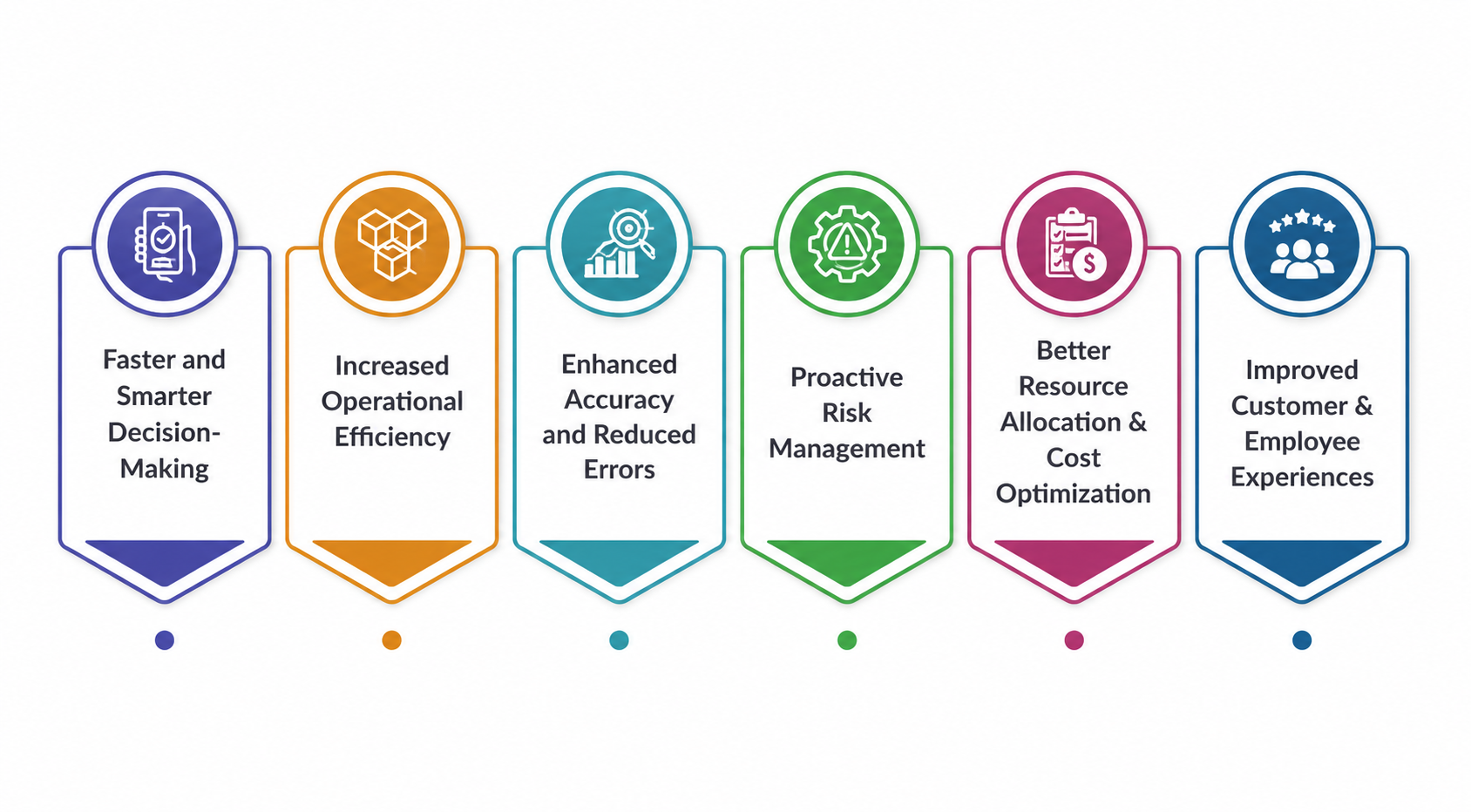
1. Faster and Smarter Decision-Making
Agentic AI analyzes enterprise data in real time, identifies patterns, evaluates multiple scenarios, and recommends or executes the best course of action. This enables business leaders to make faster, more informed decisions while minimizing delays caused by manual analysis and fragmented information.
2. Increased Operational Efficiency
By automating complex workflows and coordinating tasks across departments, Agentic AI eliminates repetitive manual processes and reduces operational bottlenecks. Employees spend less time on administrative work and more time focusing on strategic initiatives that drive business growth.
3. Enhanced Accuracy and Reduced Errors
Human errors in finance, inventory management, procurement, and reporting can significantly impact business performance. Agentic AI continuously validates data, monitors transactions, and detects inconsistencies, helping organizations improve data accuracy while reducing compliance and operational risks.
4. Proactive Risk Management
Rather than reacting to issues after they occur, Agentic AI continuously monitors business operations to identify potential risks early. It predicts disruptions, recommends preventive actions, and helps organizations maintain operational continuity in dynamic business environments.
5. Better Resource Allocation and Cost Optimization
Agentic AI helps organizations maximize resource utilization by analyzing workforce capacity, inventory levels, production schedules, and financial data. It recommends optimal resource allocation strategies that improve efficiency, reduce waste, and lower overall operational costs.
6. Improved Customer and Employee Experiences
Agentic AI enables ERP systems to respond faster to customer demands while simplifying internal processes for employees. Intelligent automation, personalized recommendations, and faster issue resolution contribute to higher customer satisfaction and a more productive workforce.
Real-World Applications of Agentic AI Across Enterprise ERP Functions
Agentic AI is transforming ERP software by enabling intelligent automation across core business functions. From finance and supply chain management to human resources and customer service, AI agents streamline operations, improve decision-making, and help organizations respond proactively to changing business conditions with greater speed and accuracy.
1. Finance and Accounting Automation
Agentic AI streamlines financial operations by automating invoice processing, expense management, financial reporting, and reconciliation. It continuously monitors transactions, identifies anomalies, and recommends corrective actions, enabling finance teams to improve accuracy while reducing manual workload.
2. Intelligent Supply Chain Management
Supply chain operations become more resilient with Agentic AI. It predicts demand fluctuations, identifies potential disruptions, optimizes inventory, and automatically recommends sourcing or logistics adjustments to maintain operational continuity.
Also Read: Agentic AI Development: The Next Frontier of Artificial Intelligence
3. Smarter Procurement and Vendor Management
Agentic AI assists procurement teams by evaluating supplier performance, monitoring contract compliance, identifying purchasing opportunities, and recommending the best sourcing strategies. This results in lower procurement costs and stronger supplier relationships.
4. Human Resources and Workforce Planning
HR teams can use Agentic AI to automate recruitment, employee onboarding, workforce scheduling, performance analysis, and talent planning. AI agents also provide workforce insights that improve employee engagement and resource allocation.
5. Customer Service and Sales Operations
Agentic AI enables ERP systems to deliver personalized customer experiences by analyzing customer interactions, predicting service needs, and automating support processes. Sales teams benefit from intelligent forecasting and opportunity prioritization.
The Future of ERP: How Agentic AI Will Drive Autonomous Enterprise Decision-Making
The future of ERP lies in intelligent systems capable of learning, reasoning, and acting independently. Partnering with the best AI development company will help businesses transform enterprise software into proactive business partners that continuously optimize operations, predict opportunities, and support strategic decision-making across every department.
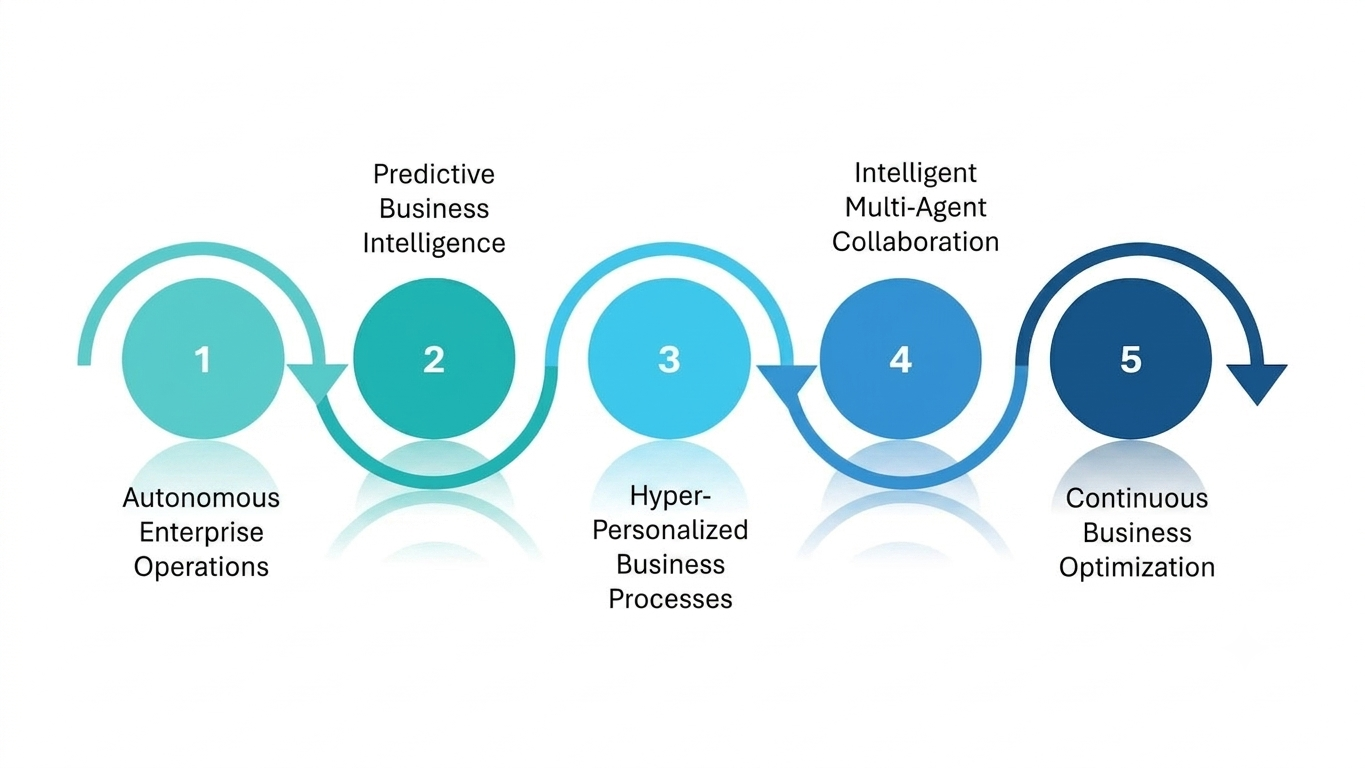
1. Autonomous Enterprise Operations
Future ERP systems will independently execute complex business processes, reducing manual intervention while improving operational speed, efficiency, and consistency across enterprise functions.
2. Predictive Business Intelligence
Agentic AI will move beyond historical reporting by continuously forecasting business trends, identifying emerging risks, and recommending proactive actions that improve long-term strategic planning.
3. Hyper-Personalized Business Processes
Future AI agents will adapt ERP workflows based on user roles, departmental objectives, and organizational priorities, delivering personalized recommendations and improving employee productivity.
4. Intelligent Multi-Agent Collaboration
Multiple AI agents will collaborate across finance, procurement, manufacturing, HR, and supply chain functions to coordinate enterprise-wide decisions without requiring constant human supervision.
5. Continuous Business Optimization
Agentic AI will continuously learn from enterprise performance, customer behavior, and market dynamics to refine business processes and improve operational efficiency over time.
Conclusion
Agentic AI represents the next evolution of enterprise resource planning by transforming ERP systems from transactional platforms into intelligent decision-making ecosystems. Unlike traditional automation, Agentic AI can analyze complex business scenarios, make informed decisions, execute workflows, and continuously improve through learning. As organizations face increasing operational complexity, partnering with an experienced ERP software development company to implement Agentic AI within ERP systems will become essential for improving efficiency, reducing costs, enhancing agility, and maintaining a competitive advantage.
At ToXSL Technologies, we help businesses embrace the future of enterprise technology through innovative AI-powered ERP solutions tailored to their unique operational needs. Our expertise in artificial intelligence, enterprise software development, cloud technologies, and digital transformation enables organizations to build intelligent ERP systems that drive smarter decisions, automate complex workflows, and accelerate sustainable business growth. Whether you're modernizing an existing ERP platform or developing an AI-first enterprise solution, our team is ready to help you unlock the full potential of Agentic AI. Contact us to learn more.
Frequently Asked Questions
1. How can Agentic AI improve enterprise ERP performance?
Agentic AI enhances ERP systems by automating complex workflows, optimizing business processes, and enabling real-time decision-making, helping enterprises improve efficiency, reduce operational costs, and respond faster to changing business demands.
- Automates enterprise workflows.
- Improves operational efficiency.
- Accelerates business decisions.
- Reduces operational costs.
2. Which industries can benefit the most from Agentic AI-powered ERP?
Industries such as manufacturing, healthcare, retail, logistics, finance, construction, and distribution can leverage Agentic AI to streamline operations, optimize resources, improve forecasting, and enhance customer experiences.
- Manufacturing.
- Healthcare.
- Retail and eCommerce.
- Financial services.
3. What should businesses consider before implementing Agentic AI in ERP?
Organizations should evaluate data quality, ERP readiness, integration capabilities, cybersecurity requirements, governance frameworks, and employee adoption strategies to ensure a successful Agentic AI implementation.
- Assess data quality.
- Review ERP infrastructure.
- Plan system integration.
- Strengthen security measures.
4. Can Agentic AI integrate with existing ERP systems?
Yes. Agentic AI can be integrated with modern cloud-based and many legacy ERP platforms through APIs, AI services, and automation frameworks, allowing businesses to enhance existing ERP capabilities without replacing their entire system.
- Integrates with legacy systems.
- Uses APIs and connectors.
- Preserves existing workflows.
- Enables scalable modernization.
5. Why should enterprises partner with an experienced AI and ERP development company?
Implementing Agentic AI requires expertise in artificial intelligence, ERP customization, data engineering, integration, and security. An experienced technology partner ensures faster deployment, lower implementation risks, and solutions aligned with long-term business objectives.
- Industry-specific expertise.
- Faster implementation.
- Reduced project risks.
- Seamless ERP integration.