




























Digital security has become a top priority for organizations as cyber threats, identity theft, and data breaches continue to increase across industries. With the rapid expansion of cloud systems, mobile applications, and digital platforms, traditional authentication methods like passwords, PINs, and OTPs are no longer fully reliable as they can be stolen, reused, or compromised.
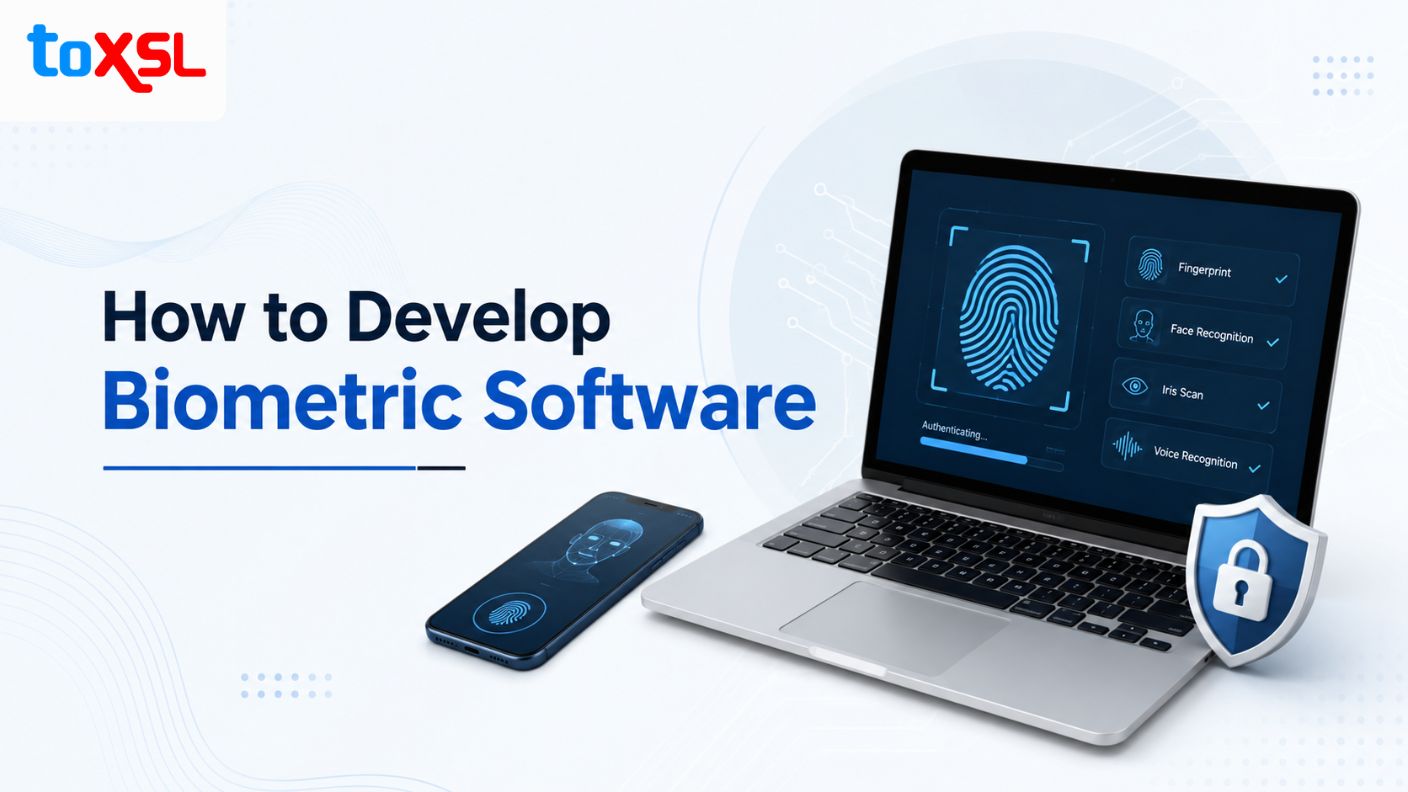
To overcome these challenges, biometric software development has emerged as a secure and advanced solution for identity verification. It uses unique biological traits such as fingerprints, facial recognition, iris patterns, and voice authentication to ensure accurate and tamper-proof access control. These characteristics are unique to each individual, making them extremely difficult to replicate or hack.
The global demand for biometric technology is also rising rapidly. The biometrics market is expected to reach USD 67.86 billion in 2026 and grow further to USD 136.86 billion by 2031, at a CAGR of 15.07% (2026–2031). This strong growth reflects the increasing adoption of biometric systems across banking, healthcare, government, and enterprise sectors.
With the integration of AI, machine learning, and encryption technologies, biometric systems are becoming faster, more accurate, and highly scalable, making them a key pillar of modern digital security.
Key Takeaways
- Biometric software development strengthens digital security by using unique biological traits such as fingerprints and facial recognition.
- It reduces dependency on passwords and minimizes risks of identity theft, phishing attacks, and credential breaches.
- The global biometrics market is expanding rapidly, driven by increasing demand for secure and scalable authentication solutions.
- AI and machine learning integration improves accuracy, reduces false acceptance rates, and enhances identity verification.
- Biometric systems offer seamless user experiences by enabling fast, contactless, and frictionless authentication processes.
- Adoption is increasing across banking, healthcare, government, and enterprise sectors due to rising cybersecurity concerns.
Biometric Software Development: Building Secure and Scalable Authentication Systems
Biometric software development focuses on building advanced authentication systems that use unique biological and behavioral characteristics to verify user identity. These systems enhance digital security, reduce fraud risks, and provide seamless access across applications, devices, and enterprise platforms.
1. Biometric Authentication Methods
Biometric systems rely on distinct human traits such as fingerprints, facial recognition, iris scans, and voice patterns to authenticate users. These characteristics are inherently unique to every individual, making them far more secure than traditional credentials like passwords or PINs, which can be stolen or guessed. By leveraging these biological identifiers, organizations can ensure higher accuracy in identity verification and significantly reduce the risk of unauthorized access or identity fraud across digital platforms.
2. Enhanced Accuracy and Performance
Modern biometric software development integrates artificial intelligence and machine learning to continuously improve system performance. These technologies analyze user behavior patterns, environmental conditions, and historical authentication data to enhance recognition accuracy over time. AI-driven biometric systems reduce false acceptance and rejection rates, ensuring faster and more reliable authentication. This adaptive learning capability makes biometric systems highly efficient in real-world applications, even in complex or changing environments.
3. Scalable Architecture
Scalability is a core advantage of biometric software systems, enabling organizations to support growing user bases without compromising performance. These solutions are designed to function across multiple platforms, including mobile applications, web systems, and enterprise infrastructures. Cloud-based deployment further enhances scalability by allowing real-time data processing and global accessibility. This makes biometric systems suitable for businesses ranging from startups to large-scale multinational enterprises.
4. Advanced Security Mechanisms
Biometric systems incorporate multiple layers of security to safeguard sensitive user data. Techniques such as encryption, tokenization, liveness detection, and anti-spoofing mechanisms ensure that biometric information remains protected from cyber threats. These security measures prevent unauthorized access attempts using fake images, recordings, or deepfake technologies. As a result, biometric software provides a highly secure authentication environment that meets modern cybersecurity standards and compliance requirements.
Top Benefits of Custom Biometric Software Development for Modern Businesses
Custom biometric software development enables businesses to build tailored authentication systems that match their specific security, operational, and user experience requirements. These solutions offer higher flexibility, stronger protection, and better integration compared to standard off-the-shelf authentication tools.
1. Enhanced Security
Custom biometric solutions significantly improve security by using unique biological traits for identity verification. They reduce risks associated with stolen credentials, phishing attacks, and unauthorized access. With advanced biometric matching and authentication layers, businesses can protect sensitive data more effectively.
- Eliminates dependency on passwords and PINs
- Reduces identity theft and unauthorized access risks
- Strengthens authentication using unique biometric identifiers
- Integrates multi-factor biometric security layers
2. Improved User Experience
Biometric systems provide users with a seamless and frictionless authentication experience. Instead of remembering complex passwords, users can quickly access systems using fingerprint, face, or voice recognition, improving convenience and overall satisfaction across digital platforms and applications.
- Enables quick login using biometric traits
- Removes the need for password management
- Enhances customer satisfaction and usability
- Reduces friction in onboarding and access processes
3. Flexible Integration
Custom biometric software can be easily integrated into existing business systems, applications, and APIs. It supports scalable deployment across mobile apps, web platforms, and enterprise environments, allowing organizations to expand without compromising performance or security efficiency.
- Easily integrates with existing enterprise systems
- Supports mobile, web, and cloud-based platforms
- Scales efficiently with growing user bases
- Enables API-based customization and flexibility
4. Secure Data Handling
Custom biometric solutions help organizations meet strict data privacy and security regulations. They ensure encrypted storage of biometric data and provide compliance with global standards such as GDPR and HIPAA, reducing legal risks and improving trust among users and stakeholders.
- Ensures compliance with global security regulations
- Uses encrypted storage for sensitive biometric data
- Provides audit trails for authentication processes
- Strengthens data privacy and governance standards
Why Businesses Are Investing in Advanced Biometric Software Development Solutions
Businesses are increasingly investing in biometric software development to strengthen digital security, improve operational efficiency, and deliver seamless user experiences. Rising cyber threats and the need for faster, more reliable authentication are driving widespread adoption across industries worldwide.
1. Rising Cybersecurity Threats
Organizations are turning to biometric systems due to the increasing number of cyberattacks, phishing attempts, and identity theft cases. Traditional authentication methods are no longer sufficient, making biometric verification a stronger and more reliable security solution.
- Protects against stolen credentials and password leaks
- Reduces risks of phishing and unauthorized access
- Strengthens enterprise-level digital security systems
- Provides unique user-based authentication methods
2. Contactless Authentication
The need for fast and contactless authentication has grown significantly across digital platforms. Biometric systems allow users to verify identity instantly using facial or voice recognition, improving convenience and reducing dependency on physical credentials or manual verification processes.
- Enables touchless authentication using face or voice
- Improves speed of user verification processes
- Enhances customer experience across digital services
- Reduces reliance on physical passwords or OTPs
3. AI-Driven Security
Modern biometric systems use artificial intelligence and machine learning to detect anomalies and prevent unauthorized access in real time. This proactive security approach helps businesses identify suspicious behavior and strengthen overall digital protection systems.
- Detects abnormal login patterns instantly
- Improves authentication accuracy using AI models
- Prevents unauthorized system access proactively
- Enhances decision-making through intelligent analysis
4. Operational Efficiency
Biometric systems help organizations automate identity verification, reducing manual workload and operational costs. Faster authentication processes improve employee productivity, streamline onboarding, and eliminate inefficiencies associated with traditional verification systems.
- Automates identity verification processes
- Reduces administrative workload and errors
- Speeds up user onboarding and access
- Improves overall business operational efficiency
Biometric Software Development: Cost Analysis
The cost of biometric software development depends on multiple factors such as system complexity, type of biometric technology, security requirements, and scalability needs. Simple authentication systems like fingerprint-based apps are more affordable, while advanced AI-driven facial recognition or multi-modal biometric systems require higher investment. Costs also vary based on infrastructure, integration needs, and long-term maintenance requirements. Understanding these components helps businesses choose the right solution based on budget and security goals.
Component | Estimated Cost Range (USD) | Description |
|---|---|---|
Basic Biometric App | $5,000 – $20,000 | Simple fingerprint or face recognition login system |
Mid-Level Biometric System | $20,000 – $50,000 | Includes encryption, secure authentication, and basic AI features |
AI-Powered Biometric System | $50,000 – $120,000 | Advanced facial recognition with machine learning capabilities |
Enterprise Biometric Solution | $100,000 – $250,000+ | Large-scale multi-user, multi-platform authentication system |
Security Enhancements | $10,000 – $40,000 | Liveness detection, encryption, and anti-spoofing mechanisms |
Cloud Integration | $15,000 – $60,000 | Scalable cloud infrastructure and real-time processing setup |
Maintenance & Support (Annual) | $8,000 – $30,000/year | Updates, monitoring, bug fixes, and performance optimization |
Key Factors Affecting Biometric Software Development Cost
The overall cost of biometric software development depends on several important technical and operational elements. Each factor contributes differently based on system design, security requirements, and integration complexity.
1. Type of Technology Used
Different biometric methods such as fingerprint recognition, facial recognition, iris scanning, and voice authentication vary in complexity and development effort. Advanced technologies like facial recognition with AI require higher investment compared to simpler fingerprint-based systems.
- Fingerprint systems are generally cost-effective
- Facial and iris recognition require advanced algorithms
- Voice recognition needs AI-based processing models
- Multi-modal systems increase overall development cost
2. AI Integration
The inclusion of AI and machine learning significantly increases development cost but improves system accuracy and intelligence. These technologies enable real-time learning, fraud detection, and improved authentication performance.
- Enhances accuracy of identity verification systems
- Requires advanced model training and data processing
- Improves fraud detection and anomaly recognition
- Increases development time and technical complexity
3. Security Features and Compliance Requirements
Advanced security features such as encryption, liveness detection, and anti-spoofing mechanisms add to the overall cost. Compliance with regulations like GDPR or HIPAA also requires additional development effort and secure architecture design.
- Encryption ensures safe storage of biometric data
- Liveness detection prevents spoofing attacks
- Compliance increases development complexity
- Adds legal and security validation layers
4. Scalability and System Integration
The ability to scale across platforms and integrate with existing systems affects development cost. Enterprise-level solutions require robust architecture, cloud deployment, and API integrations for seamless performance.
- Supports mobile, web, and enterprise platforms
- Requires cloud infrastructure for scalability
- Integration with third-party systems increases cost
- Large user base demands high-performance design
Conclusion
Biometric software development is rapidly transforming the future of digital security by replacing traditional authentication methods with more secure, intelligent, and user-centric solutions. As cyber threats continue to evolve in complexity, businesses are under increasing pressure to adopt advanced security systems that protect sensitive data while ensuring seamless user experiences. Biometric technologies such as fingerprint recognition, facial authentication, iris scanning, and voice verification are playing a crucial role in strengthening identity management across industries.
At ToXSL Technologies, we specialize in delivering advanced biometric software development solutions tailored to modern business needs. Our expertise lies in building secure, scalable, and AI-powered authentication systems that help organizations enhance security, reduce fraud risks, and improve operational efficiency. By integrating cutting-edge technologies like artificial intelligence, machine learning, and cloud computing, we develop biometric solutions that are highly accurate, reliable, and future-ready. Contact us to learn more
Frequently Asked Questions
1. What is biometric software development in a business context?
Biometric software development helps businesses implement secure identity verification systems using unique human traits, improving access control and reducing dependency on traditional authentication methods.
- Enables secure employee and customer authentication systems
- Reduces risks linked to password sharing and breaches
- Supports digital transformation and security modernization
2. How can biometric systems benefit business security?
Biometric systems strengthen enterprise security by ensuring only authorized individuals can access systems, data, or facilities, significantly reducing fraud and internal security risks.
- Prevents unauthorized access to sensitive business data
- Reduces identity fraud in financial and enterprise systems
- Strengthens multi-layer authentication strategies
3. Why are businesses replacing passwords with biometrics?
Businesses are shifting to biometrics because passwords are vulnerable to theft, reuse, and phishing attacks, while biometrics offer stronger and more reliable identity verification.
- Eliminates password management challenges
- Reduces IT support costs for password resets
- Improves user authentication speed and reliability
4. How do biometric solutions improve operational efficiency?
Biometric systems automate identity verification processes, helping businesses reduce manual workload, speed up onboarding, and streamline employee and customer access systems.
- Speeds up employee login and attendance tracking
- Automates customer onboarding and verification processes
- Reduces administrative workload and human errors
5. Are biometric systems suitable for large-scale enterprises?
Yes, biometric systems are highly scalable and designed to support enterprise-level operations across multiple locations, departments, and digital platforms.
- Supports large employee and customer databases
- Easily integrates with enterprise software systems
- Works across cloud, mobile, and on-premise environments