



























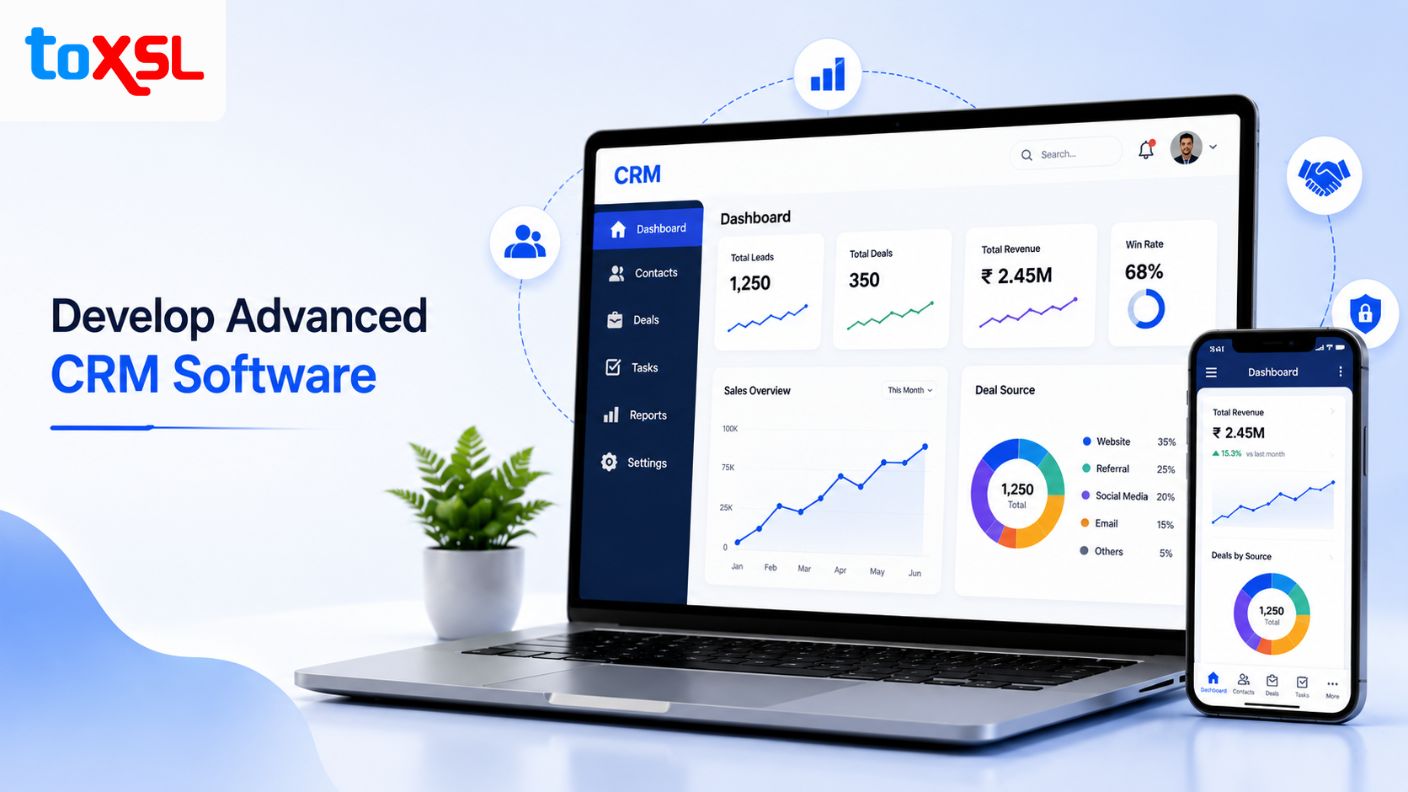
Customer expectations are evolving rapidly, and businesses today need smarter ways to manage relationships, streamline operations, and improve customer engagement. This is where Customer Relationship Management (CRM) software plays a crucial role. Advanced CRM platforms help organizations manage customer interactions, automate workflows, improve sales performance, and deliver personalized experiences across multiple channels.
Did you know 91% of companies with 10 or more employees use CRM software? According to reports, 94% of businesses have experienced increased sales productivity after adopting CRM solutions. These statistics clearly show how CRM systems have become an essential part of modern business operations.
Platforms like HubSpot have transformed the way businesses manage leads, marketing campaigns, customer support, and sales pipelines. Their ability to combine automation, analytics, AI-powered insights, and seamless integrations makes them highly valuable for startups, SMEs, and enterprises alike.
Key Insights
- Modern CRM systems help businesses maintain long-term customer relationships by organizing customer data.
- CRM platforms automate repetitive business tasks such as email marketing, lead tracking, follow-ups, and workflow approvals.
- Advanced CRM software provides real-time insights into customer behavior, sales performance, and campaign effectiveness.
- AI-powered chatbots, predictive analytics, and automated recommendations help businesses improve customer engagement.
- Businesses increasingly rely on mobile CRM apps to manage customer relationships remotely, and support agents to access customer data.
- Cloud CRM systems allow organizations to scale operations, improve data accessibility, and reduce infrastructure management costs.
Essential Steps to Build Advanced CRM Software Like HubSpot
Developing a modern CRM platform requires a strategic approach that combines business analysis, user-centric design, scalable architecture, and advanced technologies. Businesses should focus on creating a CRM system that improves productivity, enhances customer experiences, and supports long-term business growth.
1. Conduct Market Research
Before development begins, businesses must analyze market trends, competitors, customer expectations, and industry-specific requirements. This helps define the CRM’s objectives, target audience, and unique selling points.
- Identify target industries and business requirements
- Analyze competitor CRM platforms and features
- Define business goals and user expectations
- Create a clear CRM development roadmap
2. Right CRM Development Model
Businesses should decide whether they want a cloud-based CRM, on-premise solution, or hybrid model. The chosen model should align with scalability, security, operational needs, and budget requirements.
- Choose cloud, hybrid, or on-premise deployment
- Evaluate scalability and maintenance requirements
- Analyze infrastructure and hosting needs
- Plan long-term system expansion strategies
3. Design an Intuitive User Interface
User experience plays a critical role in CRM adoption. A clean, responsive, and easy-to-navigate interface helps teams use the platform efficiently and improves overall productivity across departments.
- Create user-friendly dashboards and navigation
- Optimize mobile responsiveness and accessibility
- Design customizable workflow interfaces
- Focus on customer interaction experiences
4. Develop Core Functionalities
Core functionalities form the foundation of the CRM platform. Businesses should focus on lead management, contact organization, sales tracking, workflow automation, and communication management during development.
- Build lead and customer management modules
- Develop sales pipeline tracking systems
- Integrate task and workflow automation
- Implement communication and notification tools
5. Integrate AI and Automation Features
AI-driven functionalities enhance CRM capabilities by improving personalization, predictive analytics, and automation. Businesses can leverage AI to optimize customer interactions and increase operational efficiency.
- Add AI-powered lead scoring systems
- Implement predictive sales analytics tools
- Develop chatbot and virtual assistant support
- Automate repetitive business workflows
6. Advanced Data Analytics
Data-driven insights help businesses monitor performance and optimize strategies. CRM software should include real-time reporting dashboards and advanced analytics tools for better decision-making.
- Create performance monitoring dashboards
- Develop real-time sales reporting systems
- Track customer engagement and behavior
- Enable customizable business intelligence reports
7. Ensure Strong Security
CRM systems manage sensitive customer and business data, making security a top priority. Businesses must implement advanced security measures and comply with industry regulations.
- Use data encryption and secure authentication
- Implement role-based access controls
- Ensure GDPR and compliance readiness
- Conduct regular security audits and testing
8. Integrate Third-Party Tools
Modern CRM software should support integration with business tools such as marketing platforms, payment gateways, communication systems, and analytics software.
- Integrate email marketing platforms
- Connect payment and invoicing systems
- Enable communication and video call integrations
- Support API-based third-party connections
9. Test the CRM Platform
Comprehensive testing ensures the CRM platform functions smoothly across devices and environments. Testing helps identify bugs, security vulnerabilities, and performance issues before launch.
- Perform functional and usability testing
- Conduct security and performance testing
- Test cross-platform compatibility
- Resolve bugs and optimization issues
10. Launch and Maintain
Post-launch maintenance is essential for CRM success. Businesses should continuously monitor system performance, gather user feedback, and release feature updates regularly.
- Monitor performance and user engagement
- Provide ongoing technical support
- Release regular feature enhancements
- Continuously optimize user experiences
Why Modern Businesses Should Invest in CRM Software
Modern CRM software helps businesses centralize customer information, automate workflows, improve communication, streamline sales processes, and enhance overall business productivity. Companies across industries are increasingly investing in advanced CRM platforms to gain better customer insights, improve operational performance, and accelerate business growth.
1. Improves Customer Relationship Management
One of the primary reasons businesses invest in CRM software is to strengthen customer relationship management. CRM systems store customer information, communication history, purchase records, preferences, and engagement data in a centralized platform. This enables businesses to better understand their customers and provide personalized interactions across different channels.
Modern customers expect businesses to respond quickly, understand their needs, and deliver customized experiences.
2. Enhances Sales Productivity
CRM software significantly improves sales productivity by automating sales processes and helping teams manage leads more efficiently. Sales representatives can track customer interactions, monitor sales opportunities, schedule follow-ups, and manage pipelines through a centralized dashboard.
Advanced CRM platforms provide sales forecasting, lead scoring, and performance analytics, allowing businesses to identify high-value opportunities and improve conversion rates. Automated reminders and task management features ensure that sales teams never miss important follow-ups or deadlines.
3. Streamlines Business Operations
Modern CRM software automates repetitive business tasks and improves workflow efficiency across departments. Businesses can automate processes such as email marketing, customer onboarding, appointment scheduling, reporting, and communication management.
Automation reduces manual work, minimizes human errors, and increases operational efficiency. Employees can focus more on strategic activities rather than spending time on repetitive administrative tasks. This leads to improved productivity and better resource utilization across the organization.
4. Supports Data-Driven Decision Making
Data has become one of the most valuable business assets in the digital age. CRM software helps businesses collect, organize, and analyze customer and operational data to support informed decision-making.
Modern CRM software development provide advanced analytics, reporting dashboards, and real-time insights into customer behavior, sales performance, campaign effectiveness, and operational efficiency. Businesses can use these insights to identify trends, evaluate strategies, and make smarter business decisions.
5. Improves Customer Service and Support
Customer service has become a major factor influencing customer loyalty and business success. CRM software enables businesses to provide faster, more personalized, and more efficient customer support experiences.
Support teams can track customer issues, manage support tickets, access communication history, and resolve problems quickly using CRM systems. Integrated live chat, AI chatbots, and omnichannel communication features further enhance customer support capabilities.
6. Enables Personalized Marketing Strategies
Modern CRM software helps businesses create highly targeted and personalized marketing campaigns based on customer data and behavioral insights. Businesses can segment customers based on demographics, preferences, purchase history, and engagement patterns.
CRM platforms also provide automation tools for email campaigns, lead nurturing, and customer communication, helping businesses manage marketing activities more efficiently.
7. Enhances Team Collaboration
CRM software improves collaboration between teams by centralizing customer information and communication records in a single platform. Employees across departments can access updated customer data, monitor project progress, and coordinate activities more effectively.
This improved transparency helps teams work more efficiently and reduces communication gaps between departments. CRM systems also support task assignments, notifications, shared calendars, and internal messaging, making collaboration smoother and more organized.
How Much Does It Cost to Develop CRM Software?
The cost to develop CRM software depends on several factors, including features, complexity, integrations, platform type, UI/UX design, technology stack, and development team location. A basic CRM solution costs significantly less than an advanced enterprise-grade CRM platform like HubSpot or Salesforce.
On average, CRM software development costs can range between $10,000 to $150,000+, depending on the project scope and customization requirements.
CRM Type | Estimated Cost | Development Timeline |
|---|---|---|
Basic CRM Software | $10,000 – $30,000 | 2 – 4 Months |
Mid-Level CRM Solution | $30,000 – $70,000 | 4 – 7 Months |
Advanced CRM Software | $70,000 – $150,000+ | 7 – 12+ Months |
Must-Have Features for Advanced CRM Software
Advanced CRM platforms require feature-rich functionality to improve customer engagement, automate operations, and support business growth. Businesses should focus on integrating smart and scalable features during development.
1. Contact and Lead Management
This feature helps businesses organize customer information, track interactions, and manage leads throughout the sales cycle efficiently.
- Store customer profiles and interaction history
- Track lead sources and engagement activities
- Segment customers for targeted campaigns
- Manage customer communication records
2. Sales Pipeline Management
Sales pipeline management allows businesses to monitor sales progress, manage opportunities, and improve conversion rates through organized workflows.
- Visualize sales stages and opportunities
- Track deal progress in real-time
- Manage sales targets and forecasting
- Automate follow-up reminders and tasks
3. Marketing Automation
Marketing automation tools streamline campaign management, customer engagement, and lead nurturing processes across multiple channels.
- Automate email marketing campaigns
- Schedule customer engagement workflows
- Personalize marketing communication strategies
- Track campaign performance analytics
4. AI-Powered Analytics
AI-driven analytics help businesses predict customer behavior, identify sales opportunities, and optimize marketing and support strategies.
- Enable predictive customer insights
- Automate lead scoring processes
- Generate AI-based recommendations
- Monitor customer engagement trends
5. Customer Support Management
Integrated support systems improve customer service experiences by enabling faster issue resolution and organized support ticket management.
- Create centralized support ticket systems
- Enable live chat and chatbot assistance
- Track customer support performance
- Maintain customer issue resolution history
6. Workflow and Task Automation
Automation features reduce manual work and improve operational efficiency across business processes and team collaboration.
- Automate repetitive business tasks
- Create custom workflow sequences
- Set automated reminders and notifications
- Improve task assignment and management
7. Mobile CRM Accessibility
Mobile CRM solutions help businesses manage customer relationships and workflows remotely from smartphones and tablets.
- Access customer data from anywhere
- Enable mobile sales tracking features
- Support remote team collaboration
- Improve on-the-go business management
8. Third-Party Integration Support
Integration capabilities allow businesses to connect CRM software with external tools and platforms for seamless operations.
- Connect email and communication platforms
- Integrate payment and accounting systems
- Support API-based business applications
- Synchronize data across platforms
The Future of CRM Software
The future of CRM software is evolving rapidly as businesses increasingly adopt advanced technologies to improve customer engagement, automate operations, and enhance decision-making processes. Traditional CRM platforms are no longer limited to managing customer information and tracking sales activities. Modern CRM solutions are becoming intelligent business ecosystems powered by Artificial Intelligence (AI), automation, cloud computing, predictive analytics, and real-time data processing.
1. AI-Powered CRM Systems
Artificial Intelligence will become one of the most influential technologies in the future of CRM software. AI-powered CRM systems will help businesses automate lead scoring, predict customer preferences, generate sales forecasts, and provide intelligent recommendations for marketing and customer engagement strategies.
2. Workflow Automation
Automation will continue transforming CRM platforms by minimizing manual tasks and improving workflow efficiency. Future CRM systems will automate follow-ups, customer onboarding, reporting, email campaigns, task assignments, and communication management. This level of automation will allow businesses to streamline operations, reduce human errors, improve productivity, and enable teams to focus on strategic business activities rather than repetitive administrative tasks.
3. Cloud-Based CRM Solutions
Cloud-based CRM solutions will dominate the market due to their scalability, flexibility, and accessibility. Businesses increasingly prefer cloud CRM platforms because they offer remote access, simplified infrastructure management, lower operational costs, and faster deployment.
4. Hyper-Personalized Customer Experiences
Another major trend shaping the future of CRM software is hyper-personalization. Businesses are increasingly using customer data and analytics to deliver tailored experiences based on user behavior, preferences, purchase history, and interaction patterns.
5. Integration with IoT and Smart Technologies
The integration of CRM software with Internet of Things (IoT) devices and smart technologies will become more common in the coming years. IoT-enabled CRM platforms will collect real-time customer and operational data from connected devices, helping businesses monitor customer behavior and optimize operational performance.
6. Rise of Mobile-First CRM Platforms
Mobile-first CRM solutions will continue gaining importance as businesses rely more on remote teams and mobile workforces. Future CRM applications will offer advanced mobile capabilities, allowing sales teams, managers, and customer support agents to access customer information and manage workflows directly from smartphones and tablets.
Conclusion
Developing advanced CRM software like HubSpot requires a combination of strategic planning, innovative technologies, scalable architecture, and customer-centric design. Modern businesses need CRM platforms that not only manage customer relationships but also automate workflows, improve productivity, and provide valuable business insights.
As customer expectations continue to evolve, investing in customized CRM solutions can help businesses streamline operations, strengthen customer engagement, and achieve long-term growth. From AI-powered analytics and automation to mobile accessibility and cloud scalability, advanced CRM software offers significant advantages for businesses across industries.
At ToXSL Technologies, we specialize in developing secure, scalable, and feature-rich CRM software solutions tailored to modern business needs. Our experienced development team helps businesses build innovative CRM platforms that enhance customer experiences, improve operational efficiency, and accelerate digital transformation. Whether you are a startup, SME, or enterprise, we deliver customized CRM solutions designed to support your long-term business success.
Frequently Asked Questions
1. Why should businesses invest in custom CRM software development?
Custom CRM software helps businesses streamline operations, improve customer engagement, automate workflows, and manage sales efficiently. Unlike ready-made solutions, custom CRM platforms are tailored to specific business goals, processes, and scalability requirements.
Benefits for Businesses:
- Improves customer relationship management
- Automates repetitive business processes
- Enhances sales and marketing efficiency
- Supports long-term business scalability
2. How does CRM software improve business productivity?
CRM software centralizes customer data, automates routine tasks, improves collaboration, and simplifies communication management. This helps businesses increase operational efficiency and reduce manual workload.
Key Productivity Advantages:
- Faster lead and customer management
- Improved team collaboration
- Automated follow-ups and reminders
- Real-time business performance tracking
3. What are the essential features businesses should include in CRM software?
Businesses should focus on features that improve customer engagement, workflow automation, reporting, and operational management for better business performance.
Must-Have CRM Features:
- Contact and lead management
- Sales pipeline tracking
- Workflow automation
- Reporting and analytics dashboards
- Customer support management
- Third-party integrations
4. How much does it cost to develop advanced CRM software like HubSpot?
The development cost depends on software complexity, features, integrations, deployment model, and customization requirements. Advanced enterprise CRM solutions require larger investments due to AI, automation, and scalability features.
Factors Affecting CRM Development Cost:
- UI/UX design complexity
- Number of custom features
- Third-party integrations
- Cloud infrastructure requirements
- AI and automation functionalities
5. How long does it take to develop custom CRM software?
CRM development timelines vary depending on project scope and required functionalities. A basic CRM solution can take a few months, while advanced enterprise-level CRM software requires longer development cycles.
Timeline Depends On:
- Software complexity
- Number of modules and features
- Customization requirements
- Testing and deployment process
- Integration requirements