





































Key Takeaways
- AI can personalize nutrition recommendations according to user preferences and goals.
- Computer vision can help identify foods and estimate nutritional information.
- AI chatbots can provide interactive nutrition guidance and answer common questions.
- Smart meal planning can make personalized diet management more convenient.
- Wearable and health-device integrations can improve nutrition tracking.
- Strong privacy, security, validation, and responsible AI practices are essential.
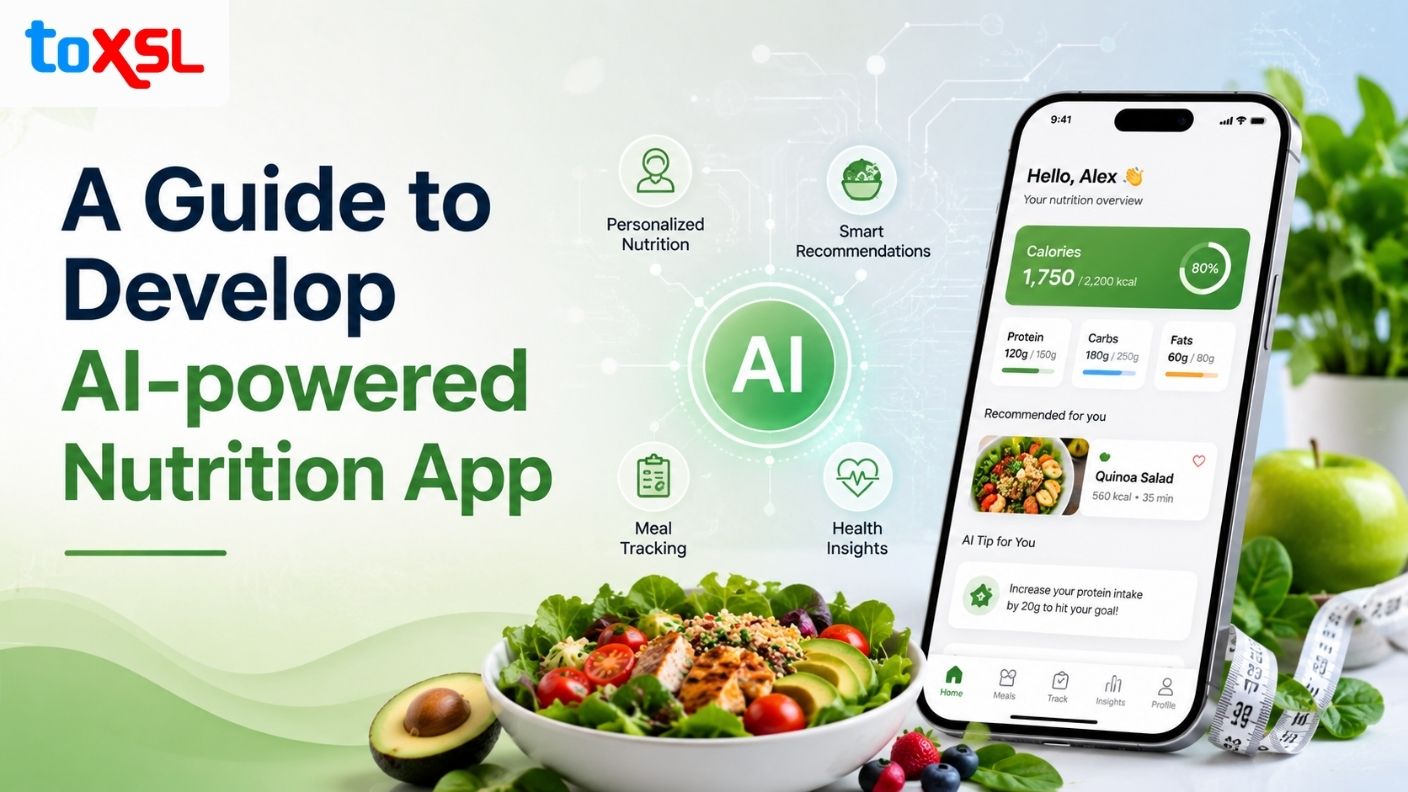
Artificial intelligence is transforming how people track food, understand nutrition, plan meals, and build healthier everyday habits. AI-powered nutrition apps can combine food recognition, personalized recommendations, nutrition tracking, conversational assistance, and intelligent analytics in one digital platform. Instead of relying entirely on manual food entries and generic diet plans, these applications can analyze user-provided information and deliver more personalized, convenient, and interactive nutrition experiences.
Modern users increasingly expect health and wellness applications to understand their individual preferences rather than provide the same recommendations to everyone. AI can help nutrition apps consider factors such as dietary preferences, food choices, activity patterns, meal history, lifestyle habits, and selected wellness goals. This enables applications to generate more relevant meal suggestions, identify recurring eating patterns, simplify food logging, and provide useful insights through an easy-to-use interface.
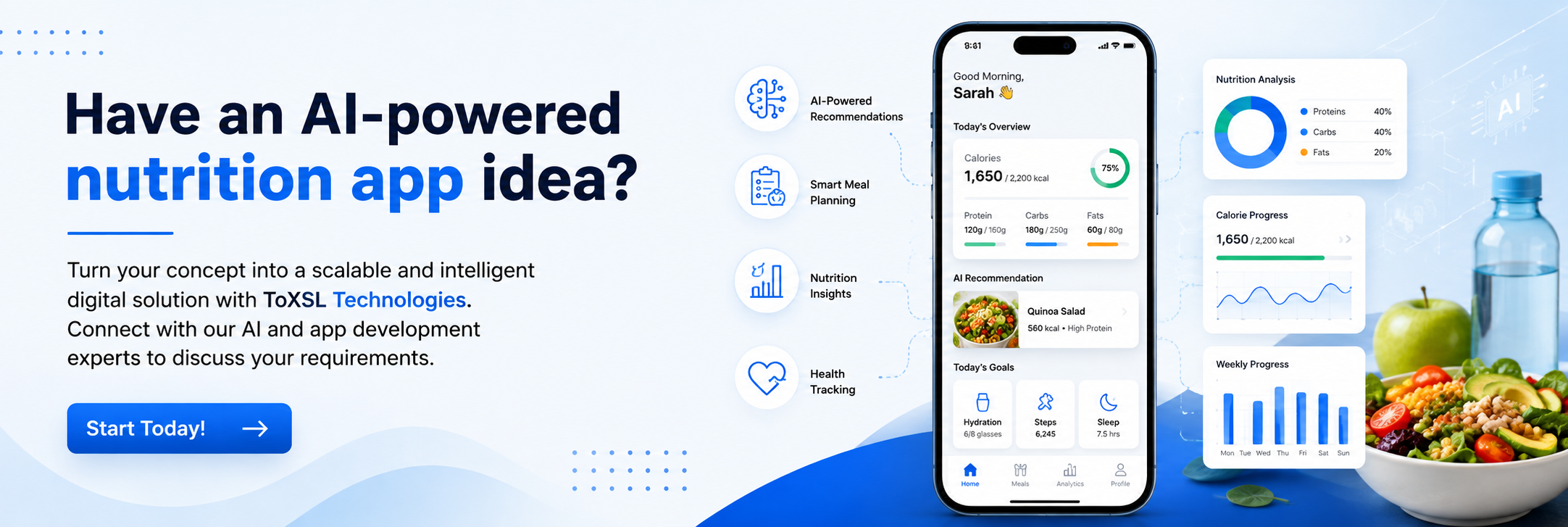
The market opportunity is also expanding rapidly. The global AI in personalized nutrition market size is projected to grow from USD 1.9 billion in 2026 to USD 10.2 billion by 2033, representing a 27.2% CAGR from 2026 to 2033, according to Grand View Research. This growth highlights increasing interest in AI-driven personalization and creates significant opportunities for businesses planning to enter the digital nutrition and wellness market.
Why Invest in AI-Powered Nutrition App Development?
Traditional food-tracking applications generally depend on manual data entry and predefined databases. AI-powered applications can make the experience more intelligent by analyzing user inputs, recognizing foods, identifying patterns, and generating personalized recommendations.
For businesses, AI can create opportunities to build nutrition platforms for consumers, healthcare organizations, fitness companies, wellness brands, dietitians, and corporate wellness programs.
An AI nutrition platform can also continuously learn from user interactions. For example, it can understand frequently consumed foods, preferred cuisines, dietary restrictions, and meal patterns to provide increasingly relevant recommendations.
However, nutrition applications should be designed as wellness and informational tools unless appropriately developed and clinically validated for healthcare use. AI-generated recommendations should not replace qualified medical or nutritional professionals.
Building an Intelligent AI Nutrition App: Development Process
Developing an AI-powered nutrition app requires more than simply adding an AI chatbot. The process involves defining the target audience, designing the nutrition experience, selecting appropriate AI technologies, developing the application, integrating reliable data sources, testing recommendations, and continuously improving the platform.
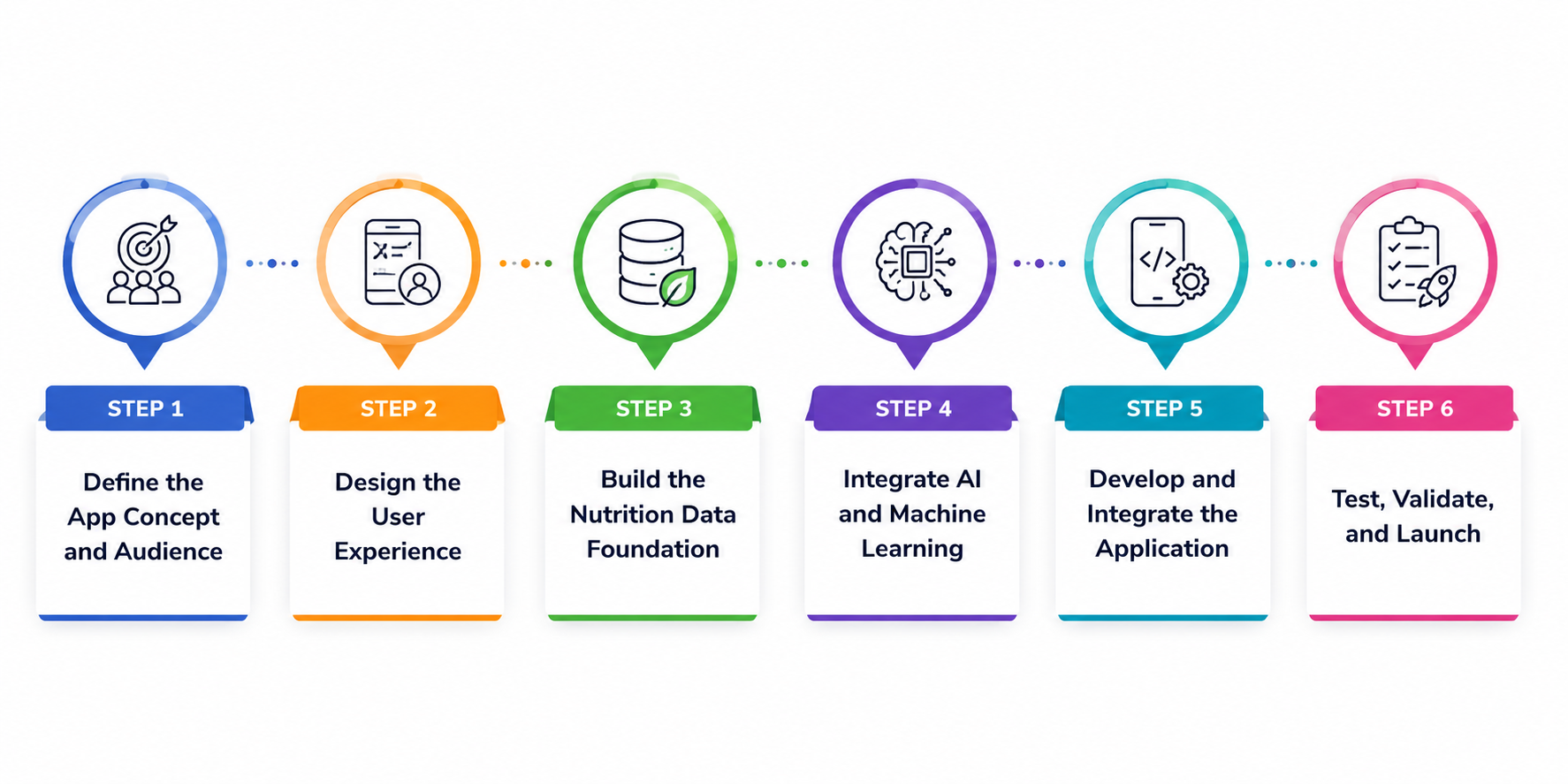
1. Define the App Concept and Audience
Start by identifying the application's purpose and target users. Decide whether the platform will focus on meal planning, food tracking, wellness, fitness, professional nutrition management, or a combination. Define user personas, business objectives, monetization strategy, and the specific problems the application will solve.
- Target audience identification
- Business model definition
- User persona development
- Competitor research
2. Design the User Experience
Create a simple experience that makes nutrition tracking convenient. Design onboarding screens, dashboards, meal logs, recommendation screens, progress views, and AI assistant interfaces. The application should present nutrition information clearly without overwhelming users with unnecessary data or complicated terminology.
- Simple onboarding
- Accessible navigation
- Clear nutrition dashboards
- Personalized user journeys
3. Build the Nutrition Data Foundation
AI recommendations depend on reliable information. Developers need structured food, nutrient, ingredient, and serving-size data. The platform may combine licensed databases, verified nutritional information, user-entered data, and carefully managed internal datasets to support accurate calculations and recommendations.
- Food database integration
- Nutrient information
- Ingredient data
- Serving-size management
4. Integrate AI and Machine Learning
The next stage involves integrating suitable AI technologies. Machine learning can support personalization, while computer vision can assist with food recognition and natural language processing can power conversational interactions. Models should be evaluated carefully before being introduced into user-facing nutrition workflows.
- Machine learning models
- Computer vision
- Natural language processing
- Recommendation engines
5. Develop and Integrate the Application
Develop the mobile or web application and connect the AI layer with backend services, databases, APIs, authentication, analytics, and third-party integrations. The architecture should be designed to support future growth, additional AI capabilities, and increasing numbers of users.
- Frontend development
- Backend APIs
- Cloud infrastructure
- Third-party integrations
6. Test, Validate, and Launch
Thorough testing should cover application functionality, usability, performance, security, data accuracy, and AI behavior. Nutrition-related recommendations require particular attention because incorrect information can negatively affect user decisions. After validation, launch the MVP and monitor feedback for continuous improvements.
- Functional testing
- AI output evaluation
- Security testing
- Performance monitoring
Essential Features for a Smart AI-Powered Nutrition App
A successful AI nutrition application should combine intelligent technology with practical nutrition-management features. The objective is to reduce manual effort while providing useful, understandable, and personalized information. Features should be selected according to the target audience rather than adding AI capabilities simply for technological appeal.
1. AI Food Recognition
Computer vision can allow users to photograph meals and receive an estimated identification of foods within the image. The system can then connect recognized foods with nutritional data. Because image recognition can be uncertain, the interface should allow users to review and correct identified items.
- Faster food logging
- Image-based meal identification
- Reduced manual entry
- User correction options
2. Personalized Nutrition Recommendations
AI can analyze user-provided information such as dietary preferences, food choices, activity patterns, and nutrition goals to generate personalized suggestions. Instead of presenting identical recommendations to everyone, the application can adapt suggestions based on individual preferences and changing behavior.
- Personalized recommendations
- Adaptive meal suggestions
- Preference-based guidance
- Improved engagement
3. Intelligent Meal Planner
An AI meal planner can generate meal suggestions based on selected preferences, available ingredients, cuisine choices, dietary patterns, and nutritional requirements. Users can review suggested meals and make adjustments according to their personal preferences and household needs.
- Automated meal planning
- Ingredient-based suggestions
- Weekly planning
- Personalized meal options
4. AI Nutrition Assistant
A conversational AI assistant can make nutrition information easier to access. Users can ask questions about ingredients, meals, food labels, or general nutrition concepts and receive understandable responses. The assistant should clearly distinguish general wellness information from professional medical or dietary advice.
- Conversational interaction
- Instant information
- Natural-language questions
- Personalized assistance
5. Nutrition and Food Tracking
Users should be able to record meals, snacks, beverages, and other relevant information. AI can identify recurring patterns and summarize consumption trends. Visual dashboards can make progress easier to understand while avoiding unnecessary complexity.
- Daily food tracking
- Nutrition summaries
- Historical records
- Pattern identification
6. Wearable and Health Device Integration
Integrating compatible fitness trackers and health devices can provide additional context around activity and lifestyle patterns. Depending on the platform and permissions, data can help create a more complete picture of user behavior and support more personalized wellness insights.
- Activity data synchronization
- Automated data collection
- Broader wellness insights
- Personalized recommendations
7. Progress Analytics
Analytics can transform collected information into understandable trends. Users may view meal consistency, nutrient patterns, activity information, or other selected metrics over time. AI can highlight meaningful patterns while allowing users to decide which information they want to monitor.
- Visual progress reports
- Trend identification
- Personalized insights
- Long-term tracking
8. Notifications and Reminders
Smart notifications can encourage consistent use without becoming intrusive. Reminders may support meal logging, hydration tracking, meal preparation, or other app-defined activities. Personalization can help determine appropriate notification timing according to user behavior.
- Better engagement
- Timely reminders
- Personalized notifications
- Consistent tracking
AI-Powered Nutrition App Development Cost
The cost of developing an AI-powered nutrition application depends on its functionality, AI complexity, platform requirements, integrations, security requirements, and development team. A basic application with food tracking and simple recommendations requires considerably less development effort than an advanced platform using computer vision, conversational AI, wearable integrations, and sophisticated personalization.
App Type | Estimated Development Cost |
Basic Nutrition App | $20,000–$35,000 |
AI-Enabled Nutrition MVP | $35,000–$60,000 |
Advanced AI Nutrition App | $60,000–$100,000+ |
Enterprise Nutrition Platform | $100,000+ |
These figures are indicative estimates, not fixed quotations. The actual cost can change significantly based on design complexity, technology stack, AI models, APIs, integrations, development location, and ongoing maintenance requirements. A practical approach is to launch an MVP with essential functionality and then add advanced AI capabilities based on user feedback and business requirements.
Where AI Nutrition Apps Can Make an Impact: Key Use Cases
AI-powered nutrition applications can support several business and consumer scenarios. Their capabilities can extend beyond simple calorie or food logging into personalized wellness, meal planning, professional workflows, and corporate health programs. The most suitable use case depends on the application's target audience and the level of personalization required.
1. Personalized Meal Planning
Consumers can use AI to receive meal suggestions based on their preferences, dietary patterns, available ingredients, and selected wellness objectives. The application can simplify weekly planning and help users discover different meal options without repeatedly creating plans manually.
2. Food Tracking and Recognition
Users can record food through text, voice, barcode scanning, or images. AI-powered recognition can reduce manual data entry by helping identify food items and connect them with relevant nutritional information.
3. Fitness and Wellness Applications
Fitness platforms can integrate nutrition intelligence alongside activity tracking. Combining workout information with food and lifestyle data can create a more comprehensive wellness experience while keeping recommendations within appropriate wellness boundaries.
4. Dietitian and Nutritionist Platforms
Professional platforms can use AI to organize food records, summarize user-entered information, identify patterns, and assist with administrative workflows. AI should support, not replace, the judgment of qualified nutrition professionals.
5. Corporate Wellness Programs
Organizations can use nutrition applications as part of employee wellness initiatives. Features may include educational content, meal tracking, wellness challenges, and personalized insights while maintaining appropriate privacy controls.
6. Healthcare and Preventive Wellness
Healthcare-oriented platforms can incorporate nutrition tracking and educational features to support broader preventive wellness programs. Where an app is intended for clinical decision-making or medical purposes, additional validation, professional oversight, regulatory considerations, and appropriate safeguards are necessary.
What Determines the Cost of AI Nutrition App Development?
Understanding cost drivers helps businesses plan realistic budgets before development begins. AI nutrition applications can vary substantially in complexity, so the final investment depends on technical requirements, AI functionality, integrations, design, security, development resources, and ongoing operational expenses.
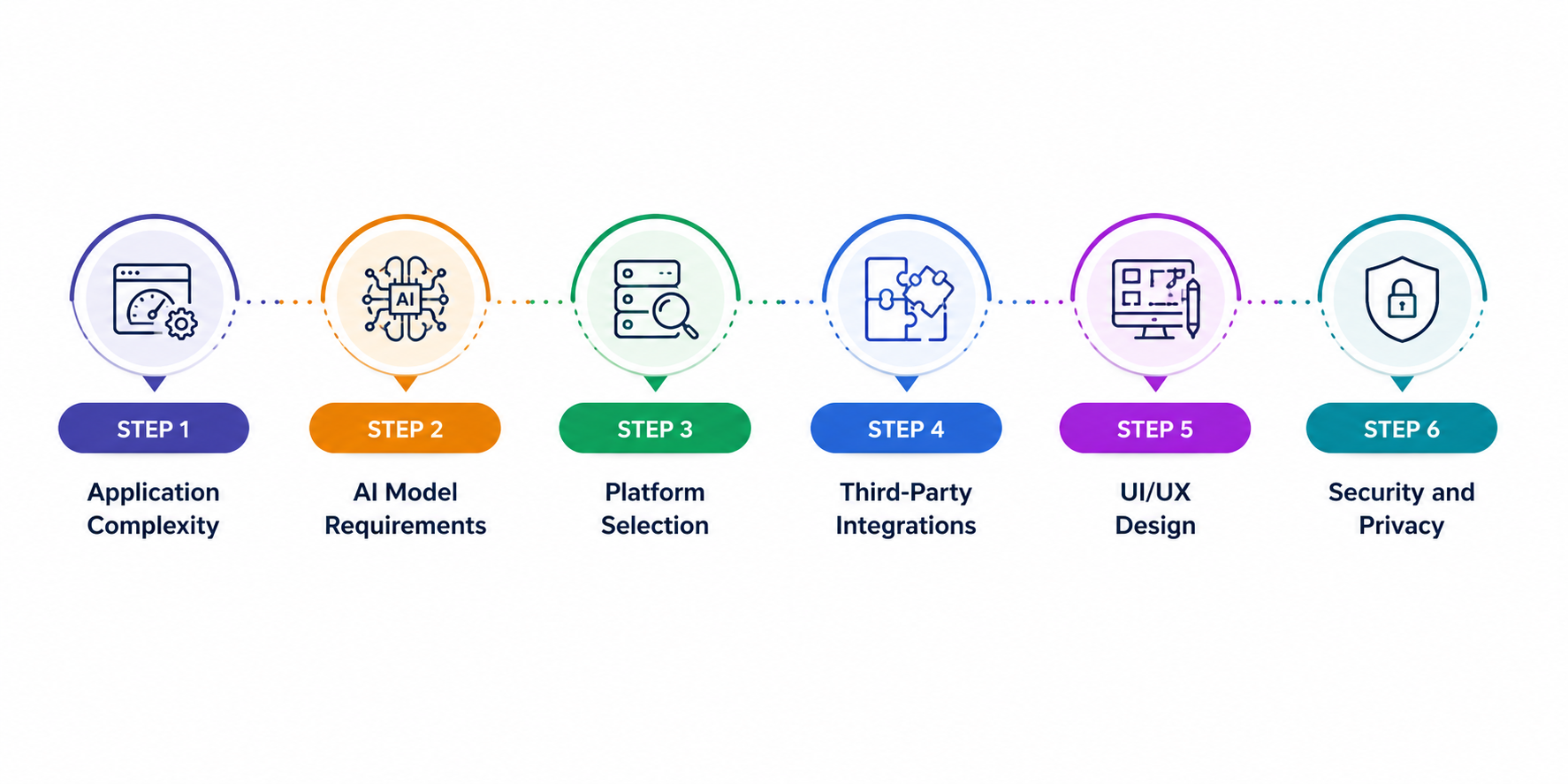
1. Application Complexity
A simple nutrition tracker requires fewer development resources than an application containing AI food recognition, conversational assistants, personalized recommendations, and extensive analytics. More workflows mean more design, development, testing, infrastructure, and maintenance requirements.
2. AI Model Requirements
AI complexity is one of the biggest cost factors. Using existing APIs or pretrained services may reduce initial development effort, while developing, fine-tuning, evaluating, and maintaining specialized models can require significantly more resources.
3. Platform Selection
Developing separately for iOS and Android can require additional development and testing resources. Cross-platform technologies can sometimes reduce development effort, depending on the application's technical requirements and device integrations.
4. Third-Party Integrations
Food databases, wearable devices, payment gateways, barcode services, analytics platforms, authentication providers, and other APIs can affect development costs. Each integration requires implementation, testing, maintenance, and potentially recurring subscription or usage fees.
5. UI/UX Design
A nutrition app handles substantial information, making usability particularly important. Custom dashboards, interactive charts, onboarding flows, personalized interfaces, accessibility considerations, and intuitive food-logging workflows can increase design and development requirements.
6. Security and Privacy
Nutrition and wellness applications can handle sensitive personal information. Strong authentication, encryption, secure APIs, access controls, privacy management, logging, and secure cloud infrastructure may increase initial development costs but are important for building user trust.
Future Trends Shaping AI-Powered Nutrition App Development
AI nutrition applications are likely to become more personalized, connected, and context-aware. Future platforms will increasingly combine AI with computer vision, wearables, conversational interfaces, predictive analytics, and broader health ecosystems. Businesses that focus on trustworthy recommendations and useful experiences will be better positioned to build sustainable nutrition platforms.
1. Multimodal Nutrition AI
Future applications will increasingly combine text, images, voice, and structured health data. Users could photograph food, ask a question through voice, and receive an AI-generated explanation in a single workflow.
2. Real-Time Personalization
AI systems can increasingly adapt recommendations according to changing user behavior. Instead of relying on static plans, applications may continuously analyze interaction patterns and adjust suggestions based on user preferences and engagement.
3. Smart Wearable Integration
Wearables are likely to play a larger role in nutrition platforms. As users connect additional activity and wellness data, AI can potentially create more context-aware insights while giving users greater control over data permissions.
4. Conversational Nutrition Experiences
Conversational interfaces can make nutrition applications easier to use. Instead of navigating multiple screens, users may communicate with an AI assistant using natural language to record food, find meal ideas, understand labels, or explore general nutrition information.
5. Predictive Wellness Insights
AI may increasingly identify patterns in user-provided information and provide predictive-style insights. These capabilities should be carefully designed to avoid presenting uncertain AI outputs as medical diagnoses or guaranteed outcomes.
6. Greater Focus on Responsible AI
As AI becomes more influential in nutrition and wellness, responsible development will become increasingly important. Businesses will need transparent recommendations, reliable data sources, privacy controls, appropriate disclaimers, and human oversight for higher-risk applications.
Conclusion
AI-powered nutrition apps represent an important opportunity to combine artificial intelligence, nutrition data, personalization, and convenient digital experiences. From AI food recognition and personalized meal planning to conversational assistants and wearable integrations, these applications can make nutrition management more interactive and accessible.
However, successful development requires more than adding AI features. Businesses need reliable data, thoughtful UX, secure architecture, carefully evaluated AI models, and responsible handling of health-related information. Starting with a focused MVP can help validate the concept before expanding into advanced capabilities.
ToXSL Technologies is a leading AI-powered nutrition app development company, helping businesses transform nutrition app concepts into scalable digital solutions by combining AI development, mobile application development, cloud technologies, APIs, data analytics, and secure backend architecture. The right development strategy can help create a nutrition platform that is technically capable, user-friendly, and prepared for future AI innovation.
Frequently Asked Questions
1. What is an AI-powered nutrition app?
An AI-powered nutrition app uses technologies such as machine learning, computer vision, natural language processing, and recommendation systems to provide intelligent nutrition-related functionality such as food recognition, meal planning, tracking, and personalized wellness insights.
2. How much does it cost to develop an AI nutrition app?
An AI nutrition app can cost approximately $20,000 to $100,000+ depending on its features and complexity. Enterprise-level platforms with advanced AI, extensive integrations, and sophisticated infrastructure can require significantly higher investment.
3. How does AI recognize food in a nutrition app?
Computer vision models can analyze food images to identify potential food items. The application can then connect those items with a nutrition database. Because recognition may not always be accurate, users should have the ability to review and correct results.
4. Can AI create personalized meal plans?
Yes. AI can generate meal suggestions using information such as food preferences, dietary patterns, selected goals, ingredients, and user interactions. However, applications should avoid presenting AI-generated recommendations as medical advice unless they have appropriate professional and regulatory validation.
5. Which technologies are used to build AI nutrition apps?
Development may involve mobile technologies such as Flutter, React Native, Swift, or Kotlin, backend technologies and cloud infrastructure, machine learning, computer vision, natural language processing, databases, APIs, analytics, and wearable or health-platform integrations.
6. How long does it take to develop an AI nutrition app?
A basic MVP may take several months, while an advanced AI nutrition platform can take considerably longer. The timeline depends on the number of platforms, AI capabilities, integrations, design complexity, testing requirements, and development team size.
7. How can businesses monetize an AI nutrition app?
Common models include subscriptions, premium features, freemium plans, professional dashboards, corporate wellness packages, and business partnerships. The monetization strategy should align with the target audience while maintaining transparency around data and privacy.