



























The Software as a Service (SaaS) industry has transformed how businesses deliver software, making applications more accessible, scalable, and cost-effective than traditional software models. Instead of purchasing and installing software on individual devices, users can access cloud-based applications anytime, anywhere, through a subscription model. From startups to global enterprises, organizations are increasingly investing in SaaS solutions to improve operational efficiency, enhance customer experiences, and create recurring revenue streams.
According to Fortune Business Insights, the global SaaS market is expected to grow from USD 408.21 billion in 2025 to over USD 1.25 trillion by 2032, driven by rapid cloud adoption, AI integration, and increasing digital transformation initiatives across industries. This remarkable growth highlights the enormous opportunities for businesses planning to develop innovative SaaS products.
Key Takeaways
- Understand the complete SaaS product development lifecycle from idea validation to continuous product improvement.
- Learn the essential stages involved in building scalable and secure SaaS applications.
- Discover best practices for designing user-friendly, cloud-native SaaS products.
- Explore technologies and tools commonly used for SaaS development.
- Understand common SaaS development challenges and effective solutions.
- Learn how partnering with an experienced SaaS development company accelerates product success.
SaaS Product Development Process: From Idea Validation to Market Launch
Developing a successful SaaS product begins with understanding customer problems and creating a scalable solution that delivers continuous value. Every development phase plays a significant role in reducing risks, improving product quality, and ensuring long-term business growth.
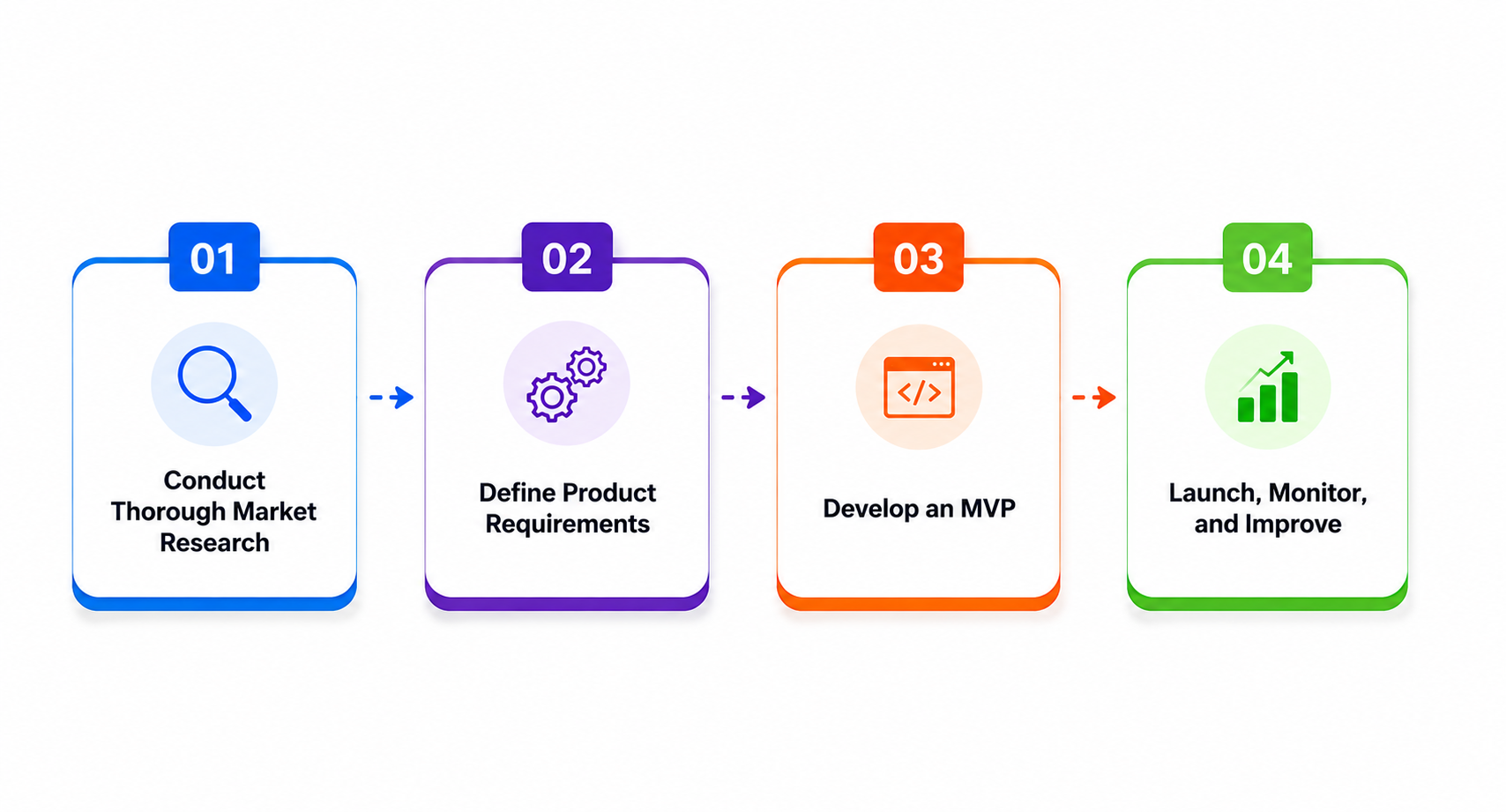
1. Conduct Thorough Market Research
Before development begins, analyze your target audience, competitors, industry trends, and customer pain points to validate your product idea and identify market opportunities that differentiate your SaaS solution from existing alternatives while minimizing investment risks.
- Study customer pain points and business challenges.
- Analyze competitors and feature gaps.
- Validate market demand through surveys.
- Define your unique value proposition.
2. Define Product Requirements
Create detailed documentation covering product goals, user stories, feature priorities, business requirements, technical architecture, and success metrics. Well-defined requirements reduce misunderstandings, improve collaboration, and ensure efficient project execution throughout development.
- Prepare Software Requirement Specification.
- Prioritize core and advanced features.
- Define user roles and permissions.
- Establish measurable project objectives.
3. Develop an MVP
A Minimum Viable Product (MVP) enables businesses to launch with essential features, validate assumptions, collect real customer feedback, and refine the product before investing heavily in advanced functionalities and large-scale development.
- Build only essential features.
- Validate product-market fit quickly.
- Collect early customer feedback.
- Reduce development costs and risks.
4. Launch, Monitor, and Improve
After deployment, continuously monitor performance, gather customer insights, release updates, improve security, and introduce new features to increase customer satisfaction, retention, and recurring subscription revenue.
- Track application performance regularly.
- Collect customer feedback consistently.
- Release security updates frequently.
- Improve features based on analytics.
Essential Stages of SaaS Product Development
Every SaaS application goes through multiple development stages before becoming a mature software product. Each stage contributes to building a reliable, secure, scalable, and user-centric application capable of handling growing customer demands while maintaining excellent performance and business continuity.
1. Product Discovery
The discovery phase focuses on identifying business objectives, validating customer needs, defining product vision, and preparing a strategic roadmap that aligns technical development with long-term business goals and market opportunities.
2. UI/UX Design
An intuitive UI/UX design increase product adoption, improve customer satisfaction, and reduce user frustration by making navigation, workflows, and feature accessibility simple across all devices.
3. Application Development
Developers build the frontend, backend, APIs, databases, cloud infrastructure, authentication systems, and integrations while following agile methodologies to ensure flexibility, scalability, and continuous improvements throughout development.
4. Testing and Deployment
Comprehensive testing ensures software quality, security, performance, and reliability before deployment. Continuous integration and deployment practices simplify releases while minimizing downtime and operational risks.
Best Practices for Building Successful SaaS Products
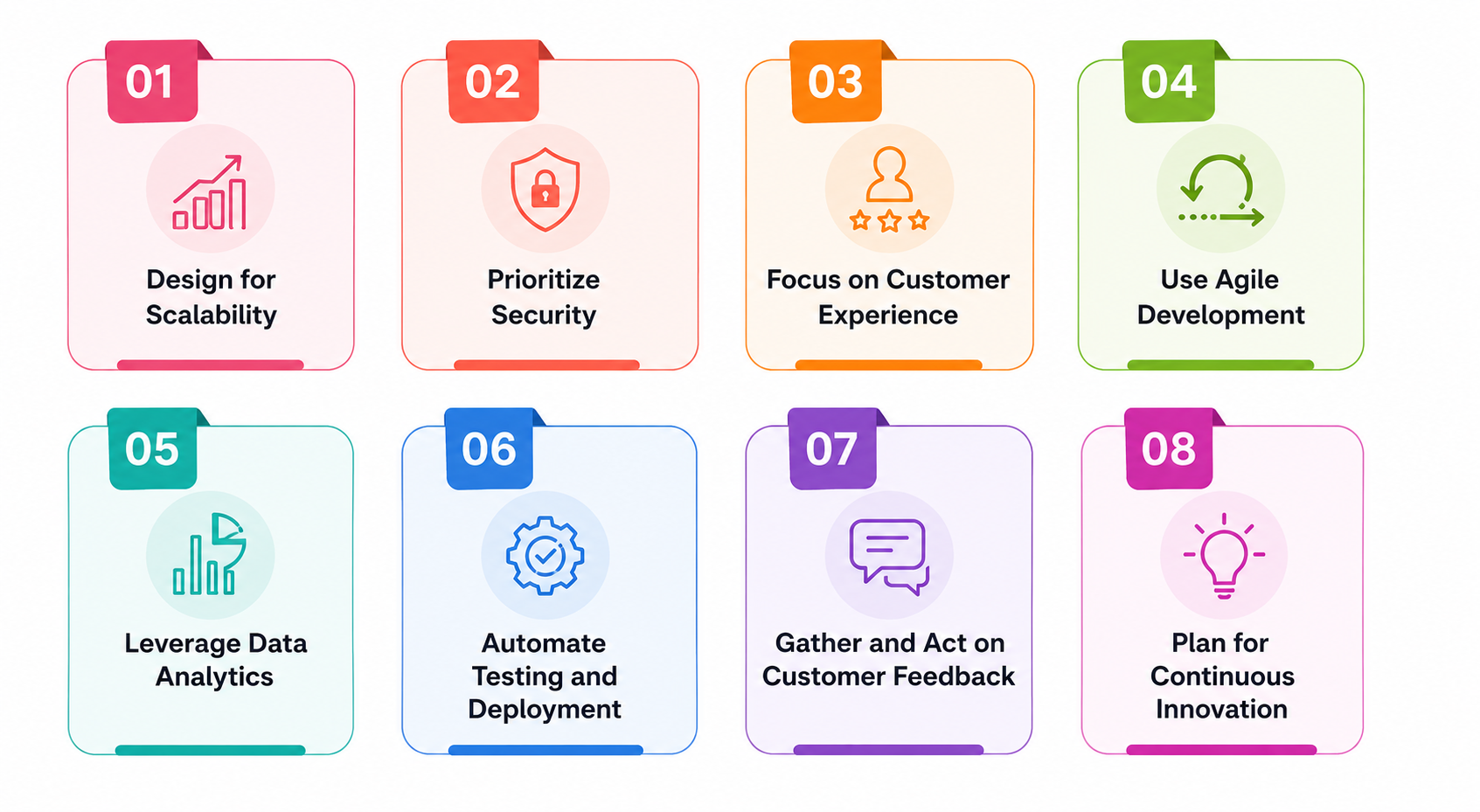
Successful SaaS businesses focus on customer satisfaction, scalable infrastructure, data security, continuous innovation, and performance optimization. Following proven best practices helps businesses deliver reliable applications while increasing customer retention and subscription-based revenue growth.
1. Design for Scalability
Design your SaaS application with scalability as a core principle from the beginning. Leverage cloud-native architecture, microservices, and flexible infrastructure capable of supporting increasing users, larger workloads, and expanding data volumes without compromising application performance, reliability, or user experience as your business grows.
2. Prioritize Security
Protecting customer and business data should be a top priority throughout the SaaS development lifecycle. Implement enterprise-grade security measures such as end-to-end encryption, multi-factor authentication, secure access controls, regular vulnerability assessments, compliance with industry standards, and continuous monitoring to minimize cyber threats and build lasting customer trust.
3. Focus on Customer Experience
Deliver an exceptional customer experience by creating intuitive user interfaces, seamless navigation, personalized dashboards, fast-loading pages, and responsive customer support. Continuously analyze user behavior and collect feedback to improve usability, increase engagement, reduce customer churn, and encourage long-term subscription renewals.
4. Use Agile Development
Adopt agile development methodologies to improve collaboration, accelerate software delivery, and respond quickly to changing customer requirements. Agile practices promote iterative development, continuous testing, faster feature releases, and regular product improvements, allowing businesses to deliver higher-quality SaaS solutions more efficiently.
5. Leverage Data Analytics
Utilize advanced analytics tools to monitor customer behavior, application performance, feature adoption, and business KPIs. Data-driven insights enable organizations to identify improvement opportunities, optimize user experiences, make informed product decisions, and increase customer retention while maximizing recurring revenue.
6. Automate Testing and Deployment
Implement automated testing frameworks and continuous integration/continuous deployment (CI/CD) pipelines to streamline development workflows. Automation reduces manual errors, improves software quality, accelerates release cycles, ensures consistent application performance, and enables faster delivery of new features and updates.
7. Gather and Act on Customer Feedback
Continuously collect customer feedback through surveys, support tickets, user reviews, and in-app analytics to better understand customer expectations and evolving business needs. Acting on valuable feedback helps businesses improve product functionality, strengthen customer relationships, and maintain a competitive advantage.
8. Plan for Continuous Innovation
Successful SaaS products continuously evolve by introducing innovative features, integrating emerging technologies such as Artificial Intelligence (AI) and automation, and optimizing existing functionalities. Regular innovation helps businesses stay ahead of competitors, increase customer value, improve operational efficiency, and achieve long-term market success.
Technologies and Tools Used in SaaS Product Development
Selecting the right SaaS app development technology stack significantly impacts application performance, scalability, maintainability, and long-term development costs. Modern SaaS products leverage cloud platforms, frontend frameworks, backend technologies, DevOps tools, and AI capabilities to deliver exceptional digital experiences.
1. Frontend Technologies
Modern frontend frameworks create interactive, responsive, and high-performance user interfaces that enhance usability across web browsers, smartphones, and tablets while delivering engaging customer experiences.
- React.js
- Angular
- Vue.js
- Next.js
2. Backend Technologies
Backend technologies manage business logic, APIs, authentication, databases, and integrations while ensuring application security, scalability, and high-performance cloud operations.
- Node.js
- Python
- Java
- .NET
3. Cloud Platforms
Cloud providers offer scalable infrastructure, automated deployments, storage, networking, monitoring, and security services essential for modern SaaS application development and operations.
- jiWebHosting
- AWS
- Microsoft Azure
- Google Cloud Platform
- DigitalOcean
4. DevOps & Monitoring Tools
DevOps tools automate deployment, infrastructure management, monitoring, and performance optimization while enabling continuous delivery and maintaining application reliability.
- Docker
- Kubernetes
- Jenkins
- Prometheus
Best Practices for Building a Successful and Sustainable SaaS Product
Creating a successful SaaS product goes beyond launching a great app, it requires continuous innovation, customer-centric improvements, robust security, and scalable infrastructure. By following proven best practices, businesses can improve user satisfaction, and increase customer retention.
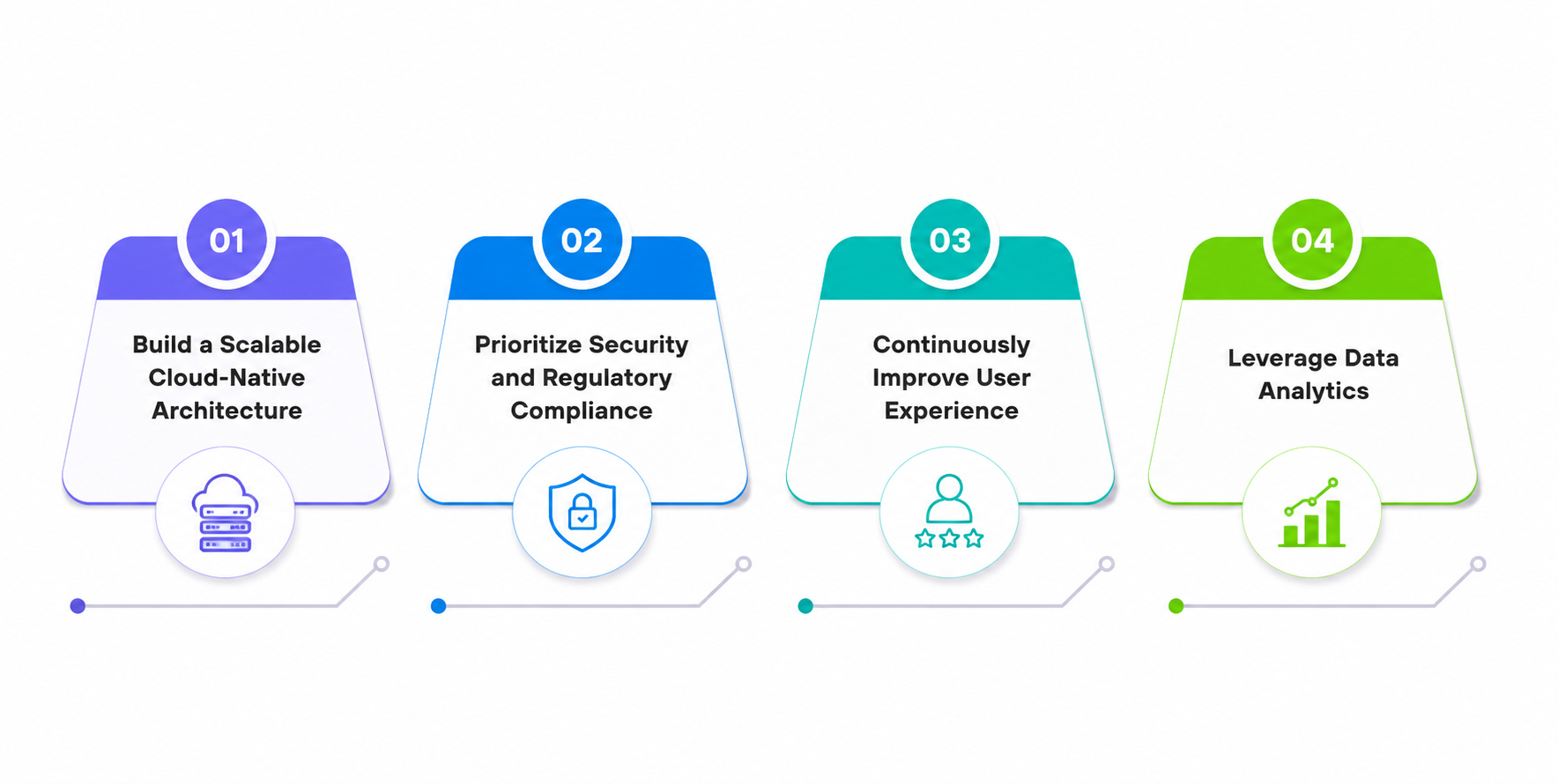
1. Build a Scalable Cloud-Native Architecture
Design your SaaS application with scalability in mind from the beginning. Leveraging cloud-native technologies, microservices, and flexible infrastructure enables your platform to handle increasing users, growing workloads, and evolving business requirements without sacrificing performance, availability, or user experience.
2. Prioritize Security and Regulatory Compliance
Protecting customer data is essential for every SaaS business. Implement advanced security measures, regular vulnerability assessments, encryption, access controls, and industry compliance standards to build customer trust, reduce cybersecurity risks, and safeguard sensitive business information against evolving threats.
3. Continuously Improve User Experience
An exceptional user experience encourages customer retention and increases product adoption. Regularly gather user feedback, analyze customer behavior, simplify onboarding, improve navigation, and optimize application performance to deliver a seamless, intuitive, and engaging experience that keeps users coming back.
4. Leverage Data Analytics
Successful SaaS companies rely on analytics to understand user behavior, measure feature performance, and identify opportunities for improvement. Monitor key performance indicators, release regular feature updates, and embrace emerging technologies like Agentic AI and automation to stay ahead of competitors.
Conclusion
Building a successful SaaS product requires a strategic combination of market research, user-focused design, scalable architecture, robust security, agile development, and continuous product improvement. Businesses that follow a structured SaaS product development process can reduce risks, accelerate time-to-market, and create software solutions that deliver long-term value for customers while generating sustainable recurring revenue.
ToXSL Technologies, a leading SaaS product development company specializes in developing innovative, secure, and scalable SaaS applications tailored to your unique business goals. From product discovery and MVP development to cloud deployment, AI integration, and ongoing maintenance, our experienced development team helps businesses transform ideas into powerful SaaS solutions.
Whether you are a startup launching your first product or an enterprise modernizing your software ecosystem, ToXSL Technologies is your trusted technology partner for end-to-end SaaS product development. Contact us to learn more.
Frequently Asked Questions
1. Why should businesses invest in SaaS product development?
SaaS product development enables businesses to generate recurring revenue, reduce software distribution costs, scale quickly, and deliver cloud-based solutions that customers can access anytime. It also supports continuous innovation, easier maintenance, and faster feature deployment.
2. How do businesses choose the right SaaS product development company?
Businesses should evaluate a development partner's industry experience, technical expertise, cloud capabilities, security practices, portfolio, client reviews, and post-launch support services. Choosing an experienced SaaS development company ensures faster delivery, reduced risks, and a scalable product.
3. What factors influence the cost of SaaS product development?
The overall cost depends on project complexity, feature requirements, UI/UX design, technology stack, cloud infrastructure, third-party integrations, security requirements, development team size, and ongoing maintenance or support after deployment.
4. How can businesses ensure the long-term success of their SaaS product?
Businesses should focus on continuous product improvements, customer feedback, regular security updates, scalable cloud architecture, performance monitoring, data-driven decision-making, and feature enhancements to maximize customer retention and sustainable business growth.
5. Why partner with ToXSL Technologies for SaaS product development?
ToXSL Technologies delivers end-to-end SaaS product development services, from product strategy and MVP development to cloud deployment, AI integration, and ongoing support. Our experienced team builds secure, scalable, and high-performance SaaS solutions tailored to your unique business objectives.