





































The freelance economy is growing at an unprecedented pace, and digital platforms that connect businesses with skilled professionals are becoming more important than ever. Platforms like Upwork have transformed the way companies hire talent and how freelancers access global opportunities. In fact, the global freelance platforms market size is projected to reach USD 24.16 billion by 2033, growing at a CAGR of 18.6% from 2026 to 2033.
This remarkable growth reflects the rising demand for flexible hiring models, remote collaboration, and project-based work across industries. As businesses increasingly turn to freelance talent and professionals seek greater independence, building an Upwork clone has become a highly profitable and future-ready business opportunity. With the right strategy, features, and development approach, you can create a scalable freelance marketplace that connects employers and freelancers while generating long-term revenue.
Key Highlights
- An Upwork clone is a high-potential business model that capitalizes on the growing demand for remote work and freelance hiring across industries.
- Clear market research is essential before development to create a platform that stands out from existing competitors.
- Core features such as user profiles, job posting, messaging, and reviews are fundamental to building a successful freelance marketplace.
- Choosing the right tech stack and development partner plays a crucial role in ensuring platform scalability and security.
- A phased development approach with MVP launch, testing, and post-launch optimization helps reduce risk and improve user adoption.
Why Is Investing in an Upwork Clone a Smart Business Move?
Building an Upwork clone is more than just replicating a popular platform, it is about creating a scalable business model that addresses the increasing demand for freelance hiring and project-based work. As businesses continue to embrace remote teams and freelancers seek flexible work opportunities, freelance marketplaces are becoming indispensable digital ecosystems.
An Upwork clone allows you to launch faster with a proven marketplace structure while customizing the platform according to your target audience, niche, and revenue goals. Whether you want to serve startups, enterprises, creative professionals, or tech experts, the model is highly adaptable and future-ready.
By investing in a freelance marketplace, you can create recurring revenue streams through commissions, subscriptions, featured listings, and premium services, while building a platform that delivers long-term value to both clients and freelancers.
Benefits of Having an Upwork Clone
Creating an Upwork clone app comes with several business and operational advantages. It enables you to launch a proven freelance marketplace model while tailoring it to your target audience and industry niche.
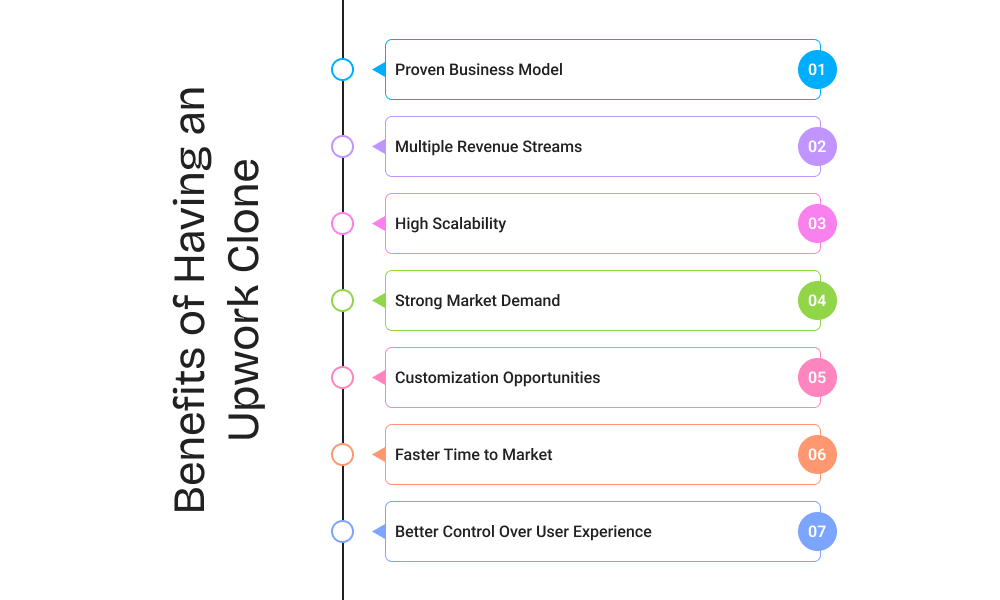
1. Proven Business Model
Upwork has already validated the freelance marketplace concept. By building a similar platform, you are entering a market with established demand and user behavior, reducing the risk associated with launching a completely new concept.
2. Multiple Revenue Streams
An Upwork clone can generate revenue through service fees, commissions on completed projects, premium memberships, featured freelancer profiles, promoted job listings, and even third-party advertising. This gives you a flexible and sustainable monetization structure.
3. High Scalability
A well-developed freelance marketplace can scale as your user base grows. You can start with a niche market and later expand into broader industries, additional services, or global markets without rebuilding the platform from scratch.
4. Strong Market Demand
The gig economy continues to expand worldwide. Businesses increasingly rely on freelancers for cost-effective, specialized, and on-demand talent, while professionals seek flexible work options. This creates a strong and growing demand for freelance platforms.
5. Customization Opportunities
Unlike generic marketplaces, an Upwork clone can be customized with unique workflows, niche-focused categories, advanced search filters, AI-based recommendations, industry-specific features, and tailored payment structures to differentiate your brand.
6. Faster Time to Market
Instead of building every concept from the ground up, an Upwork-inspired model gives you a clear roadmap for features, user flows, and monetization. This speeds up the mobile app development cycle and helps you launch faster.
7. Better Control Over User Experience
Owning your own freelance marketplace gives you complete control over branding, policies, onboarding, pricing strategies, dispute resolution, and user engagement. This allows you to optimize the platform based on real business needs.
Steps to Build an Upwork Clone
Building an Upwork clone requires a strategic approach that combines market understanding, strong technology, user-centric design, and secure platform functionality. Instead of simply copying an existing freelance marketplace, businesses should focus on creating a platform that delivers real value to both clients and freelancers. Below are the essential steps to build a successful Upwork clone, explained in detail.
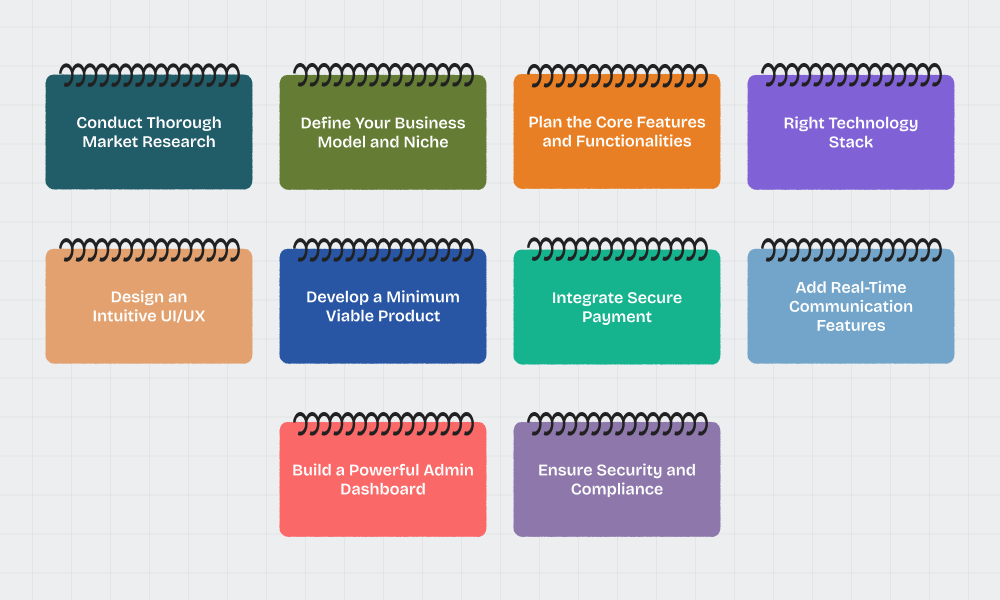
1. Conduct Thorough Market Research
Before starting development, it is essential to understand the freelance marketplace landscape. Proper research helps you identify user needs, industry trends, and opportunities to build a competitive platform.
- Analyze top platforms like Upwork, Fiverr, and Freelancer
- Identify target audience and their pain points
- Study pricing models and revenue strategies
- Find gaps in the market to create unique value
2. Define Your Business Model and Niche
A clear business model and niche help your platform stand out and attract the right audience. It also defines how your platform will generate revenue.
- Choose between a general or niche-specific marketplace
- Decide revenue streams like commissions or subscriptions
- Identify industries with growing freelance demand
- Define your unique value proposition
3. Plan the Core Features and Functionalities
Planning features ensures your platform meets the needs of both clients and freelancers. A well-balanced feature set improves usability and engagement.
- Client features: job posting, hiring, milestone management
- Freelancer features: profiles, proposals, portfolio showcase
- Messaging and collaboration tools
- Payment tracking and review systems
4. Right Technology Stack
Choosing the right technology stack ensures your platform is scalable, secure, and high-performing. It directly impacts speed, flexibility, and future growth.
- Frontend: React, Angular, or Vue.js for responsiveness
- Backend: Node.js, Laravel, Django, or Ruby on Rails
- Database selection for efficient data handling
- API integration for seamless functionality
5. Design an Intuitive UI/UX
A user-friendly interface is critical for engagement and retention. Good design makes navigation simple and improves the overall user experience.
- Simple and clean interface design
- Easy navigation for both user types
- Smooth onboarding and profile creation
- Seamless job posting and proposal process
6. Develop a Minimum Viable Product
Building an MVP allows you to launch quickly and test your idea in the real market. It helps reduce risks and gather early feedback.
- Include only essential features for launch
- Focus on usability and performance
- Collect user feedback for improvements
- Plan upgrades based on real data
7. Integrate Secure Payment
Secure payment systems build trust between users and ensure safe transactions. It is a key component of any freelance platform.
- Integrate trusted payment gateways
- Enable deposit and withdrawal options
- Implement escrow system for security
- Ensure transparent transaction tracking
8. Add Real-Time Communication Features
Effective communication improves collaboration and project success. Real-time features make interactions faster and more efficient.
- In-app messaging system
- File sharing capabilities
- Notifications and updates
- Optional video or voice call integration
9. Build a Powerful Admin Dashboard
An admin dashboard helps manage and monitor the platform efficiently. It gives full control over operations and user activities.
- Manage users, projects, and categories
- Monitor payments and commissions
- Handle disputes and reviews
- Track reports and platform performance
10. Ensure Security and Compliance
Strong security measures protect user data and build platform credibility. Compliance ensures smooth and legal operations.
- Data encryption and secure authentication
- Role-based access control
- Fraud detection mechanisms
- Secure APIs and compliance standards
How Much Does It Cost to Develop a Freelance Marketplace Like Upwork?
The cost to develop a freelance marketplace like Upwork depends on several factors, including the platform’s feature set, design complexity, development approach, technology stack, third-party integrations, and whether you want to build a web platform only or include mobile apps for Android and iOS. Since a freelance marketplace is a multi-vendor platform that requires user management, job posting, bidding, secure messaging, payment processing, escrow functionality, reviews, and an admin dashboard, the overall budget can vary significantly based on your business goals.
Development Type | Estimated Cost | What It Includes |
|---|---|---|
Basic Freelance Marketplace | $10,000 – $45,000 | Includes essential features such as user registration, freelancer and client profiles, job posting, proposal submission, messaging, secure payment integration, reviews, and a basic admin panel. |
Mid-Level Custom Freelance Platform | $45,000 – $90,000 | Includes advanced UI/UX, milestone payments, escrow system, advanced search filters, notifications, reporting tools, enhanced admin controls, and improved scalability. |
Enterprise-Grade Upwork Clone | $90,000+ | Includes web and mobile apps, AI-powered matching, video interviews, multi-currency support, multilingual features, analytics dashboards, fraud detection, enterprise tools, and high scalability. |
Key Factors That Influence Development Cost
The final cost of building a freelance marketplace is not fixed. It depends on multiple elements that shape the complexity, performance, and scalability of the platform. Below are the major factors that impact development cost:
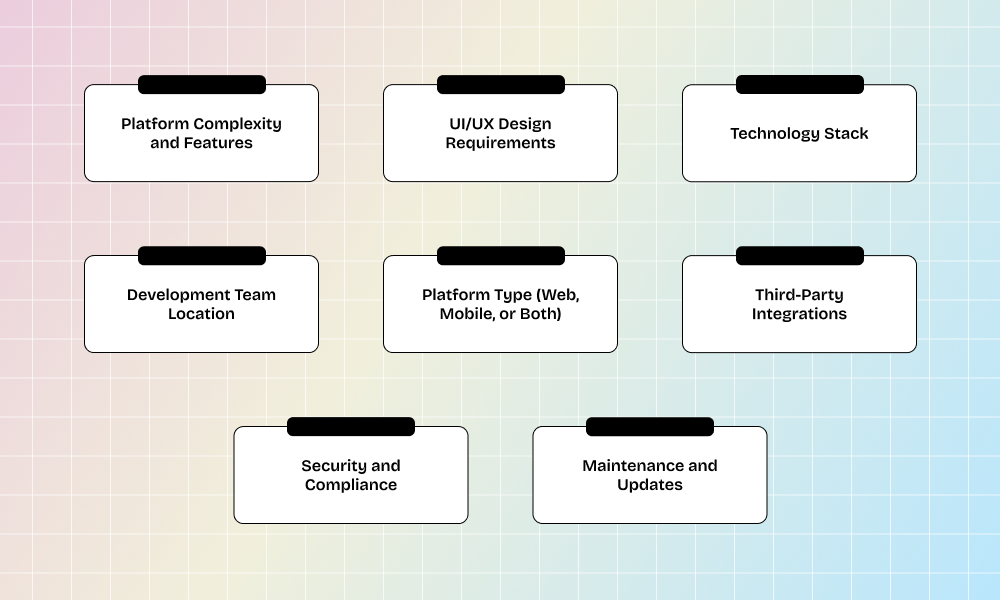
1. Platform Complexity and Features
The number and type of features you include play a major role in determining the cost. A basic platform with essential features like user registration, job posting, and messaging will cost less. However, advanced features such as AI-based recommendations, real-time chat, escrow payment systems, analytics dashboards, and multi-language support will significantly increase development time and cost.
2. UI/UX Design Requirements
A simple design with standard templates is more affordable, while a fully customized, interactive, and visually appealing UI/UX requires more time and expertise. High-quality design improves user engagement but also adds to the overall budget, especially if you aim for a premium user experience similar to top platforms.
3. Technology Stack
The choice of technologies used for frontend, backend, database, and integrations also affects the cost. Modern frameworks and scalable architectures may require experienced developers, which increases development expenses. Additionally, integrating third-party APIs for payments, notifications, and analytics can add to the cost.
4. Development Team Location
The cost of hiring developers varies based on their geographical location. For example, development teams in North America or Europe usually charge higher rates compared to teams in regions like India. Choosing the right development partner can help balance quality and cost effectively.
5. Platform Type (Web, Mobile, or Both)
Developing only a web platform is less expensive compared to building both web and mobile applications. If you plan to launch Android and iOS apps along with a website, the cost will increase due to additional development, testing, and maintenance efforts.
6. Third-Party Integrations
Integrating services such as payment gateways, chat systems, cloud storage, email services, and security tools adds functionality but also increases cost. Some integrations come with subscription fees, which should also be considered in the long-term budget.
7. Security and Compliance
Since freelance platforms handle sensitive data and financial transactions, implementing strong security measures is essential. Features like data encryption, secure authentication, fraud detection, and compliance with regulations (such as GDPR) can increase development time and cost.
8. Maintenance and Updates
The cost does not end after development. Regular maintenance, bug fixes, feature updates, and server management are ongoing expenses. A well-maintained platform ensures better performance, security, and user satisfaction over time.
Conclusion
Building an Upwork clone is a strategic investment for businesses looking to enter the rapidly growing freelance economy. With the right features, intuitive design, secure payment infrastructure, and a scalable technology stack, you can create a powerful freelance marketplace that connects businesses with top talent efficiently.
However, success goes beyond simply replicating an existing platform. It requires a clear business model, niche positioning, seamless user experience, and continuous innovation to stand out in a competitive market.
At ToXSL Technologies, we specialize in developing robust, scalable, and feature-rich freelance marketplace solutions tailored to your business needs. From market research and UI/UX design to custom development, payment integration, testing, and post-launch support, our team helps businesses turn innovative marketplace ideas into successful digital platforms. If you are planning to build an Upwork clone, partner with ToXSL Technologies to create a secure, high-performing platform that drives long-term growth and user engagement. Contact us to learn more.
Frequently Asked Questions
1. What is an Upwork clone?
An Upwork clone is a freelance marketplace platform designed with similar core functionalities to Upwork, allowing businesses to hire freelancers and manage projects in one place. It helps create a digital ecosystem where clients and professionals can connect securely and collaborate efficiently.
- Enables clients to post projects and receive proposals from freelancers.
- Allows freelancers to create profiles, showcase portfolios, and bid on jobs.
- Includes features like messaging, milestone tracking, payments, and reviews.
2. How long does it take to develop a freelance marketplace like Upwork?
The timeline for developing an Upwork clone depends on the project scope, design complexity, and the number of custom features you want to include. A basic version can be launched faster, while a more advanced and scalable platform takes longer to build and test.
- A simple MVP version can be developed in a shorter timeframe.
- A fully customized platform with advanced features requires more development time.
- UI/UX design, payment systems, and testing phases influence the total timeline.
- Working with an experienced development company can help speed up delivery.
3. What are the must-have features in an Upwork clone?
A successful Upwork clone must include essential features that support both freelancers and clients while ensuring secure transactions and smooth communication. These features form the foundation of a reliable and scalable freelance marketplace.
- User registration, profile creation, and portfolio management are essential basics.
- Job posting, bidding or proposal submission, and project management are core functions.
- Secure messaging, milestone payments, and escrow integration build trust and transparency.
- Ratings, reviews, notifications, and an admin dashboard improve overall platform management.
4. Can I build a niche-specific freelance marketplace instead of a general platform?
Yes, building a niche-specific freelance marketplace is often a smart strategy because it allows you to target a focused audience and create specialized features for a particular industry. Niche platforms can stand out more easily in a competitive market.
- Build platforms for developers, designers, or other industries.
- A niche focus helps create tailored industry-specific user experiences.
- Improve trust and user retention by serving a clearly defined audience.
- Niche marketplaces often face less competition than broad general-purpose platforms.
5. How Can You Differentiate Your Upwork Clone from Competitors?
Standing out in a competitive market requires innovation and a clear value proposition tailored to your target audience.
- Focus on a specific niche or industry
- Offer unique features like AI-based matching
- Provide better pricing or lower commission rates
- Enhance user experience with intuitive design
6. What Monetization Strategies Can Be Used in an Upwork Clone?
A strong monetization model ensures consistent revenue generation while maintaining platform usability.
- Commission fees on completed projects
- Subscription plans for premium features
- Featured job listings or freelancer profiles
- Service charges for secure transactions
7. What Role Does AI Play in Freelance Marketplace Development?
Artificial Intelligence can significantly enhance platform efficiency and user experience.
- Smart job and freelancer matching
- Automated spam and fraud detection
- Personalized recommendations for users
- Chatbots for instant customer support
8. How Long Does It Take to Build an Upwork Clone?
The development timeline depends on the complexity, features, and development approach chosen.
- MVP development may take 2–4 months
- Advanced platforms can take 6+ months
- Timeline varies based on team size
- Continuous updates extend overall development cycle