







































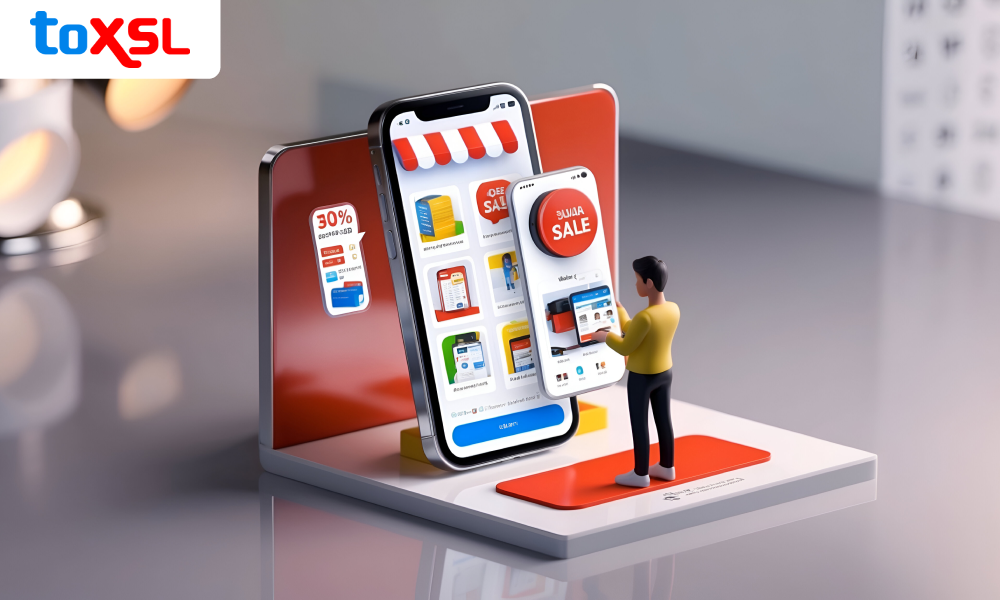
The rise of on-demand services has reshaped consumer expectations in every industry and retail is no exception. Quick commerce (q-commerce) refers to the ultra-fast delivery of goods (often within 15–60 minutes of ordering) spanning groceries, meals, pharmaceutical essentials, and daily-use items. With a projected market value exceeding $330+ billion globally by 2030, q-commerce has become a mainstream segment within e-commerce. Early adopters report 30–50% higher order frequency, and businesses leveraging hyper-local delivery have seen customer retention increase by up to 25%.
In today’s fast-paced world, consumers want convenience and they want it now. Whether it’s groceries before office hours, pet supplies in the afternoon, or emergency needs at night quick commerce apps are bridging the gap between demand and delivery. In this blog, we break down everything you need to know about developing a successful quick commerce app from features and strategy to future trends and costs.
Key Takeaways
- The demand for ultra-fast delivery has grown exponentially and shows no signs of slowing down.
- A seamless user experience and powerful backend logistics are key to success.
- From basic MVP to advanced AI-enabled platforms, development costs vary widely.
- The right business model and monetization plan can make or break your app.
- Integrating future trends like AI, predictive analytics, and automated logistics will future-proof your product.
- Choosing the right technology partner, like ToXSL Technologies, ensures quality, scalability, and ongoing support.
Steps to develop a Quick Commerce App
Here are a few steps needs to develop a quick commerce app:
1. Market Research and Validation
The first step in developing a quick commerce app is to understand the market and validate your idea. You need to analyze your target audience, determine which products or services are in highest demand, and identify which cities or regions are feasible for hyper-local delivery. Studying competitors’ strengths and weaknesses, and conducting surveys or focus groups, will provide insights into what users expect and help shape your app’s core functionality.
2. Define Your Business Model
Once you have market clarity, the next step is to define your business model. Decide whether you will maintain your own inventory, aggregate multiple local stores, or use a hybrid approach. This choice affects logistics, delivery speed, and operational costs. Additionally, you need to determine your pricing structure, delivery charges, and any subscription or loyalty programs to create sustainable revenue streams.
3. Identify Essential Features
The success of a quick commerce app depends heavily on the features it offers. You must define the key functionalities for users, delivery partners, and administrators. Features such as real-time order tracking, fast checkout, smart search, and secure payment options enhance user experience, while logistics management tools for delivery partners and analytics for administrators ensure smooth operations.
4. UI/UX Design
Designing the user interface and experience is critical for keeping users engaged. A good design ensures that users can browse products, place orders, and track deliveries with minimal effort. It should be visually appealing, intuitive, and consistent across devices. Optimizing the flow of the app reduces friction and increases user retention.
5. Development and Technology Stack
Once the design is finalized, development begins. Choosing the right technology stack is essential for performance and scalability. The frontend and backend should work seamlessly, with secure database management, smooth payment integration, and real-time tracking features. Developers should focus on creating a responsive app that works across iOS and Android devices while maintaining high performance under heavy user load.
6. Testing and Quality Assurance
Before launching the app, rigorous testing is necessary to ensure reliability. Functional tests check whether all features work correctly, while non-functional tests validate performance, speed, and security. User acceptance testing ensures that the app meets the expectations of real users, and testing the payment system, delivery tracking, and notifications prevents future operational issues.
7. Launch and Deployment
After testing, the app is ready for deployment on major platforms like the Google Play Store and Apple App Store. This step also involves setting up servers, integrating APIs, and ensuring compliance with platform guidelines and data privacy regulations. A well-executed launch strategy helps generate initial traction and positive reviews.
8. Marketing and Growth Strategy
Once the app is live, a strong marketing strategy is necessary to attract and retain users. This includes online advertising, social media campaigns, referral programs, and partnerships with local stores or influencers. Early promotions and incentives can drive initial downloads, while loyalty programs encourage repeat usage and improve customer retention.
9. Ongoing Support and Updates
The development process does not end with the launch. Continuous maintenance, bug fixes, feature upgrades, and performance optimization are crucial to keeping the app competitive. Regular updates based on user feedback and emerging market trends help the app stay relevant and scalable over time.
Core Features of a Quick Commerce App
1. User App Features
The user app should provide a seamless and convenient shopping experience. Easy on boarding and login options allow users to quickly create accounts or sign in through social media and email. Smart search and filters help users find products quickly, while a detailed product catalog with clear images, descriptions, and pricing ensures informed purchasing decisions. The cart and quick checkout process should minimize steps, allowing users to place orders in seconds. Real-time order tracking keeps customers informed of their delivery status, and multiple payment options, including digital wallets and UPI, offer flexibility. Promotions, rewards, and personalized offers enhance user engagement, while integrated customer support ensures help is available whenever needed.
2. Delivery Partner App Features
The delivery partner app should focus on efficiency and clarity. Simple login and verification processes allow delivery personnel to start working immediately. The ability to accept or reject orders and view optimized routes ensures timely deliveries. Real-time navigation helps drivers avoid delays, while status updates indicate whether orders have been picked up, are in transit, or have been delivered. Delivery partners can also access their order history and track earnings, making it easier to manage multiple deliveries and maintain productivity.
3. Admin Panel Features
The admin panel serves as the backbone of a quick commerce app. It provides a comprehensive dashboard with analytics and insights into sales, orders, and customer behavior. Order management allows admins to monitor, assign, and track deliveries efficiently. Inventory control ensures stock levels are accurate and prevents out-of-stock situations. User management helps monitor both customers and delivery partners, while detailed reports and insights guide strategic decisions. The admin panel also enables sending push notifications, running promotions, and updating product listings to maintain smooth operations and enhance overall business performance.
How Much Does it Cost to Develop a Quick Commerce App?
The cost of developing a quick commerce app can vary significantly depending on the app’s complexity, features, platforms, and the development partner you choose. A simple Minimum Viable Product (MVP) with core functionalities is much more affordable and allows you to test the market before investing heavily. On the other hand, a full-featured application with advanced functionalities like AI-based delivery optimization, predictive analytics, multiple payment integrations, and real-time tracking will require a larger budget and more development time.
Other factors influencing the cost include the technology stack, platform choice (iOS, Android, or both), UI/UX design complexity, backend infrastructure, third-party API integrations, and ongoing maintenance requirements. Location and expertise of the development team also play a role; for example, developers in North America or Europe tend to charge more than developers in Asia or India for the same scope of work.
Package Type | Description | Estimated Cost (USD) |
|---|---|---|
MVP | Basic user, delivery, and admin features; suitable for market testing | $25,000 – $40,000 |
Standard | Enhanced UI/UX, payment integration, basic analytics, and improved functionality | $40,000 – $80,000 |
Advanced | Real-time tracking, AI suggestions, advanced reporting, scalable cloud setup | $80,000 – $150,000 |
Enterprise/Custom Solution | Full customization, security, multi-region support, ongoing maintenance | $150,000+ |
The Right Quick Commerce App Strategy
Developing your app is only part of the journey. Without a strong strategy, adoption and growth will stall. Below is a comparative breakdown of strategic choices that shape the success of a q-commerce app.
Strategy Area | Focus | Goal Outcome |
|---|---|---|
Target Market | Hype-local, city-centric shoppers | Faster deliveries & optimized routing |
Monetization Model | Delivery fees, subscription, ads | Diverse revenue streams |
Inventory Management | Dark stores vs aggregated partner stores | Low fulfillment time & better stock availability |
Marketing Channels | Social ads, influencer partnerships, local promotions | Higher initial traffic & better brand visibility |
Technology Investments | AI route optimization, predictive analytics | Faster delivery & data-driven decisions |
Loyalty & Retention | Rewards, referral programs | Higher customer lifetime value |
Quick Commerce App Development: Future Trends
Quick commerce is an evolving industry, and staying ahead of emerging trends is critical for businesses looking to remain competitive. As consumer expectations grow, technology will play a major role in shaping the future of ultra-fast delivery apps. Here are the key trends that are expected to dominate the landscape in the coming years:
1. Artificial Intelligence and Machine Learning
AI and machine learning are set to transform how quick commerce apps operate. Predictive analytics can forecast demand patterns based on historical purchase behavior, weather conditions, and local events. For instance, an AI-driven app can anticipate grocery demand spikes during holidays and adjust inventory accordingly. Machine learning algorithms also optimize delivery routes in real-time, reducing delays and improving efficiency. Personalized recommendations powered by AI will enhance user experience by suggesting products based on previous purchases or current trends, increasing order frequency and customer satisfaction.
2. Automated and Drone-Based Delivery
The future of last-mile delivery will increasingly rely on automation. Drones and autonomous vehicles are being tested to speed up deliveries in urban areas, particularly for lightweight items such as food, medicine, and small household goods. This reduces dependency on human couriers, minimizes errors, and can dramatically shorten delivery times. Companies investing in autonomous delivery solutions will gain a competitive edge by offering faster, contactless, and more environmentally friendly services.
3. Predictive Inventory and Smart Warehousing
To meet the promise of near-instant deliveries, managing inventory efficiently is crucial. Future quick commerce apps will leverage predictive inventory systems that anticipate product demand and ensure stock availability in dark stores or micro-warehouses near urban centers. Smart warehousing technologies, such as robotic sorting and automated restocking, will streamline operations, reduce human error, and improve fulfillment speed. Businesses that adopt these technologies can avoid out-of-stock situations, a key factor in customer satisfaction and retention.
4. Immersive Shopping Experiences
AR is slowly becoming a part of online shopping, allowing users to visualize products in their real-world environment before purchase. For example, customers can see how a piece of furniture fits in their living room or how a cosmetic product looks on their skin. Integrating AR into quick commerce apps can enhance user engagement, reduce product returns, and offer an innovative edge over competitors. This trend will become more relevant as devices and apps become more AR-capable.
Conclusion
In an era where speed meets convenience, quick commerce apps are redefining how consumers shop for everyday essentials. Developing a q-commerce platform requires strong technical planning, strategic execution, and ongoing iteration based on user feedback. At ToXSL Technologies, we understand these challenges and we turn them into opportunities. With our expertise, innovative thinking, and customer-first values, we help businesses build robust and scalable quick commerce solutions that captivate users and consistently drive growth. If you’re poised to launch in the fast-paced world of on-demand delivery, we’ll be your trusted technology partner every step of the way. Contact us today.
Frequently Asked Questions
1. Which industries benefit most from Quick Commerce app development?
Quick Commerce app development is ideal for industries that require urgent fulfillment. These include grocery delivery, food and beverages, pharmacies, personal care products, electronics accessories, and daily essentials, where speed, convenience, and proximity play a critical role in customer satisfaction.
2. How long does it take to develop a Quick Commerce app?
Development timelines depend on app complexity and feature requirements. A basic MVP can take 3–4 months, while a fully customized Quick Commerce platform with AI, analytics, and integrations may require 6 months or more for development and testing.
3. What role does AI play in Quick Commerce app development?
AI enhances Q-Commerce apps by optimizing delivery routes, forecasting demand, managing inventory levels, and personalizing user recommendations. These intelligent capabilities help reduce delivery times, minimize stock issues, and improve overall customer satisfaction and retention.
4. Can Quick Commerce apps integrate with third-party services?
Yes, Quick Commerce apps can integrate seamlessly with third-party services such as payment gateways, mapping APIs, logistics platforms, CRM systems, and analytics tools. These integrations improve operational efficiency, enhance user experience, and support data-driven decision-making.
5. How can businesses monetize a q-commerce app?
Monetization methods include delivery fees, priority subscriptions, commission from partner stores, in-app advertising, and loyalty programs.