































- Jun 12, 2026
Share this post on:
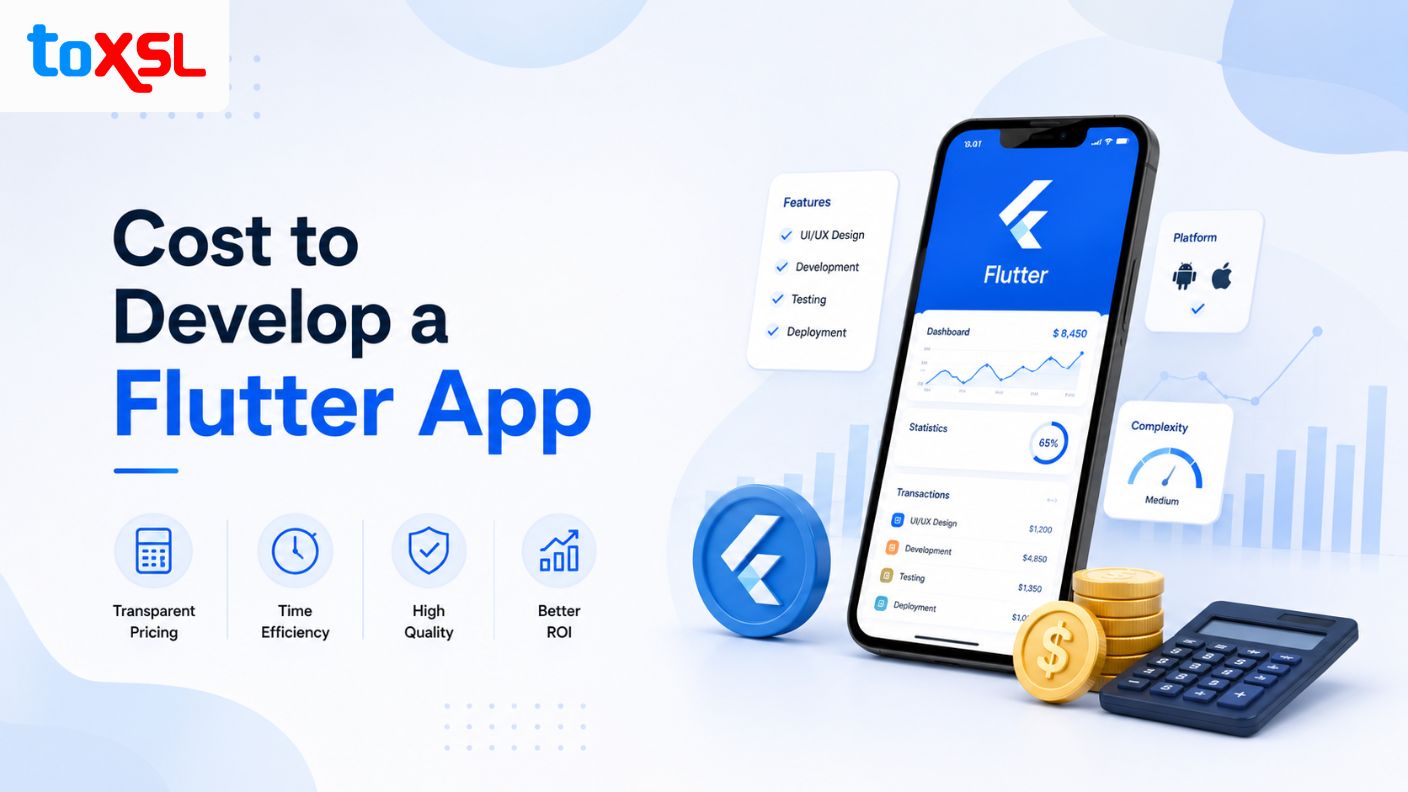
In today's competitive digital landscape, businesses are increasingly investing in mobile applications to improve customer engagement, streamline operations, and generate new revenue streams. However, developing separate applications for Android and iOS platforms can be costly and time-consuming. This is where Flutter has emerged as a game-changing framework for businesses worldwide.
Developed by Google, Flutter enables developers to create high-performance, cross-platform applications using a single codebase. Its ability to deliver native-like experiences while reducing development time and costs has made it one of the most preferred app development frameworks among startups, SMEs, and enterprises.
Before starting a Flutter app project, one of the most common questions businesses ask is: "How much does Flutter app development cost?" The answer depends on multiple factors, including app complexity, design requirements, features, integrations, development team location, and maintenance needs.
This comprehensive pricing guide explores Flutter app development costs, key influencing factors, app categories, cost optimization strategies, and how to choose the right Flutter development partner for your project.
Key Takeaways
- Flutter allows businesses to develop Android and iOS applications using a single codebase, reducing development costs significantly.
- Flutter app development costs typically range from $10,000 to $100,000+, depending on project complexity and functionality.
- Features, UI/UX design, third-party integrations, and developer expertise significantly impact the overall project budget.
- Proper planning and MVP development can help businesses optimize Flutter app development costs.
- Partnering with an experienced Flutter development company ensures faster development, better quality, and long-term ROI.
Market Size: Flutter App Development
Flutter has established itself as one of the most widely adopted cross-platform app development frameworks globally. According to 6sense, Flutter currently serves more than 26,800 customers worldwide and holds approximately 0.96% market share in the Application Development category, ranking among the top application development technologies used by businesses across various industries.
The framework has gained particularly strong adoption in key markets such as the United States and India. 6sense data shows that over 5,000 companies in India alone use Flutter for application development, while globally thousands of organizations, including large enterprises and fast-growing startups, rely on Flutter to build scalable, high-performance mobile applications.
Understanding Flutter App Development
Flutter app development refers to the process of building mobile, web, and desktop applications using Flutter, Google's open-source UI software development kit (SDK). Introduced by Google in 2017, Flutter enables developers to create visually appealing, high-performance applications for multiple platforms using a single codebase. This eliminates the need to develop separate applications for Android and iOS, helping businesses reduce development time, costs, and maintenance efforts.
Flutter uses the Dart programming language and comes with a rich collection of customizable widgets that allow developers to create responsive and engaging user interfaces. One of its most notable features is the "Hot Reload" functionality, which enables developers to view code changes instantly, significantly accelerating the development process and improving productivity.
Businesses across industries such as healthcare, eCommerce, finance, education, travel, and logistics are increasingly choosing Flutter because it delivers near-native performance while maintaining a consistent user experience across platforms. Its flexibility, scalability, and cost-effectiveness make it an ideal solution for startups, small businesses, and enterprises looking to launch high-quality applications quickly.
By leveraging Flutter app development, organizations can accelerate their digital transformation initiatives, improve customer engagement, and achieve faster time-to-market while maintaining a lower total cost of ownership.
How to Choose the Right Flutter App Development Company
Choosing the right Flutter app development company is a critical step that can significantly influence the success of your mobile application project. With numerous development firms offering Flutter services, businesses must carefully evaluate their options to ensure they partner with a company that possesses the necessary technical expertise, industry experience, and project management capabilities.
1. Evaluate Flutter Development Expertise
The technical expertise of a development company is one of the most important factors to consider. Experienced Flutter developers understand the framework's capabilities, best practices, and performance optimization techniques, enabling them to build high-quality applications that deliver exceptional user experiences across platforms.
What to Look For:
- Proven experience in Flutter app development
- Strong knowledge of Dart programming language
- Cross-platform development expertise
- Experience with API integrations
- Ability to build scalable applications
2. Review Portfolio and Previous Projects
A company's portfolio serves as a reflection of its capabilities, creativity, and industry experience. Reviewing previous projects allows businesses to assess the quality of applications delivered and determine whether the company has experience working on projects similar to their own.
Key Areas to Assess:
- Similar projects within your industry
- Complexity of applications developed
- Innovation and customization capabilities
- Performance and functionality standards
- Success stories and case studies
3. Check Client Reviews and Testimonials
Client reviews and testimonials offer valuable information about a company's reliability, professionalism, and customer satisfaction levels. Feedback from previous clients can help businesses understand how effectively the company communicates, manages projects, and resolves challenges during development.
Things to Verify:
- Client satisfaction ratings
- Project delivery consistency
- Communication effectiveness
- Quality of technical support
- Responsiveness to issues
4. Assess Development Methodology
An organized development process ensures projects are completed efficiently and within the agreed timeline. Companies that follow Agile development methodologies are often better equipped to handle changing requirements and deliver incremental improvements throughout the project lifecycle.
Important Considerations:
- Agile development practices
- Project transparency
- Quality assurance procedures
- Risk management strategies
- Continuous improvement processes
5. Communication and Collaboration
Effective communication is essential for the successful execution of any software development project. A development company should maintain clear communication channels and provide regular updates regarding project progress, challenges, and milestones.
Evaluate the Following:
- Availability of dedicated project managers
- Communication tools and channels
- Frequency of project updates
- Responsiveness to inquiries
- Collaboration and reporting processes
- Transparency in decision-making
6. Verify Quality Assurance and Testing
Testing is a crucial phase of app development that directly impacts application performance, security, and user satisfaction. A reputable Flutter development company should have a dedicated quality assurance team responsible for identifying and resolving issues before deployment.
Quality Assurance Checklist:
- Functional testing procedures
- Performance testing standards
- Security testing practices
- Device compatibility testing
- Automated and manual testing
- User acceptance testing processes
7. Evaluate Post-Launch Support
Launching an application is only the beginning of its lifecycle. Regular maintenance, updates, and enhancements are necessary to ensure optimal performance, security, and compatibility with evolving technologies.
Support Services Should Include:
- Bug fixes and troubleshooting
- Security patches and updates
- Performance monitoring
- Feature enhancements
- Version upgrades
- Technical support and consultation
8. Compare Pricing Models
Understanding the pricing structure and engagement options offered by a Flutter development company is essential for budget planning and project management. Different companies provide various models that cater to different project scopes and business requirements.
Common Engagement Models:
- Fixed-price development model
- Dedicated development team
- Time and material model
- Offshore development services
- Hybrid engagement approach
- Project-based resource allocation
9. Assess Industry Experience
Industry-specific experience can be a major advantage when developing a Flutter application. Companies familiar with your business sector are better equipped to understand user expectations, compliance requirements, and market challenges.
Look for Experience In:
- Healthcare applications
- FinTech solutions
- eCommerce platforms
- Education technology
- Logistics and transportation
- Travel and hospitality applications
10. Consider Long-Term Partnership
Business requirements often evolve as organizations grow. Choosing a Flutter development company that can scale resources and support future enhancements ensures your application remains competitive and capable of meeting changing demands.
Consider These Factors:
- Ability to scale development teams
- Expertise in emerging technologies
- Long-term support commitment
- Future feature development capabilities
- Cloud and infrastructure expertise
- Strategic technology consulting services
How Much Does Flutter App Development Cost?
The cost of Flutter app development depends on several factors, including application complexity, UI/UX design requirements, feature set, third-party integrations, backend infrastructure, development team location, and post-launch maintenance needs. One of Flutter's biggest advantages is its ability to support multiple platforms through a single codebase, helping businesses reduce overall development expenses compared to native app development.
A simple Flutter application with basic functionalities can be developed at a relatively lower cost, while complex enterprise-grade applications with advanced features such as real-time communication, AI capabilities, payment gateways, cloud integrations, and analytics dashboards require a larger investment. Businesses should also consider additional expenses such as testing, deployment, security enhancements, and ongoing maintenance when planning their app development budget. The table below provides an estimated breakdown of Flutter app development costs based on project complexity:
App Type | Features Included | Estimated Development Time | Estimated Cost |
|---|---|---|---|
Basic Flutter App | Simple UI, user registration, basic navigation, static content | 2–3 Months | $10,000 – $25,000 |
Standard Business App | API integrations, user profiles, push notifications, payment gateway | 3–5 Months | $25,000 – $50,000 |
Medium Complexity App | Real-time features, advanced UI/UX, analytics, cloud integration | 5–8 Months | $50,000 – $100,000 |
E-commerce or On-Demand App | Product catalog, payment processing, order tracking, chat features | 6–9 Months | $75,000 – $150,000 |
Enterprise Flutter App | ERP/CRM integration, advanced security, custom workflows, reporting dashboards | 9–12 Months | $100,000 – $250,000+ |
AI-Powered Flutter App | AI recommendations, chatbots, predictive analytics, machine learning features | 10–14 Months | $150,000+ |
Key Factors Influencing Flutter App Development Costs
The cost of Flutter app development can vary significantly depending on the project's requirements, complexity, and business objectives. Understanding the major cost-driving factors helps businesses plan their budgets effectively and make informed decisions throughout the development process. Below are the key elements that directly impact the overall Flutter app development cost.
1. App Complexity and Features
The complexity of the application is one of the biggest factors affecting development costs. Apps with advanced functionalities require more development time, testing, and technical expertise, resulting in higher overall expenses.
Key Cost Drivers:
- Basic apps with limited features cost less.
- Medium-complexity apps require API integrations and user management.
- Advanced apps need real-time features and custom functionalities.
- Complex business logic increases development efforts.
2. UI/UX Design Requirements
A well-designed user interface improves user engagement and satisfaction. Custom designs, animations, and interactive elements require additional design and development efforts, increasing the overall project cost.
Key Cost Drivers:
- Custom UI designs require more design hours.
- Interactive animations add development complexity.
- Responsive designs for multiple devices increase workload.
- Premium user experiences demand extensive testing.
3. Platform Compatibility
Although Flutter allows cross-platform development, ensuring seamless performance across Android, iOS, web, and desktop platforms requires additional optimization and testing, which can impact project costs.
Key Cost Drivers:
- Platform-specific customizations add effort.
- Device compatibility testing requires additional resources.
- Performance optimization across platforms takes extra time.
4. Third-Party Integrations
Many modern applications rely on third-party services for payments, maps, analytics, messaging, and cloud storage. Integrating these services requires additional development and configuration work.
Key Cost Drivers:
- Payment gateway integrations require security measures.
- Cloud service implementation adds configuration complexity.
- API integrations require ongoing maintenance.
- Advanced external services may involve licensing costs.
5. Backend Development
A strong backend infrastructure is essential for applications that handle user data, authentication, transactions, and real-time communication. Backend complexity directly affects development expenses.
Key Cost Drivers:
- Database architecture impacts development efforts.
- User authentication systems require security implementation.
- Real-time data synchronization increases complexity.
- Scalable infrastructure demands additional planning.
Popular Types of Flutter Applications for Businesses
Flutter's flexibility, scalability, and cross-platform capabilities make it suitable for developing a wide variety of applications across industries.Below are some of the most popular types of Flutter applications businesses can develop.
1. E-commerce Applications
Flutter is widely used for developing feature-rich e-commerce applications that provide customers with a smooth and engaging shopping experience. Its customizable UI components enable businesses to create visually appealing storefronts while ensuring fast performance and seamless navigation.
2. Healthcare Applications
Healthcare organizations use Flutter to develop secure and user-friendly applications that improve patient care and streamline medical services. The framework supports scalable healthcare solutions that can operate efficiently across multiple devices and platforms.
3. FinTech and Banking Applications
Financial institutions and fintech startups increasingly rely on Flutter to create secure and high-performing applications for digital financial services. Flutter enables developers to build intuitive interfaces while maintaining the security standards required for financial transactions.
4. Education and eLearning Applications
The growing demand for online education has increased the need for robust eLearning platforms. Flutter helps educational institutions and businesses develop engaging learning applications that provide consistent experiences across multiple devices.
5. Social Networking Applications
Flutter is an excellent choice for building social networking applications that require smooth interactions, real-time communication, and multimedia content sharing. Its responsive design capabilities help create highly interactive user experiences.
6. On-Demand Service Applications
Businesses offering transportation, food delivery, home services, and logistics solutions frequently choose Flutter for developing on-demand applications. The framework supports real-time functionality and location-based services required for such platforms.
7. Travel and Hospitality Applications
Flutter enables travel companies and hospitality businesses to create intuitive trip planner applications that simplify trip planning and booking experiences. Its rich UI capabilities help deliver visually engaging travel platforms.
Why Choose ToXSL Technologies for Flutter App Development?
Selecting the right Flutter app development partner is crucial for building high-performance, scalable, and cost-effective mobile applications. With extensive experience in cross-platform app development, ToXSL Technologies helps businesses transform their ideas into feature-rich digital products. Our expert Flutter developers leverage the latest technologies and industry best practices to deliver applications that drive business growth, enhance user engagement, and accelerate time-to-market.
1. Experienced Flutter Developers
Our team consists of skilled Flutter developers with extensive experience in building applications across various industries. We understand the technical and business requirements of modern mobile solutions, ensuring seamless project execution and exceptional outcomes.
2. Cost-Effective Solutions
At ToXSL Technologies, we focus on delivering maximum value without compromising quality. Our Flutter development services help businesses reduce development costs by leveraging a single codebase for multiple platforms.
3. End-to-End Development Services
From initial consultation and UI/UX design to development, testing, deployment, and maintenance, we provide comprehensive Flutter app development services tailored to your specific business requirements and goals.
4. Custom Flutter App Development
Every business has unique needs, and we create customized Flutter applications that align with your objectives. Our solutions are designed to enhance operational efficiency, customer engagement, and long-term scalability.
5. Agile Development Methodology
We follow agile development practices that promote transparency, flexibility, and faster delivery. Regular updates and continuous feedback ensure that your project stays aligned with business expectations throughout the development cycle.
6. Focus on Quality and Performance
Quality is at the core of our development process. Our team conducts rigorous testing and quality assurance procedures to ensure that applications deliver excellent performance, security, and user experience across devices.
Conclusion
Flutter has emerged as one of the most cost-effective and efficient frameworks for mobile app development, enabling businesses to build high-quality applications for multiple platforms using a single codebase. While Flutter app development costs vary depending on factors such as app complexity, design requirements, integrations, and development expertise, the framework offers significant savings compared to traditional native development approaches.
At ToXSL Technologies, we specialize in delivering innovative Flutter app development solutions that combine performance, scalability, and affordability. Our experienced developers work closely with businesses to create custom applications that meet their unique requirements while maximizing return on investment. Whether you are a startup looking to launch your first app or an enterprise seeking digital transformation, ToXSL Technologies is your trusted partner for successful Flutter app development. Contact us for more information.
Frequently Asked Questions
1. How can Flutter app development help businesses reduce development costs?
Flutter enables businesses to build applications for multiple platforms using a single codebase, reducing both development and maintenance expenses. This approach helps organizations optimize resources while accelerating time-to-market.
Key Benefits:
- Single codebase for Android and iOS
- Faster development cycles
- Lower maintenance costs
- Reduced resource requirements
2. Is Flutter suitable for enterprise-level business applications?
Yes, Flutter is an excellent choice for enterprise applications due to its scalability, flexibility, and performance. Businesses can leverage Flutter to develop feature-rich applications that support complex operations and future growth.
Enterprise Advantages:
- Supports large-scale applications
- Seamless third-party integrations
- High performance and reliability
- Scalable architecture for future expansion
3. What factors should businesses consider when estimating Flutter app development costs?
Several factors influence the overall cost of Flutter app development, including app complexity, design requirements, integrations, and maintenance needs. A clear understanding of project requirements helps businesses plan their budgets more effectively.
Important Cost Factors:
- Application complexity and features
- UI/UX design requirements
- Backend infrastructure needs
- Ongoing support and maintenance
4. Why should businesses hire a professional Flutter development company instead of freelancers?
A professional development company provides a complete team of experts, structured workflows, and quality assurance processes. This ensures consistent project delivery, better communication, and long-term support throughout the development lifecycle.
Benefits of Hiring a Development Company:
- Access to multidisciplinary expertise
- Dedicated project management
- Comprehensive testing and quality assurance
- Reliable post-launch support
5. How does ToXSL Technologies ensure successful Flutter app development projects?
ToXSL Technologies follows a strategic and client-focused development approach, ensuring that every application aligns with business goals. From planning to deployment, our team emphasizes quality, scalability, and performance.
Why Businesses Choose ToXSL Technologies:
- Experienced Flutter development specialists
- Agile and transparent development process
- Customized solutions for diverse industries
- Ongoing maintenance and technical support