
































- May 13, 2026
Share this post on:
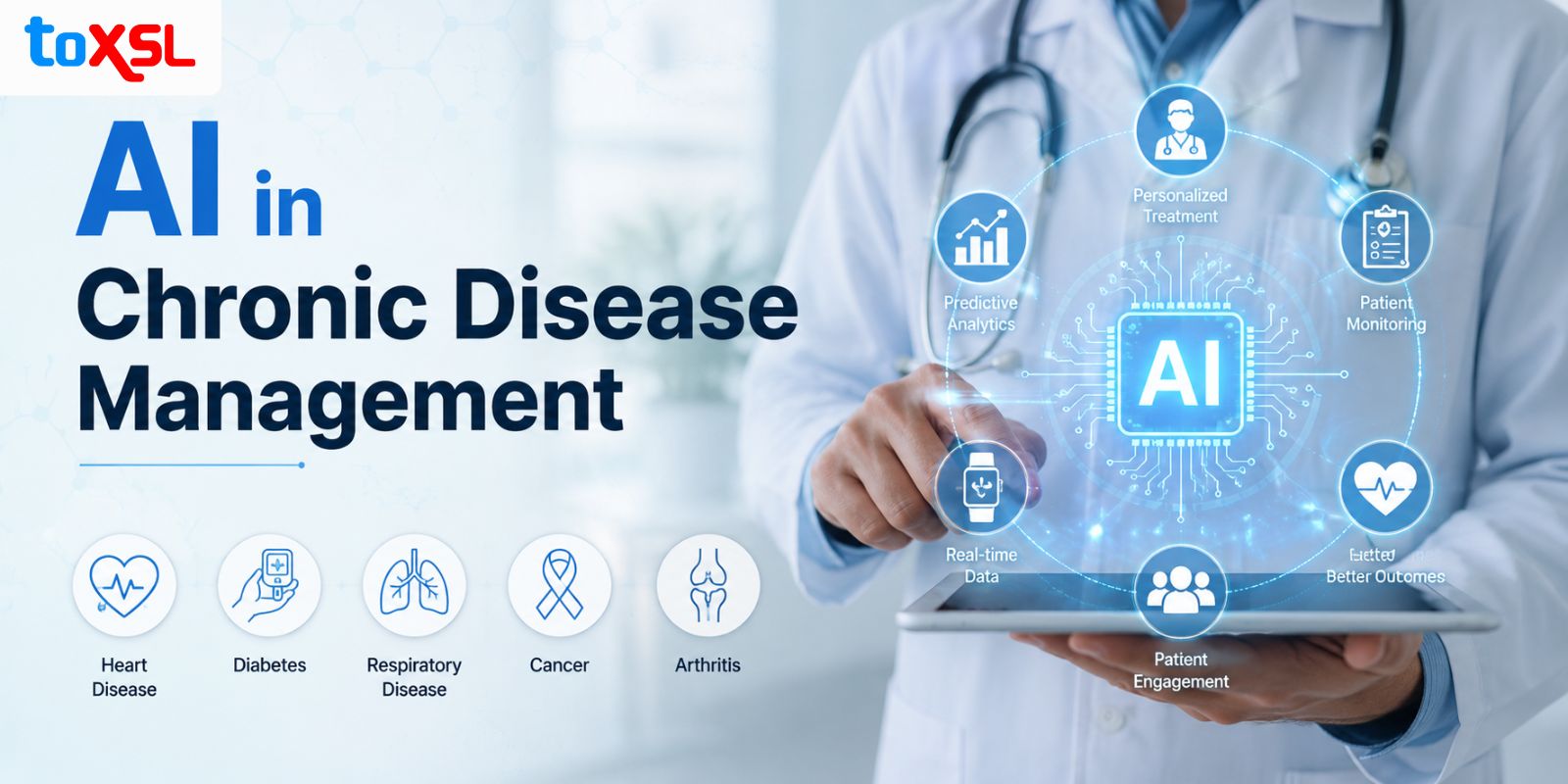
Chronic diseases have become one of the most serious healthcare challenges across the globe, affecting millions of people every year and placing immense pressure on healthcare systems. According to recent healthcare reports, nearly 6 out of 10 adults worldwide suffer from at least one chronic condition such as diabetes, cardiovascular disease, cancer, asthma, or hypertension. As the number of patients continues to grow, traditional healthcare approaches are struggling to provide continuous, personalized, and cost-effective care.
The global AI healthcare market is expected to surpass USD 505.59 billion by 2033, while more than 70% of healthcare organizations are actively investing in AI-driven solutions to improve operational efficiency and patient outcomes. AI-powered remote monitoring systems can reduce hospital re-admissions by up to 30%, while intelligent diagnostic tools are improving disease detection accuracy by nearly 40% in certain chronic conditions.
As healthcare organizations continue to embrace digital transformation, AI-powered chronic disease management systems are becoming essential for delivering proactive, data-driven, and patient-centric healthcare services. In this guide, we will explore the benefits, architecture, cost analysis, major factors, future trends, and opportunities associated with AI in chronic disease management and how businesses can leverage this technology to build smarter healthcare solutions.
Key Takeaways
- AI helps healthcare providers detect chronic diseases earlier through predictive analytics and real-time patient monitoring.
- Machine learning algorithms improve personalized treatment plans based on patient history, lifestyle, and medical records.
- AI-powered wearable devices enable continuous monitoring of vital signs and patient health conditions.
- Hospitals and healthcare organizations can reduce operational costs and improve efficiency using intelligent automation.
- Remote healthcare and telemedicine solutions powered by AI improve patient engagement and accessibility.
- The future of chronic disease management will rely heavily on AI, IoT, cloud computing, and big data analytics.
Understanding AI in Chronic Disease Management
Artificial Intelligence in chronic disease management refers to the use of intelligent systems and algorithms to monitor, predict, diagnose, and manage long-term medical conditions. AI systems process massive healthcare datasets to identify patterns and provide actionable insights for doctors and patients.
These technologies help healthcare providers make informed decisions while improving patient care quality and treatment accuracy. Some major AI technologies used in chronic disease management include:
- Machine Learning: Machine learning algorithms analyze patient data to identify disease risks, treatment responses, and health trends. These systems continuously improve based on new healthcare data.
- Predictive Analytics: Predictive AI models forecast disease progression and identify high-risk patients before serious complications occur.
- Natural Language Processing (NLP): NLP enables AI systems to interpret medical records, doctor notes, prescriptions, and patient interactions.
- Computer Vision: AI-powered imaging systems help detect diseases through medical scans such as MRIs, CT scans, and X-rays.
- Wearable Health Technology: AI integrates with wearable devices to monitor heart rate, blood sugar levels, oxygen saturation, sleep patterns, and physical activity.
AI-Powered Chronic Disease Management Architecture
AI-powered chronic disease management architecture combines advanced technologies such as artificial intelligence, machine learning, IoT-enabled medical devices, cloud computing, predictive analytics, and healthcare applications to create a connected and intelligent healthcare ecosystem. This architecture enables healthcare providers to collect, process, analyze, and monitor patient data in real time while delivering personalized treatment, predictive healthcare insights, automated workflows, and proactive patient care management. By integrating multiple healthcare technologies into a unified system, AI-driven architectures improve operational efficiency, treatment accuracy, patient engagement, and long-term chronic disease management outcomes.
Architecture Layer | Primary Function | Key Technologies |
Data Collection Layer | Collects real-time patient health information | IoT Devices, Wearables, Mobile Apps |
Data Processing & Storage Layer | Processes and securely stores healthcare data | Cloud Computing, Databases |
AI & Predictive Analytics Engine | Analyzes data and predicts health risks | Machine Learning, Predictive Analytics |
Integration & Communication Layer | Connects healthcare systems and applications | APIs, EHR Integration |
User Interface & Monitoring Layer | Provides dashboards and monitoring access | Web Portals, Mobile Applications |
1. Data Collection Layer
The data collection layer acts as the foundation of the AI-powered healthcare architecture by gathering patient health information from multiple connected sources. It continuously captures real-time healthcare data required for accurate chronic disease monitoring, treatment analysis, and predictive healthcare insights.
- Collects data from wearable healthcare devices
- Integrates with mobile health applications
- Captures real-time patient health metrics
- Supports IoT-enabled medical devices
- Enables continuous remote patient monitoring
- Tracks vital signs and patient activity levels
2. Data Processing Layer
This layer is responsible for processing, organizing, validating, and securely storing healthcare data collected from multiple healthcare systems and devices. It ensures efficient data accessibility, scalability, and compliance for AI-driven healthcare operations.
- Cleans and structures healthcare datasets
- Stores patient information securely in cloud systems
- Supports scalable healthcare infrastructure
- Enables real-time healthcare data synchronization
- Improves accessibility to patient records
- Ensures compliance with healthcare security regulations
3. Predictive Analytics Engine
The AI and predictive analytics engine serves as the intelligence core of the architecture. It analyzes patient information using machine learning algorithms and predictive models to identify disease patterns, predict risks, and generate personalized healthcare recommendations.
- Performs predictive healthcare analysis
- Detects disease progression patterns
- Generates personalized treatment recommendations
- Supports faster clinical decision-making
- Enhances diagnosis accuracy and treatment planning
- Provides real-time healthcare insights and alerts
4. Integration Layer
The integration and communication layer connects AI-powered systems with healthcare platforms such as hospital management software, telemedicine applications, laboratory systems, and electronic health records to ensure seamless workflow management and secure data exchange.
- Integrates with EHR and hospital systems
- Supports secure healthcare communication
- Enables seamless data exchange between platforms
- Improves operational workflow efficiency
- Connects telemedicine and remote care systems
- Supports real-time healthcare collaboration
5. Real-Time Monitoring Layer
This layer provides healthcare providers, patients, and administrators with access to dashboards, reports, notifications, and monitoring tools through user-friendly interfaces. It enables proactive healthcare management and improves patient engagement through real-time access to healthcare insights.
- Provides real-time patient monitoring dashboards
- Enables access through mobile and web applications
- Sends healthcare alerts and notifications
- Improves patient engagement and communication
- Supports data-driven healthcare decision-making
- Enhances overall healthcare user experience
Benefits of Using AI in Chronic Disease Management
Artificial Intelligence is revolutionizing chronic disease management by helping healthcare providers deliver smarter, faster, and more personalized patient care. AI-powered healthcare systems can analyze large amounts of patient data, predict disease risks, automate workflows, and support real-time monitoring. From improving diagnosis accuracy to enhancing patient engagement, AI is transforming the way chronic illnesses such as diabetes, heart disease, cancer, and respiratory disorders are managed. Below are some major benefits of using AI in chronic disease management.
1. Early Disease Detection
AI helps healthcare providers identify chronic diseases at an early stage by analyzing medical records, lab reports, wearable device data, and patient history.
- Detects health risks before symptoms become severe
- Improves chances of early treatment and recovery
- Reduces long-term healthcare complications
- Supports preventive healthcare strategies
2. Personalized Treatment Plans
- AI systems create customized treatment recommendations based on patient-specific data such as lifestyle, genetics, and medical history.
- Delivers patient-centric healthcare solutions
- Improves treatment effectiveness
- Reduces medication side effects
- Enhances patient satisfaction and care quality
3. Continuous Remote Monitoring
AI-powered wearable devices and remote healthcare systems enable real-time patient monitoring without frequent hospital visits.
- Tracks vital signs continuously
- Sends real-time alerts during emergencies
- Reduces hospital admissions
- Improves convenience for chronic disease patients
4. Improved Diagnostic Accuracy
AI technologies help doctors diagnose diseases more accurately by analyzing medical imaging and healthcare data quickly.
- Minimizes human diagnostic errors
- Detects diseases faster
- Enhances clinical decision-making
- Supports accurate treatment planning
5. Faster Clinical Decision-Making
AI systems process large healthcare datasets instantly and provide intelligent recommendations to healthcare professionals.
- Speeds up patient evaluations
- Helps doctors make informed decisions
- Improves emergency response times
- Enhances healthcare efficiency
6. Better Medication Management
AI-powered healthcare applications help patients follow medication schedules and avoid prescription errors.
- Sends automated medication reminders
- Tracks prescription usage
- Detects potential drug interactions
- Improves treatment adherence rates
7. Enhanced Patient Engagement
AI-powered virtual assistants and healthcare apps encourage patients to participate actively in managing their health.
- Provides personalized health guidance
- Offers diet and fitness recommendations
- Supports symptom tracking
- Improves communication between patients and doctors
8. Reduced Hospital Re-admissions
AI helps healthcare providers monitor patients after discharge and identify risks before conditions worsen.
- Prevents unnecessary hospital visits
- Supports proactive healthcare management
- Improves patient recovery rates
- Reduces healthcare operational costs
AI in Chronic Disease Management: Cost Analysis
The cost of implementing AI in chronic disease management depends on several factors, including technology complexity, data infrastructure, integration requirements, compliance standards, and scalability goals. Healthcare organizations can choose from basic AI monitoring systems to advanced predictive analytics platforms depending on their operational needs and budget. While the initial investment may seem significant, AI-powered healthcare systems deliver long-term cost savings through improved efficiency, reduced hospitalizations, and better patient outcomes.
AI Solution Type | Estimated Cost (USD) | Features Included | Suitable For |
|---|---|---|---|
Basic AI Monitoring System | $10,000 – $30,000 | Patient tracking, appointment reminders, basic analytics | Small clinics & startups |
AI Chatbots & Virtual Assistants | $15,000 – $50,000 | Patient interaction, medication reminders, automated support | Healthcare providers |
Remote Patient Monitoring Systems | $30,000 – $100,000 | Wearable integration, real-time monitoring, alert systems | Hospitals & telehealth platforms |
Predictive Analytics Platforms | $50,000 – $200,000 | Risk prediction, disease forecasting, data analysis | Mid-to-large healthcare organizations |
Enterprise AI Healthcare Solutions | $200,000 – $500,000+ | Full-scale AI automation, EHR integration, advanced diagnostics | Large hospitals & enterprises |
Maintenance & AI Model Training | $2,000 – $20,000/month | System updates, monitoring, retraining, optimization | Long-term AI operations |
Factors Associated With AI in Chronic Disease Management
The success of AI in chronic disease management depends on several technological, operational, and regulatory factors. Healthcare organizations must carefully evaluate these aspects to ensure effective implementation, improved patient outcomes, and long-term sustainability.
1. Data Quality
AI systems rely heavily on accurate and structured healthcare data to generate reliable insights and predictions. Poor-quality or incomplete data can reduce system effectiveness and lead to inaccurate outcomes. Healthcare organizations must ensure proper data collection, storage, and management practices for successful AI implementation in chronic disease management.
2. Healthcare Integration
Seamless integration with electronic health records (EHR), telemedicine platforms, and hospital management systems is essential for efficient AI adoption. Poor integration can create workflow disruptions and operational inefficiencies.
3. Data Security
Healthcare data is highly sensitive, making compliance with privacy regulations and security standards crucial. AI systems must follow healthcare regulations such as HIPAA and GDPR while ensuring secure data storage and transmission..
4. AI Model Accuracy
The effectiveness of chronic disease management systems depends on the accuracy and reliability of AI algorithms. Continuous training, testing, and optimization are necessary to improve prediction quality and reduce biases.
5. Patient Adoption
The success of AI healthcare solutions also depends on patient acceptance and participation. User-friendly interfaces, personalized communication, and transparent AI processes encourage patients to engage actively with digital healthcare tools.
6. Robust Infrastructure
Healthcare organizations need robust cloud infrastructure, computing power, and scalable systems to support AI operations effectively. As patient data volumes grow, scalable AI platforms ensure consistent performance and reliability.
Future of AI-powered Chronic Disease Management
The future of AI-powered chronic disease management is expected to bring significant advancements in personalized, preventive, and real-time healthcare solutions. As artificial intelligence continues to evolve, healthcare systems will shift from reactive treatment approaches to proactive care models that focus on early detection and continuous patient monitoring.
AI-powered tools will increasingly integrate with wearable devices, IoT sensors, and telemedicine platforms to provide real-time health tracking for patients with chronic conditions such as diabetes, heart disease, and hypertension. These systems will analyze patient data instantly, helping healthcare providers detect risks earlier and respond faster to emergencies.
Conclusion
Artificial Intelligence is transforming chronic disease management by enabling healthcare providers to deliver more accurate, proactive, and personalized care solutions. From predictive analytics and remote monitoring to intelligent automation and personalized treatment plans, AI is improving patient outcomes while reducing healthcare costs and operational inefficiencies.
As healthcare systems continue to evolve, AI-powered technologies will play an even greater role in enhancing disease prevention, patient engagement, and real-time health monitoring. Businesses and healthcare organizations that adopt AI-driven solutions today will be better prepared to meet the growing demand for efficient and scalable healthcare services in the future.
As a leading AI development comapny, ToXSL Technologies specializes in developing innovative AI-powered healthcare solutions tailored to modern medical and business requirements. As a top healthcare app development company, we help organizations leverage advanced AI technologies to build secure, scalable, and intelligent chronic disease management systems. Our expertise in AI, healthcare software development, and digital transformation enables businesses to deliver smarter healthcare experiences and improve patient care outcomes effectively. The future of healthcare is intelligent, connected, and data-driven and AI is leading this transformation.
Frequently Asked Questions
1. How does AI help in chronic disease management?
AI helps healthcare providers improve chronic disease management by analyzing patient data, predicting health risks, enabling real-time monitoring, and delivering personalized treatment recommendations. It enhances healthcare efficiency while improving patient outcomes and long-term disease control.
- Supports early disease detection and prevention
- Enables continuous remote patient monitoring
- Provides personalized treatment recommendations
- Improves diagnostic accuracy and decision-making
- Enhances patient engagement and medication adherence
- Reduces hospital readmissions and operational costs
2. Which chronic diseases can be managed using AI?
AI technologies can support the monitoring, diagnosis, and treatment of various chronic medical conditions through predictive analytics, remote monitoring, and intelligent healthcare systems.
- Diabetes management
- Cardiovascular disease monitoring
- Cancer detection and treatment support
- Respiratory disease management
- Hypertension monitoring
- Neurological disorder management
- Mental health condition monitoring
3. Is AI-powered chronic disease management secure?
Yes, modern AI-powered healthcare systems are designed with advanced security frameworks to protect sensitive patient information. These solutions use data encryption, secure cloud infrastructure, multi-factor authentication, and healthcare compliance standards such as HIPAA and GDPR to ensure privacy, confidentiality, and secure healthcare operations.
4. How much does it cost to develop an AI-powered chronic disease management solution?
The development cost of an AI-powered chronic disease management solution depends on several technical and business factors, including platform complexity, AI capabilities, integrations, scalability requirements, and healthcare compliance standards.
- AI and machine learning model development
- Cloud infrastructure and data storage
- Wearable device and IoT integration
- Mobile and web application development
- Telemedicine and EHR integration
- Security and compliance implementation
- Real-time analytics and monitoring features
Development costs can range from basic healthcare applications to large-scale enterprise healthcare platforms depending on project scope and functionality.
5. Can AI replace doctors in chronic disease management?
No, AI is designed to support healthcare professionals rather than replace them. AI assists doctors by automating repetitive tasks, analyzing healthcare data, improving diagnosis accuracy, and enabling predictive healthcare insights. However, human expertise, clinical judgment, patient communication, and emotional care remain essential components of healthcare delivery.
6. Why should healthcare organizations invest in AI-powered healthcare solutions?
Healthcare organizations are increasingly investing in AI technologies to improve operational efficiency, enhance patient care, and support digital healthcare transformation.
Key benefits of AI investment include:
- Improved patient outcomes and treatment accuracy
- Reduced healthcare operational costs
- Faster clinical decision-making
- Enhanced remote patient monitoring
- Better workflow automation and efficiency
- Improved patient engagement and accessibility
- Competitive advantage in the digital healthcare market